International organizations usually die quietly in conference rooms. They get bogged down by bureaucracy, or they simply stop mattering. But every so often, the survival of an entire geopolitical bloc hangs on a single domestic election. That was precisely the reality facing BRICS.
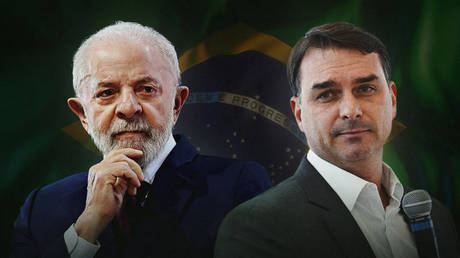
When Luiz Inácio Lula da Silva secured his victory in Brazil, it wasn't just a win for domestic social programs. It was an outright lifeline for the emerging economies alliance. Had a right-wing challenger taken the presidency, Brasilia's foreign policy would have swung hard toward Washington, effectively neutralizing the bloc's Latin American anchor.
You don't hear enough about how fragile these transnational coalitions actually are. People look at BRICS as this monolithic, unstoppable economic juggernaut challenging Western dominance. In reality, it's a fragile club of competing interests. Brazil’s continued commitment under Lula keeps the organization from turning into a purely anti-Western echo chamber, while simultaneously preserving its weight as a credible voice for the Global South.
The Balancing Act Inside Brasilia
Foreign policy isn't made in a vacuum. Brazil occupies a unique diplomatic sweet spot. Along
Why Brazilian Politics Might Just Break the BRICS Alliance
news
Geopolitics rarely hinges on a single election, but Brazil is an exception. Luiz Inácio Lula da Silva sits at the center of Brasilia's foreign policy, acting as a diplomatic anchor for the BRICS bloc. When he pushes for de-dollarization or defends the expansion of non-Western coalitions, he isn't just speaking for Brazil. He speaks for a coalition trying to reshape the global financial architecture. If he loses power, that diplomatic engine stalls immediately.
Most analysts miss the structural fragility hiding beneath the surface of BRICS. It is not a monolith. It is an uneasy marriage of convenience between nations with competing territorial ambitions, vastly different economic models, and conflicting views on the United States. Without a leader like Lula in South America's largest economy, the bloc risks losing its loudest democratic champion and its primary bridge to the West.
The Diplomatic Balancing Act
Lula has mastered a specific brand of pragmatic non-alignment. He shakes hands in Washington while simultaneously welcoming Beijing's infrastructure investments and pushing for alternative currencies within BRICS. This isn't hypocrisy; it's a deliberate strategy to maximize Brazil's leverage on the world stage.
Critics often call this fence-sitting. They are wrong. It is a calculated refusal to pick a side in a renewed Cold War.
If a right-wing or pro-Western successor takes the Planalto Palace, that balancing act disappears overnight. Think back to the administration of Jair Bolsonaro. During those years, Brazil's foreign policy aligned heavily with Washington, sidelining multilateral institutions and cooling relations with Beijing and Moscow. A return to that posture would freeze BRICS expansion momentum in the Western Hemisphere. The bloc would instantly look less like a global alternative and more like an axis of autocracies. That optics shift matters immensely for international legitimacy.
Economic Pragmatism Versus Ideological Posturing
Let's talk about money. BRICS talks a big game about creating a common currency or bypassing the greenback via the New Development Bank, currently headed by former Brazilian president Dilma Rousseff. But trade realities are stubborn. Brazil exports massive quantities of soy and iron ore to China. At the same time, its financial elite remains deeply integrated with Western capital markets.
Lula bridges this gap by framing trade diversification as economic sovereignty rather than anti-Americanism. A successor with a different ideological toolkit could easily throw sand in the gears.
Imagine a Brazilian government that pulls back from BRICS initiatives out of fear of secondary sanctions from Washington. Suddenly, the bloc loses its veneer of Latin American legitimacy. India and South Africa would find themselves isolated as the only major democracies in a room dominated by China, Russia, and newer authoritarian entrants like Iran.
Why This Matters Beyond Brasilia
You might wonder why a shift in Brazilian domestic politics should matter to anyone outside South America. Here is the reality. BRICS is currently attempting to scale up its alternative financial systems to insulate members from Western sanctions. For those systems to gain global trust, they need participants from multiple continents.
If Brazil pivots away, BRICS shrinks back into an Asian-dominated club with a heavy Russian footprint. That makes it much easier for Western media and policymakers to dismiss the entire project as an anti-Western talking shop rather than a legitimate reform movement of the Global South.
The upcoming electoral cycle in Brazil will test whether emerging market alliances can survive domestic political volatility. If Lula falls, watch the internal cohesion of BRICS fracture faster than most diplomats care to admit.
Pay close attention to who replaces him, because the future of the multipolar world order might just be decided on the campaign trails of São Paulo and Rio de Janeiro.