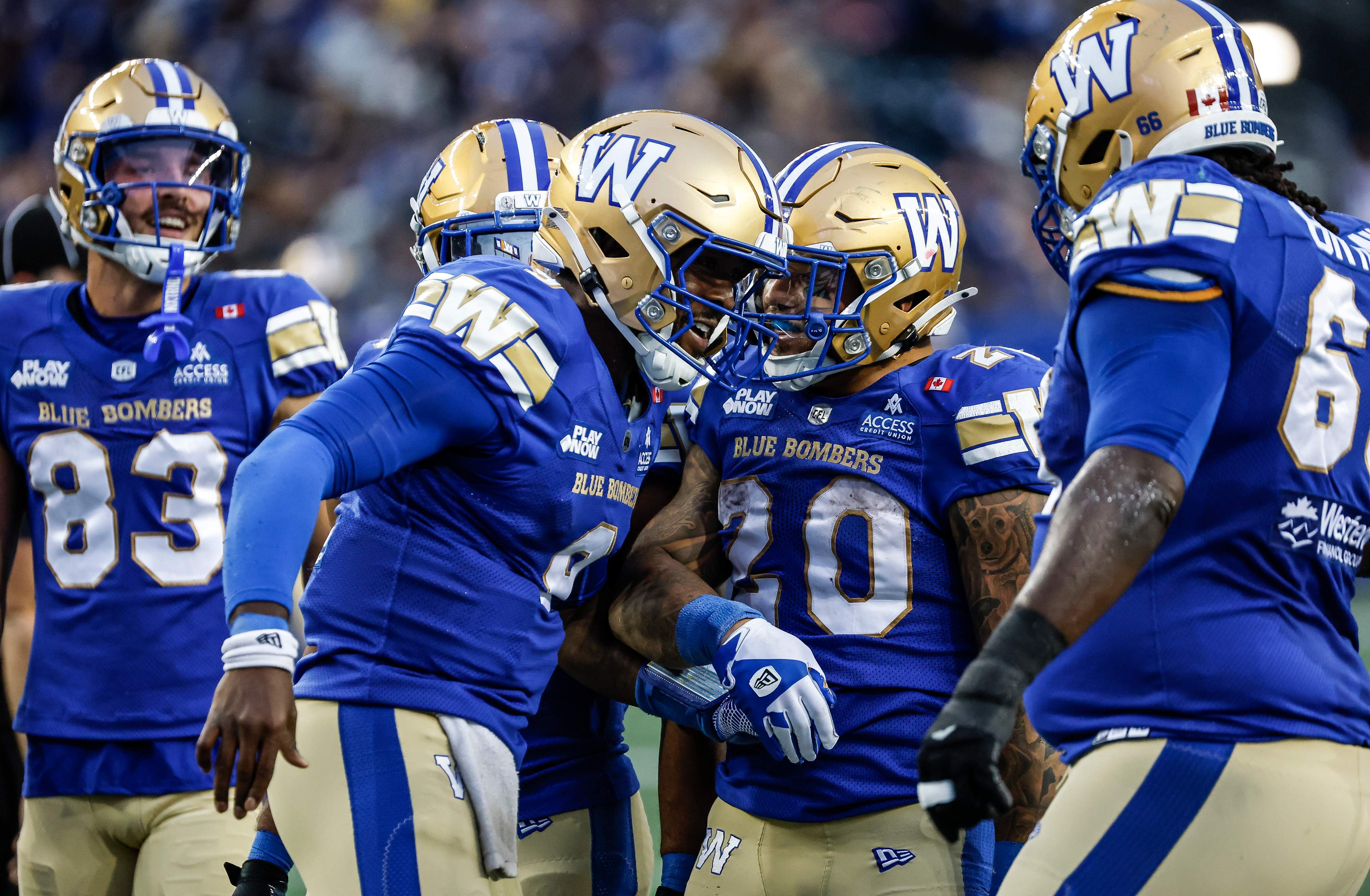
Everyone watched Brady Oliveira slice through Ottawa's front seven and assumed the running back single-handedly saved the Winnipeg Blue Bombers from an early-season spiral. The lazy narrative writes itself. Star runner gets the rock, star runner grinds down a winless expansion-era defense, team remembers how to win.
It is a comforting story for people who understand box scores and nothing else.
It is also complete nonsense.
I have spent years watching coaches panic when their ground game stalls, reaching for the heaviest hammer in the shed just to feel productive. The consensus on that game is that Oliveira carried a struggling offense on his back, proving that ground-and-pound football remains the ultimate equalizer. Let us look at what actually happened beneath the rushing yards and television hype.
The Myth of the Ground-Game Savior
When you feed a back twenty times, math dictates that yardage accumulates. That is not brilliance. That is volume.
The Redblacks entered that matchup with a defense leaking yards through the seams, structurally incapable of maintaining gap integrity against basic zone-read schemes. Winnipeg did not reinvent their identity. They simply punched a pillow repeatedly and called it a masterclass in toughness.
Let us define what an elite offensive performance actually requires. It requires efficiency over accumulation. It requires converting high-leverage downs when the opponent knows the play call. Oliveira moved the chains, yes, but look at the situational efficiency. Too many first-down runs into crowded boxes yielded two yards, setting up predictable second-and-long scenarios that put unnecessary stress on the passing attack.
If you praise a player for accumulating stats against a bottom-tier defense while ignoring the stalled drives either side of those highlight runs, you are grading on a curve.
What the Box Score Hides
Winnipeg won because Ottawa self-destructed in the secondary, blowing coverages on intermediate crossers that left receivers wide open. The running game did not open up those passing lanes. The defensive coordinator in Ottawa simply dialed up a soft zone and prayed for a drop.
Imagine a scenario where Winnipeg faced a disciplined front four that refused to bite on play-action fakes. The entire offensive structure would have fractured because the reliance on Oliveira masks deeper systemic issues in pass protection and route spacing.
Fans love running backs because running backs are easy to understand. They run forward. They get tackled. You can see the yards tick up on the screen. But football games are won in the margins—in pass-block efficiency, leverage on the perimeter, and defensive disruption behind the line of scrimmage.
Oliveira had a productive night. He did not rescue a franchise from oblivion.
The Trap of Comfort Food Football
Coaches lean on the run game when they lose confidence in their timing. It slows the game down. It keeps the defense honest. It makes everyone on the sideline feel safe.
Safety is the enemy of championship football.
When you prioritize establishing the run against a winless team just to quiet the noise in the local media, you develop bad habits that get exposed the moment you play a legitimate contender. Relying on heavy rushing volume against weak competition creates a false sense of security.
The Blue Bombers are still figuring out their identity. Pinning their resurgence on a high-touch evening from their running back lets the offensive line and the coaching staff off the hook for execution flaws that will cost them dearly in November.
Stop buying the hero worship. Look at the blocking schemes. Look at the yards per carry before contact. Look at the actual production when the game was still in the balance, long before Ottawa mailed in the fourth quarter.
The win is on the board. The analysis is broken.
Fix how you watch the game.