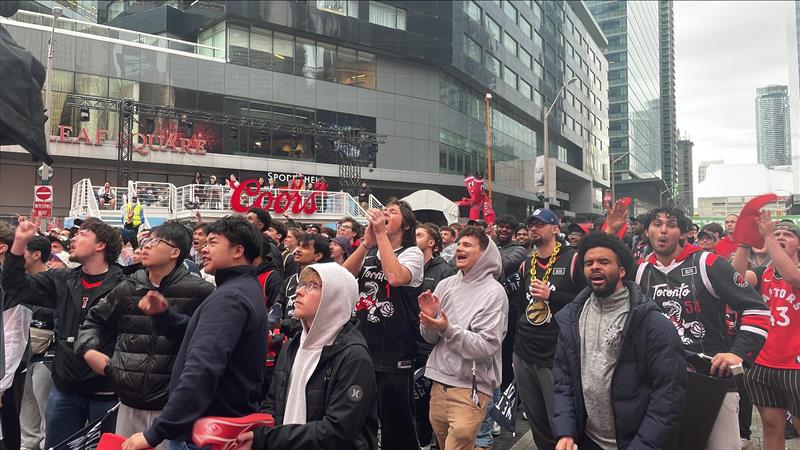
The sight of red jerseys flooding Rocket Mortgage FieldHouse is not a coincidence or a simple act of proximity. It is a calculated migration. When the Toronto Raptors play in Cleveland, the stands regularly fill with thousands of Canadians who have bypassed Scotiabank Arena in favor of a five-hour drive across the Peace Bridge. While casual observers see a spirited road crowd, the reality is a complex intersection of predatory ticket pricing, international currency fluctuations, and a loyalty forged during the 2019 championship run that has yet to cool.
The Mathematical Flight from Toronto
The primary driver of this northern invasion is the sheer cost of being a basketball fan in Ontario. Toronto remains one of the most expensive markets in the NBA. Between the corporate-owned secondary markets and the aggressive dynamic pricing models used by Maple Leaf Sports & Entertainment (MLSE), a lower-bowl seat in Toronto can easily fetch triple the price of a comparable spot in Cleveland.
Even when you factor in the exchange rate, a tank of gas, and a night at a hotel near the Cuyahoga River, a family of four often finds it cheaper to watch the Raptors in Ohio than in their own backyard. This isn’t just about saving a few dollars. It is an indictment of the pricing out of the traditional fan base in Toronto. Cleveland, meanwhile, benefits from an infusion of Canadian capital that props up local hospitality sectors during mid-week games that might otherwise see lower attendance.
Beyond the Border Post
Traveling for sports is a logistical hurdle that requires more than just a ticket. Fans must navigate the unpredictable wait times at the Buffalo-Niagara border crossings, where the sight of a Raptors car flag is often enough to prompt a nod from customs agents accustomed to the rhythm of the NBA schedule.
There is a psychological component at play here. When Raptors fans travel to Cleveland, they aren't just spectators. They are an occupying force. They find a specific kind of communal identity in being the "other" in a hostile arena. This creates a feedback loop. The more fans travel, the more the atmosphere feels like a neutral site game, which in turn encourages more fans to make the trip the following season.
The LeBron Era Hangover
The rivalry between these two cities is lopsided but deeply felt. For years, Cleveland was the graveyard where Raptors seasons went to die during the LeBron James era. That history hasn't been forgotten. For the veteran fan, returning to Cleveland is a reclamation project. They aren't just there to see a game; they are there to occupy a space that once represented their greatest sporting frustrations.
Revenue Leakage and Regional Loyalty
From a business perspective, MLSE is effectively exporting its brand value. Every dollar spent on a hot dog or a souvenir in Cleveland is a dollar that didn't go back into the Toronto economy. However, the Raptors organization seems content with this arrangement. A global brand—or at least a continental one—requires a fan base that travels. It builds the "North" identity that the marketing teams have spent a decade cultivating.
The Cleveland Cavaliers, for their part, have a complicated relationship with the influx. While the ticket revenue is green regardless of the buyer’s nationality, there is a palpable tension when the "Let's Go Raptors" chants drown out the home crowd. It affects the home-court advantage, a tangible asset that coaches and players value. When the visiting team doesn't feel like they are in a vacuum, the officiating can tilt, and the energy of the home players can flag.
The Infrastructure of a Road Trip
The "We The North" movement transformed from a slogan into a literal travel agency. Unofficial fan groups and bus tour operators now coordinate entire blocks of seating. This is organized labor for the sake of leisure. They negotiate group rates with Cleveland hotels and organize pre-game takeovers of local bars.
- Bus Charters: Groups often depart from Union Station or Mississauga early in the morning to hit the border by midday.
- Hotel Hubs: Specific hotels in downtown Cleveland become de facto Canadian territories for 48 hours.
- The Secondary Market: Scalpers in Ohio have learned to anticipate these dates, often holding inventory specifically for the "Toronto surge."
The Economic Reality of the Rust Belt
Cleveland’s downtown core relies heavily on these spikes in activity. Unlike larger metropolitan hubs with diversified tourism, the sports district in Cleveland lives and dies by the schedule at the FieldHouse and Progressive Field. The Canadian dollar, even when weak, is a vital lifeline for the service industry workers in the Gateway District.
Waitstaff and bartenders in Cleveland often report that Raptors nights are among their most profitable of the season. Canadian fans, perhaps feeling the relief of lower ticket prices, tend to spend more freely on food and beverage. It is a rare win-win in the hyper-competitive world of regional sports economics, provided you aren't the Cavaliers fan who just lost their home-court atmosphere.
A Sustainable Subculture
This isn't a fad. The border-crossing fan is now a permanent fixture of the NBA's Eastern Conference ecosystem. As long as the price disparity between Toronto and the mid-market American cities remains vast, the exodus will continue. It is a grassroots rejection of the "platinum seat" culture that has taken over the Scotiabank Arena.
The Raptors fan in Cleveland is a different breed. They are the ones who can't afford the $500 tickets in Toronto but have the grit to drive five hours through a Lake Erie snowstorm to sit in the 100-level for a fraction of the cost. They are the heartbeat of the franchise, even if they have to leave the country to prove it.
The real story isn't that fans are traveling. The story is that the Toronto market has become so bloated that its most loyal supporters find more value in a foreign city than in their own. Cleveland isn't just a destination; it's an escape valve for a pressurized fan base. Check the schedule, watch the border wait times, and follow the red jerseys south.