The stamp ink at a border crossing smells like stale coffee and wet metal.
If you have ever stood in the fluorescent glare of a passport control booth after fourteen hours of stale cabin air, you know the specific, cold sweat that pools at the base of your neck when the officer stops flipping pages. They do not look up. They do not smile. They simply type three slow keys on a mechanical keyboard, pick up a landline receiver, and turn their chair forty-five degrees away from the glass. Expanding on this theme, you can also read: When Masks Come to a Quiet Street (And What Remains After the Sirens Fade).
Silence.
For a few tense days, that silence became the sudden, terrifying reality for dozens of American and British travelers arriving at the gates of Syria. Without public fanfare, without a thirty-day grace period, and without an updated notice on embassy websites, new entry restrictions snapped shut like a steel trap. Citizens holding US and UK passports—many of them Syrian-Americans carrying heavy duffel bags stuffed with blood pressure medication for aging aunts, or British aid workers returning to half-rebuilt clinics—were abruptly stopped at the threshold and turned away. Observers at The New York Times have shared their thoughts on this trend.
Then, just as suddenly as the door slammed, Damascus pulled it back open.
On the surface, a policy reversal on entry requirements looks like a routine bureaucratic hiccup. A footnote in diplomatic cables. A minor administrative correction for a government still finding its footing in the shifting sands of post-Assad governance.
That reading misses everything that actually matters.
To understand what happened at those crossings—and why the rapid rollback carries weight far beyond passport stamps—you have to look past the dry language of foreign ministry circulars. You have to step inside the fluorescent booth, feel the weight of the rejected passport, and trace the fragile, high-stakes tightrope a recovering nation walks every time it decides who gets to cross its lines.
The Anatomy of a Sudden Locked Door
Consider a hypothetical scenario, built from the exact composite experiences of travelers caught in the sudden freeze.
Call her Layla. She is forty-two, an architect living in Chicago, born in Damascus before her family left in the late nineteen-nineties. For over a decade, returning to the street where she learned to ride a bicycle was an impossibility wrapped in layers of fear, checkpoints, and war. When the political earthquake reshaped Syria and opened a narrow window of cautious hope, Layla booked a ticket. She packed two suitcases—one with winter coats for her cousins, another with architectural survey tools, hoping to volunteer her skills to assess damaged neighborhood schools.
She did not travel recklessly. She checked travel advisories. She confirmed the informal consensus among diaspora groups that Western passport holders of Syrian origin, and even standard tourists and journalists, were navigating entry through established visa-on-arrival protocols or straightforward border clearances.
Then she reached the counter.
The officer looked at the navy blue cover with the gold eagle. He shook his head. Under quiet, newly issued directives tightening entry rules specifically for citizens of the United States and the United Kingdom, her passport was no longer a key. It was a wall. No appeal. No supervisor with discretionary mercy. Just a polite, firm gesture back toward the departure lounge and the next flight out.
Multiply Layla by dozens of real reports surfacing across diaspora WhatsApp groups, consular phone lines, and international news wires. Americans turned back at Damascus International Airport. British citizens stopped cold at land crossings from Lebanon and Jordan. People who had spent thousands of dollars on multi-leg flights, taken unpaid leave from jobs, and braced themselves emotionally for a reunion years in the making were suddenly stranded in transit hubs from Amman to Beirut.
Panic travels faster than official policy. Within hours, rumors filled the vacuum left by official silence. Had diplomatic backchannels collapsed? Was this retaliation for lingering Western sanctions? Were dual nationals suddenly trapped between two legal identities?
When a government changes border rules in the dark, every traveler becomes a detective trying to read invisible ink.
Why Borders Are Never Just Lines on a Map
I have spent years reporting from and navigating contested border zones, and if there is one truth that holds across every continent, it is this: a country’s border policy is its nervous system made visible.
You can read a nation’s deepest anxieties in how it treats a stranger holding a foreign passport.
Think of a border crossing not as a wall, but as an airlock on a spacecraft. Outside the airlock is the vacuum of international politics—sanctions, frozen assets, diplomatic non-recognition, and decades of mutual suspicion. Inside is a fragile domestic atmosphere struggling to stabilize currency, rebuild electrical grids, and convince millions of displaced citizens that normal life is possible again. Open the outer door too fast, and the pressure drops violently. Keep it welded shut, and everyone inside suffocates from isolation.
Following the dramatic collapse of the decades-long Assad regime, Syria’s transitional authorities inherited an administrative apparatus hollowed out by fourteen years of conflict. Ministries were merging. Security agencies were being dismantled and rebuilt from scratch. Old bureaucrats sat beside new commanders who had spent years governing local enclaves rather than managing international aviation protocols.
In that environment, friction is inevitable.
For months prior to the sudden crackdown, Westerners—journalists, researchers, diaspora families, humanitarian coordinators, and even adventurous travelers—had been entering Syria with relative ease compared to the tightly choreographed, state-minders-required era of the previous government. The message seemed clear: Syria was open for engagement, hungry for foreign currency, diaspora investment, and international legitimacy.
Then came the abrupt tightening against US and British nationals.
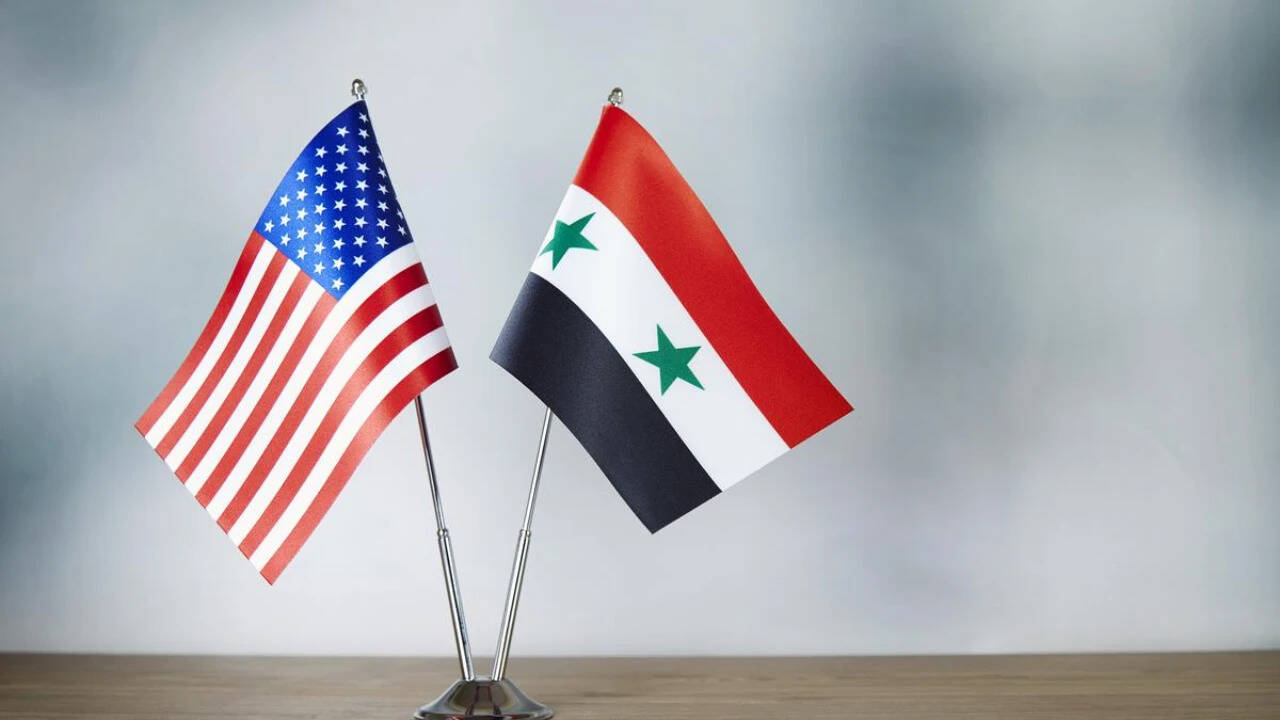
Why target those two passports specifically? Look at the geopolitical ledger. The United States and the United Kingdom remained the two most consequential holdouts regarding comprehensive sanctions relief, formal diplomatic recognition, and financial unfreezing. While regional neighbors had moved rapidly to normalize flights, trade, and ministerial visits, Washington and London maintained a cautious, condition-heavy posture.
To a mid-level security planner or an interior ministry official operating without clear diplomatic guardrails, symmetry feels like common sense. If their governments restrict our central bank, our trade, and our officials, the logic whispers, why should their citizens walk through our airports unchecked?
It is an old reflex in statecraft. Reciprocity. Tit-for-tat. A way of asserting sovereignty when every other lever of international power feels out of reach.
Yet within days—almost as quickly as reports of turned-away Americans hit international headlines—Damascus reversed course. The new entry restrictions on US and British citizens were rolled back. The door swung open again.
The Real Reason the Policy Cracked
Governments rarely admit mistakes out loud, especially transitional ones trying to project strength and competence. You will not find a press release from Damascus saying, We miscalculated the fallout. Instead, you see the quiet administrative pivot. The directive vanishes. Border guards receive a new memo before the morning shift.
Look closely at what forced that reversal, because it reveals where the real power in modern Syria actually resides.
First, the economic math is unforgiving. Every diaspora family flying in from Detroit, London, Houston, or Manchester brings something far more valuable than tourist dollars: direct, untaxed, un-sanctioned liquidity. They carry cash into local markets. They pay for hotel rooms, taxi drivers, family medical bills, and roof repairs. Shutting out US and British passport holders didn't punish Washington or London; it choked off an immediate lifeline to Syrian households barely surviving hyperinflation and infrastructure collapse.
Second, the humanitarian and reconstruction bottleneck snapped tight immediately. Dozens of medical missions, engineering assessments, and non-governmental organizations operating in Syria rely on staff holding American and British citizenship. Turning away a British structural engineer or an American trauma surgeon at the border does not hurt Whitehall or the State Department. It leaves a hospital ward in Aleppo without a specialist.
Third—and perhaps most decisive—was the reputational shockwave.
A transitional government seeking the lifting of crippling international sanctions has one primary currency: predictability. Foreign diplomats, international lenders, and risk-averse investors watch every micro-signal to answer a single question: Is there a coherent, reliable chain of command in Damascus, or can rules change arbitrarily at midnight?
When Americans reported being turned away without warning, the story didn't stay confined to travel forums. It became instant ammunition for skeptics in Washington and London arguing that Syria remained too volatile, too opaque, and too unpredictable for sanctions relief or normalized relations.
The rollback was an act of rapid political triage. Someone at the highest level looked at the blowback, weighed the symbolic satisfaction of border reciprocity against the tangible cost of international isolation, and pulled the emergency brake.
What Travelers Actually Need to Know Right Now
If you are holding a US or UK passport and planning a trip to Syria—whether to bury a relative, inspect a family home, file a story, or deliver aid—the rollback is welcome news. It is also a warning label printed in bold red ink.
Bureaucratic reversals in transitional states do not erase the underlying fragility that caused the hiccup in the first place. A policy changed on a Tuesday can still linger in the computer terminal of a remote border post on a Thursday.
Here is the unvarnished reality of navigating that threshold right now:
Documentation lags behind decisions. When restrictions are imposed and lifted within days, official embassy portals, airline check-in systems, and third-party visa databases rarely update in sync. An airline gate agent in Amman, Doha, or Cairo relies on automated databases like Timatic. If the database still flags an outdated restriction, the airline will deny you boarding before you ever see a Syrian border guard. Carry printed confirmations, local sponsor contacts, and current consular notices—not because they guarantee entry, but because they give a hesitant gate agent a reason to make a phone call rather than say no.
Dual nationality is both a shield and a puzzle. For Syrian-Americans and Syrian-Britons, carrying expired Syrian identification, family civil registry extracts, or old passports often transforms a tense interrogation into a warm welcome. Border officers frequently view diaspora travelers not as foreign nationals, but as returning sons and daughters. Yet relying solely on verbal explanations at a busy crossing invites misunderstanding. Clarity on paper prevents friction at the glass.
Expect unevenness between crossings. Damascus International Airport operates under much tighter, more centralized oversight than remote land borders. A memo issued at 8:00 AM reaches the airport terminal by 8:05 AM; it might take forty-eight hours to be fully understood at a dusty crossing hours outside the capital.
I will admit something most travel advisories gloss over: even with years of experience crossing unpredictable frontiers, standing in front of an unsmiling official in a country rewriting its own laws still makes my stomach tighten. Anyone who tells you there is a foolproof formula for navigating a post-conflict border is selling certainty they do not possess. You prepare meticulously, you respect the human being behind the glass, and you accept that until the ink hits the page, nothing is guaranteed.
The Weight of an Open Door
Step back from the visa desks and the diplomatic cables for a moment, and look at what is really happening in that narrow corridor between arrival and entry.
For generations, borders across the Levant were instruments of control—places where files were pulled, names were cross-referenced against blacklists, and citizens learned to lower their eyes and speak in whispers. A passport was not an invitation to move freely; it was a leash held by the state.
That is why a forty-eight-hour border freeze, followed by a rapid, pragmatic retreat, tells such a revealing story about this moment in history.
In an older era, a directive turning away foreign citizens would have been defended with stubborn pride, wrapped in nationalist slogans, and left in place for years regardless of the human or economic toll. Admitting error—even silently, through a quiet policy reversal—was unthinkable.
Instead, pragmatism won. The doors reopened. The buses from Beirut resumed their slow climb over the Anti-Lebanon mountains. Flights touched down on the tarmac outside Damascus, spilling passengers into the bright, dusty sunlight of an afternoon that felt suddenly, fragilely possible again.
Somewhere in that arrival hall, a woman with a navy blue passport in her carry-on bag steps up to the glass. She watches the officer’s hands. She hears the familiar click of the keyboard, the brief pause, and then—the sharp, metallic thud of the ink stamp hitting paper.
He slides the passport back under the slot, looks up, and says two words that carry the weight of a decade: Ahlan wa sahlan. Welcome.