The scent of fried charqui and roasting corn hits you long before you see the terminal. It is a heavy, humid aroma that clings to the concrete of the General Paz Avenue, the massive ring road that supposedly separates the sophisticated European dreams of Buenos Aires from the sprawling reality of its suburbs. But here, in the neighborhood of Liniers, the line doesn't just blur. It dissolves.
Step off the Train Sarmiento at the Liniers station and the air changes. The rapid-fire Rioplatense Spanish—all rhythmic "sh" sounds and Italian hand gestures—starts to soften. It melds into the melodic lilt of the Andean highlands. You aren't just in a neighborhood anymore. You are in a lung. Liniers is where Argentina breathes in the rest of South America, and where the rest of the continent exhales its hopes into the silver city.
Consider Elena. She is a hypothetical composite of the thousands of women who arrive here every month, but her calloused thumbs and the way she guards her floral-patterned luggage are real enough. She came from Potosí, Bolivia, on a bus that felt like it would never stop climbing until it finally hit the flat, humid Pampas. For Elena, Liniers isn't a "transit point." It is the doorway.
The sidewalk near the intersection of José León Suárez and Ibarrola is a tectonic plate of commerce. This is the "Mercado Boliviano," though that title is too small for what actually happens here. It is a fever dream of logistics and longing. Mountains of dried peppers, purple potatoes that look like bruised stones, and bags of coca leaves sit stacked against storefronts.
Argentina has always told itself a story about being the "Paris of the South." It looks at its wide avenues and French-style palaces and forgets the soil beneath them. But Liniers refuses to forget. In the 19th century, this was the site of the slaughterhouses, the mataderos. It was a place of blood and transition, where the wild interior was processed into the wealth of the city. Today, the "processing" is human. The neighborhood remains a threshold, a place where you arrive with nothing but a contact's phone number and a heavy coat you won't need in the humid Buenos Aires summer.
The statistics tell a story of density. While the city of Buenos Aires has seen its population remain somewhat stagnant for decades, the influx of migrants from Bolivia, Paraguay, and Peru into these border neighborhoods has fundamentally shifted the capital's DNA. Over 2 million foreigners live in Argentina, and a massive percentage of the Andean diaspora flows through these few square blocks.
But numbers are cold. They don't capture the sound of the charango echoing from a second-story window or the sight of a San Cayetano pilgrimage.
San Cayetano is the patron saint of bread and work. His sanctuary sits right here in Liniers. Every August, hundreds of thousands of people line up for miles, sleeping on sidewalks for days, just to touch the glass casing of his statue. Why? Because in a country where the economy fluctuates like a heart monitor during a cardiac event, "bread and work" are not abstract rights. They are miracles.
The line for the saint is often a line of the displaced. You see the faces of the Chaco, the features of the Altiplano, and the tired eyes of the Paraguayan construction worker. They aren't asking for riches. They are asking for the floor not to fall out from under them. Liniers is the physical manifestation of that struggle. It is a neighborhood of "remittance houses," those storefronts where people stand in long, patient queues to send a fraction of their meager pesos back home, converted into dollars or bolivianos, fueling economies a thousand miles away.
There is a tension here that the tourism brochures for Palermo or Recoleta conveniently ignore. Liniers is loud. It is crowded. It is messy. It is the site of a constant, low-boil friction between the old-school "Porteño" residents—descendants of Italians and Spaniards—and the new wave of continental migrants. You hear it in the grumbles about the sidewalk being blocked by vegetable crates. You see it in the heavy police presence near the bus terminal.
Yet, this friction is exactly what makes the neighborhood vital.
The "invisible stakes" of Liniers are nothing less than the soul of the country. Is Argentina a European outpost accidentally moored in South America, or is it a part of the continent? Every time a local buys a bag of chuño from a street vendor, the answer tilts. The neighborhood acts as a giant laboratory of integration. It’s where the fusion happens—not in a fancy restaurant, but in the communal "ollas populares" (community pots) and the shared cramped quarters of the "inquilinatos" or tenement houses.
Walking through the backstreets, away from the roar of the terminal, the scale shifts. The houses are narrow. Laundry hangs like flags over wrought-iron balconies. You might stumble upon a small storefront selling salteñas—Bolivian pastries filled with spicy meat and broth. Eating one is a ritual. You have to tilt your head just right so the juice doesn't ruin your shirt. It’s a lesson in precision and patience, much like the lives of the people who bake them.
These immigrants aren't just "filling jobs." They are recreating a world. They bring their festivals, their textile traditions, and their resilience. They have turned a dusty corner of the city into a powerhouse of informal trade. If Liniers were to stop working for twenty-four hours, the fruit and vegetable supply of half the city would wither. The construction sites in the north would go silent.
The reality of Liniers is a rebuke to the idea of "settled" history. It is a neighborhood in a permanent state of becoming.
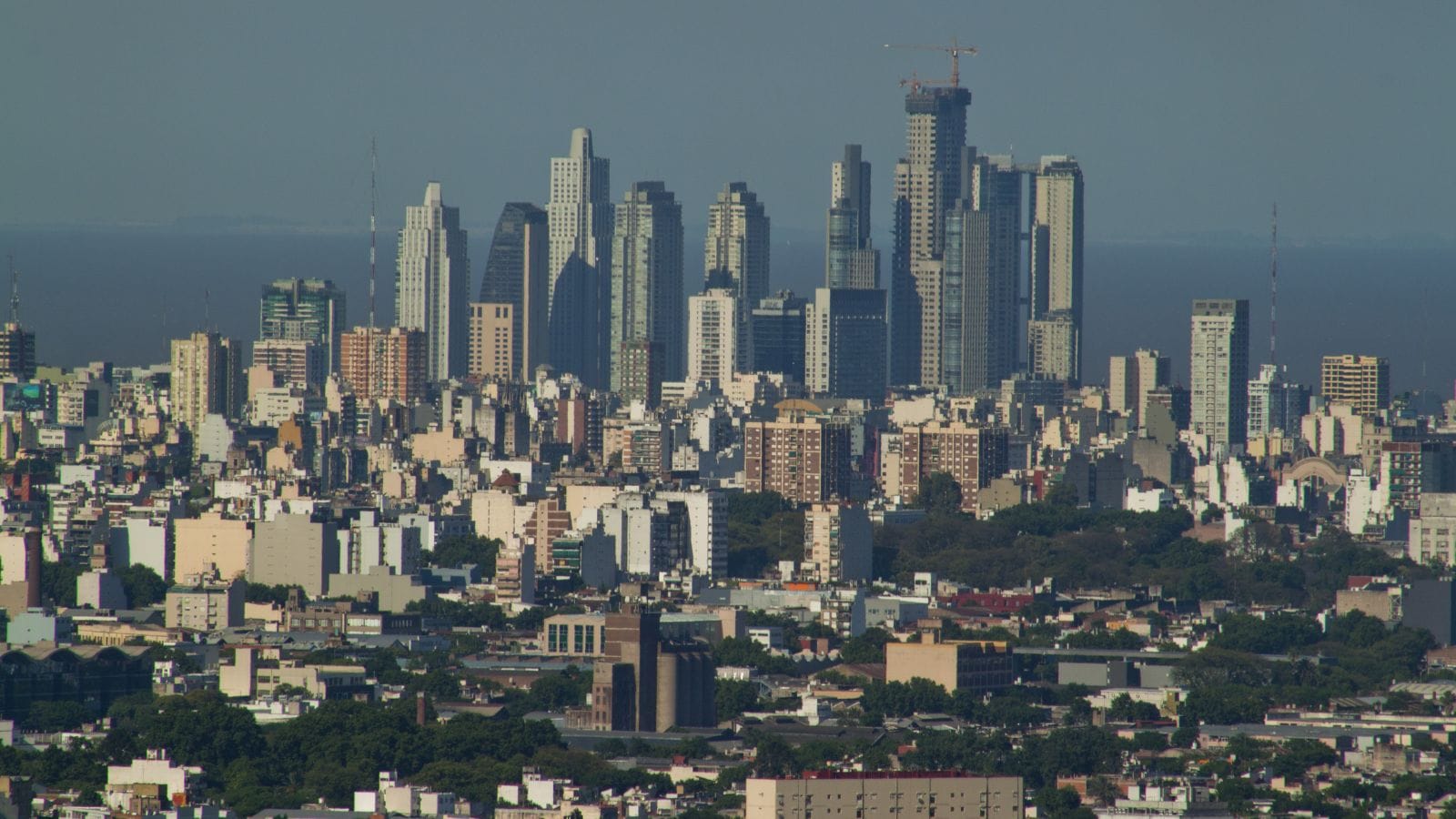
As the sun sets over the General Paz, the shadows of the high-rise apartment buildings stretch toward the low-slung markets. The lights of the long-distance buses begin to flicker on. "Asunción," "La Paz," "Cochabamba," the signs in the windows read. People hug loved ones through open bus windows, handing over packages wrapped in duct tape and hope.
It is easy to look at Liniers and see only the grit. But if you stand still long enough, you see the bravery. It takes a terrifying amount of courage to leave a mountain for a sidewalk. It takes a relentless kind of love to spend ten hours a day selling socks in the rain to pay for a daughter’s schooling in a village you haven't seen in five years.
Liniers is not a slum, and it is not a tourist trap. It is a bridge. It is the place where the map of South America is being redrawn, one street stall and one prayer at a time.
The train whistles, a sharp, metallic scream that cuts through the evening air. Another load of commuters pours out onto the platform, merging with the shoppers and the dreamers and the ghosts of the old slaughterhouses. The air still smells of roasting corn and diesel. The city keeps growing, fed by the very people it often tries to look past, while the heart of the neighborhood beats on, steady and stubborn, against the concrete.
A man sits on a plastic crate, playing a wooden flute. The notes are thin and high, lost almost immediately in the roar of the traffic on the avenue. He isn't playing for an audience. He is playing for the horizon. In Liniers, the horizon is always just one bus ride away, yet it is held firmly in place by the weight of a thousand small, daily victories.