The morning does not arrive gently in the eastern provinces of Afghanistan. It tears open.
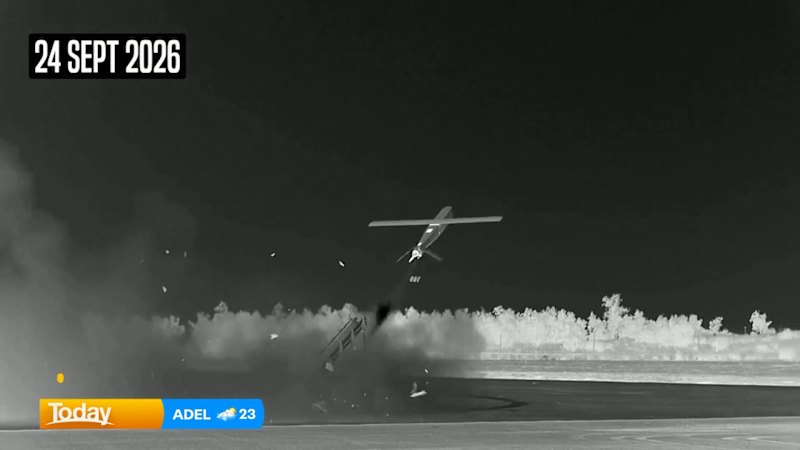
Before the first pale streak of light crests the jagged peaks of the Hindu Kush, a low, guttural vibration shakes the dust from the rafters of mud-brick homes. It is a sound older than the current geopolitical map, yet entirely modern in its devastation. A roar of jet engines splits the mountain air, followed instantly by the concussive thump of ordnance hitting earth.
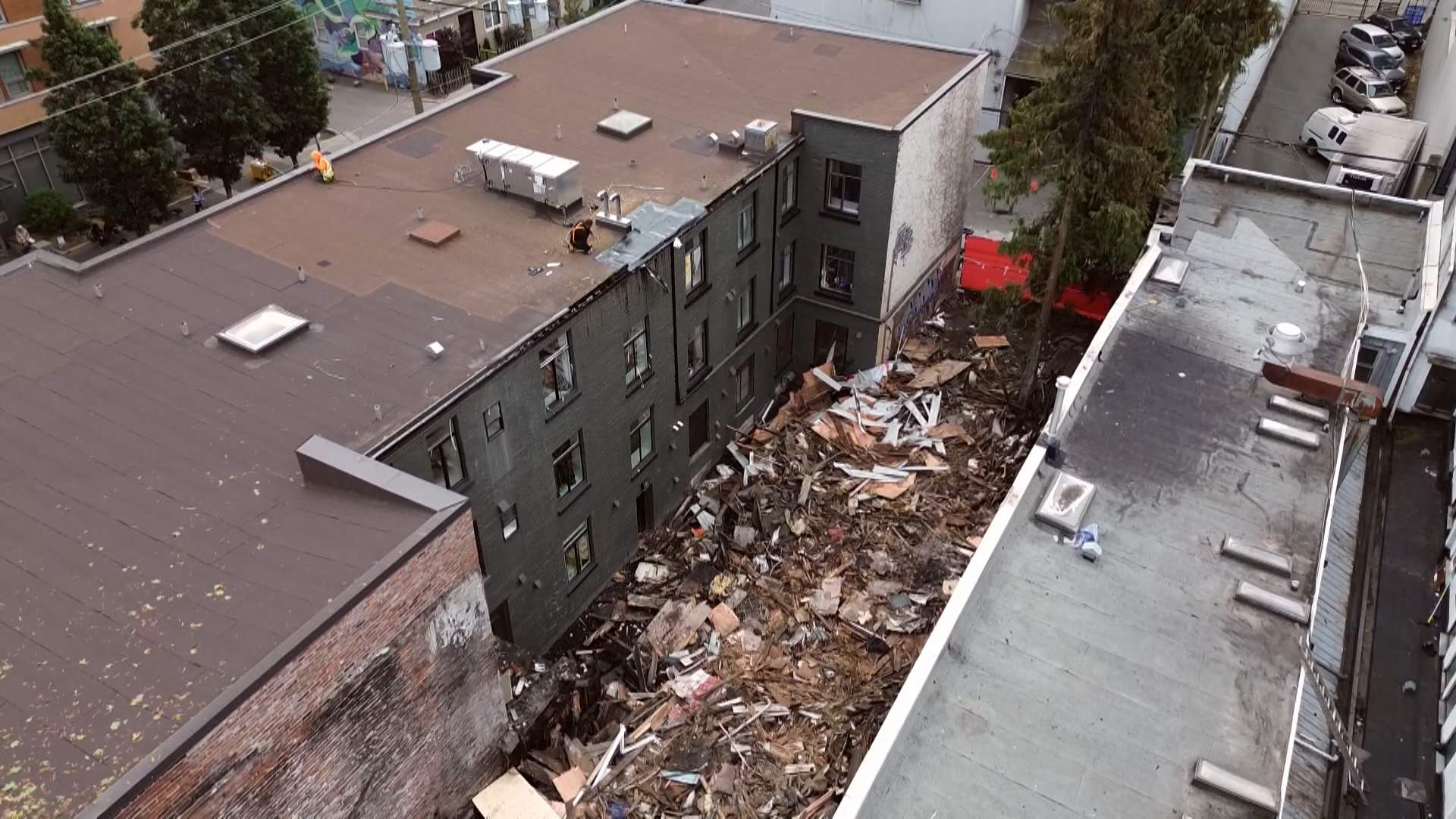
In a hypothetical home in the rugged reaches of Khost province—constructed from sun-baked mud and stone, housing a family that has farmed the same rocky terraces for generations—sleep vanishes in a microsecond. Let us call this place a reflection of reality, a composite of countless dossiers and frontline dispatches. A mother throws herself over her children. Plaster rains down. The roof groans. Outside, the pre-dawn quiet is replaced by a roaring furnace of smoke, splintered timber, and screams.
When the dust settles, four bodies lie motionless beneath the wreckage. Not combatants. Not commanders plotting cross-border raids. Just civilians whose only crime was sleeping in the wrong valley at the wrong hour.
This is the human residue of a quiet, relentless war that rarely makes the front page of international newspapers beyond a dry, bureaucratic headline: Pakistani air strikes kill four in Afghanistan.
To understand why those bombs fell, and why four innocent lives were snuffed out in the dark, one must peer beneath the sterile veneer of official military communiques. One must look at a map drawn by a British bureaucrat more than a century ago and trace the festering sore known as the Durand Line.
Sir Mortimer Durand drew that border in 1893 with a stroke of a pen, slicing straight through the heart of the Pashtun homeland. Families were divided overnight. Tribes whose loyalty belonged only to kinship and custom suddenly found themselves straddling an artificial barrier enforced by barbed wire, checkpoints, and suspicion. For generations, neither Kabul nor Islamabad has ever truly agreed on its legitimacy.
Today, that disputed line has transformed into a high-stakes fault line of mutual paranoia.
On one side sits Islamabad, grappling with a fierce domestic security crisis. The Tehrik-i-Taliban Pakistan, an ideologically driven insurgency distinct from yet ideologically aligned with the Afghan Taliban, has waged a bloody campaign against Pakistani security forces. Convoys are ambushed. Mosques are bombed. Soldiers bleed in the rugged tribal districts of Khyber Pakhtunkhwa and Balochistan.
From the vantage point of the military establishment in Rawalpindi, the math is simple, cold, and unrelenting. They believe the TTP leadership operates with impunity from safe havens nestled within Afghan provinces like Paktika, Khost, and Kunar. They look across the border and see an unheeded warning. They demand action. When diplomatic channels stall, they send jets.
On the other side sits Kabul, governed by a regime that clawed its way back to power through decades of asymmetrical warfare. For the Afghan administration, these airstrikes are not counter-terrorism operations; they are a direct violation of national sovereignty. They are acts of aggression committed against a battered population that has known nothing but war for over forty years.
When bombs strike civilian homes, killing women and children, the Afghan narrative hardens. Indignation swells into fury. Officials issue fiery condemnations, summoning diplomats and warning of severe consequences. Yet, the stark asymmetry of power leaves them with few levers of retaliation beyond rhetorical defiance and border skirmishes.
Between these two intransigent positions lies the ordinary citizen.
Imagine living in a valley where the sky itself has become an enemy. Every time a distant drone hums or a fighter jet cuts the stratosphere, a collective terror grips the community. Farmers working their meager wheat fields look upward with apprehension. Children running through dusty alleys freeze at the sound of sudden thunder.
This is the psychological toll of cross-border friction. It is a state of perpetual low-intensity trauma.
When four civilians are killed in a pre-dawn raid, the official reports from Islamabad will often frame the operation as a precision strike against high-value militant targets. They will speak of intelligence-based operations and neutralized threats. Meanwhile, local witnesses on the ground will point to shattered cradles, blood-stained blankets, and the torn bodies of infants.
Both narratives exist in a parallel universe, unable to touch or reconcile. This is the great tragedy of modern statecraft in South Asia: the truth is buried beneath layers of political posturing, propaganda, and strategic denial.
To explain this dynamic without intuitive analogies is to miss its beating heart. Think of the borderlands not as a boundary between two separate countries, but as an infected scar tissue on a single living body. When one side presses down too hard, the entire organism convulses.
The TTP insurgency cannot be understood merely as a foreign invasion or an external threat. It is deeply intertwined with decades of porous borders, historical grievances, shifting alliances, and regional geopolitics. For years, elements within the Pakistani security apparatus nurtured religious militias as instruments of strategic depth against India. History, however, has a cruel way of collecting debts. The very entities once cultivated or tolerated have turned their weapons inward, biting the hand that once fed them.
Now, Islamabad expects Kabul to clean up a mess that decades of state policies helped create. But the Afghan Taliban, newly transitioned from insurgent rulers to a recognized government, face their own internal contradictions. They rely on deep ideological and familial ties with cross-border militant networks. To aggressively crack down on their ideological brethren is to risk fracturing their own internal cohesion, inviting defections to more radical splinter factions like the local branch of the Islamic State.
Caught in this geopolitical deadlock, ordinary Afghans pay the ultimate price.
Consider what happens next in the wake of such a strike. The funerals are held under a blazing midday sun. Shrouded bodies are carried through narrow alleys as mourners chant slogans of defiance. Grief curdles into anger. Young men, watching their relatives pulled from the rubble, look toward the mountains with vengeance in their eyes.
This is the vicious cycle of radicalization. Every bomb dropped in the name of security plants the seeds of tomorrow's insurgency. Every civilian casualty provides fresh recruitment material for extremist commanders who preach that the state is an irredeemable enemy.
Military might offers the illusion of control. A jet can cross a border in minutes, drop its payload, and return to base before the echo fades. It projects strength. It signals resolve to a domestic audience demanding action. But it solves nothing. It merely deepens the chasm of distrust.
True security cannot be bombed into existence. It requires patient diplomacy, economic integration, border management built on cooperation rather than confrontation, and, above all, political will to address the root causes of extremism rather than treating its symptoms with fire from the sky.
Until leaders in both capitals realize that the blood spilled across the Durand Line stains both nations equally, the cycle will repeat. Another night will fall over the mountains. Another family will sleep in a fragile home, trusting the quiet of the dark. And another dawn will break with the roar of engines, turning dreams into ash.
The mountains remain silent witnesses to the folly of men. The wind sweeps down the ravines, carrying the dust of centuries, whispering the names of those who fell in the dark, waiting for a peace that never quite arrives.