The coffee in the Victoria Palace is always cold by the time the real decisions are made. For months, the corridors of Bucharest’s central government building have smelled of stale espresso and damp wool coats, a physical manifestation of a political engine that has ground itself down to a screeching, static halt.
Outside, the Romanian winter refuses to break. Inside, the gridlock is worse. Discover more on a related topic: this related article.
When a government freezes, citizens do not experience it as a headline. They experience it as a delayed infrastructure project on a dangerous highway. They feel it in the creeping inflation that eats away at pensions, or the sudden, anxious pause in European Union funding that should have modernized a regional hospital. Political deadlock is an invisible tax on human hope. For weeks, Romania has been paying that tax in full, trapped in a mathematical stalemate where no party can form a majority, and no leader wants to be the first to blink.
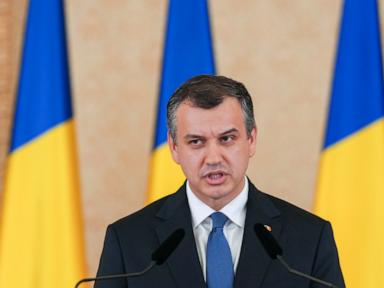
Then, the President stepped to the podium. Additional reporting by TIME highlights comparable views on the subject.
The nomination of Eugen Tomac—a veteran Member of the European Parliament and long-standing advisor—as the new Prime Minister is not just a tactical adjustment on a legislative chessboard. It is a desperate, calculated gamble to break a fever. To understand why this choice matters, you have to look past the official press releases and look at the man chosen to carry the briefcase into the storm.
The Art of the Backroom Whisper
Politics in Eastern Europe is often viewed through a lens of grand ideological battles. This is a mistake. More often, it is an intimate game of endurance, played by people who have spent decades learning exactly which levers to pull when the cameras are turned off.
Eugen Tomac is not a political firebrand who fills stadiums with roaring rhetoric. He is a creature of the institution. As an MEP, his world has been one of Brussels corridors, complex policy directives, and the quiet, exhausting work of building consensus among people who speak twenty different languages and distrust each other by default.
Consider the sheer psychological weight of that background.
Standard Politician: Rallies -> Media Outcry -> Gridlock
Consensus Diplomat: Bureaucracy -> Quiet Negotiation -> Compromise
The President’s choice to nominate him is an acknowledgment that the era of the loud, charismatic savior has failed to deliver. The country does not need another speech. It needs a mechanic. Tomac’s career has been a long masterclass in navigating the exact kind of factional warfare currently paralyzing Bucharest. He represents the return of the advisor class—the people who actually read the six-hundred-page legislative drafts while the front-facing politicians are arguing on television.
But expertise is a double-edged sword. To the cynical voter, a long-time advisor and Brussels insider looks less like a savior and more like the embodiment of the establishment. The question echoing through the cafes of Cluj and the boardrooms of Bucharest is simple: Can a man trained in the polite, rule-bound chambers of the European Parliament survive the raw, bare-knuckle brawl of domestic Romanian politics?
The Mathematics of Static
To understand the stakes, we have to look at the numbers, even if they lack a pulse. The Romanian parliament currently resembles a shattered mirror. No single coalition holds a clear path to governance without inviting their bitterest rivals into bed with them.
Imagine a family business where the three partners refuse to speak to one another, yet all three hold equal keys to the safe. The business rots while the keys sit on the table.
[Social Democrats] <---> [National Liberals] <---> [Reformists]
                 \              |              /
                  \             v             /
                   -->  TOTAL DEADLOCK  <---
Tomac’s nomination is the President’s attempt to introduce a neutral variable into this broken equation. Because he has spent significant time outside the immediate domestic sandbox, he carries slightly less of the local political radioactive waste than his peers. He is a compromise candidate by definition—not because everyone loves him, but because he is uniquely positioned as someone everyone can afford to tolerate for a little while.
The immediate task ahead of him is brutal. He has days to cobble together a cabinet that can survive a vote of confidence. This means sitting in rooms with party bosses who hate his agenda, offering concessions that will break his own heart, and selling a vision of stability to a public that has grown entirely immune to political promises.
If he succeeds, the rewards are immense: billions of euros in EU recovery funds will unlocked, stabilizing the national currency and allowing long-delayed public works to finally breathe. If he fails, the country triggers another round of chaotic elections, pushing the uncertainty well into the next fiscal year.
The Ghost at the Negotiating Table
Every political transition has a ghost—a historical pattern that repeats itself so often it feels like fate. In Romania, that ghost is the short-lived technocratic government.
We have been here before. Whenever the traditional parties push the country to the brink of collapse through sheer greed or stubbornness, they inevitably appoint a "clean" figure to steady the ship. The technocrat steps in, does the hard, unpopular work of balancing the budget and fixing the administrative plumbing, and then, the moment the crisis passes, the major parties turn on them, devour them, and resume their old battles.
Tomac knows this history. He has watched it happen from his vantage point in Brussels. He knows that the very people who might vote to confirm him next week will be looking for an opportunity to stab him in the back by autumn.
This is where the human element of leadership becomes terrifying. It requires a specific kind of courage—or perhaps a specific kind of vanity—to accept a job when you know your employers are already planning your dismissal. You are accepting the blame for a crisis you did not create, with the full knowledge that if you fix it, someone else will take the credit.
The Long Road to the Vote
The coming days will be filled with frantic, late-night updates, tactical leaks to the press, and sudden reversals of fortune. The markets are watching. The neighboring countries, dealing with their own geopolitical anxieties, are watching.
But away from the television studios, an ordinary citizen walks into a small grocery store in northeastern Romania. She looks at the price of eggs, then at the price of milk, and makes a silent calculation about what she can afford to cut out this week. She does not know Eugen Tomac. She does not care about the intricate power balance between Brussels and Bucharest.
She just needs the government to work so her life can stop feeling like an endless series of compromises.
The man with the briefcase is walking down the long, cold hallway of the Victoria Palace. The cameras are flashing, the reporters are shouting questions, and the door to the negotiation room is about to close behind him. He has a plan, a stack of data, and a few days to prove that a bureaucrat can do what the politicians couldn't: make the machine move again.