Rain on a tin roof sounds like a promise or a threat, depending on where you are standing.
In the late summer of 2005, the Gulf Coast of Texas was learning how to spell displacement. Hurricane Katrina had hurled thousands upon thousands of refugees westward, turning Houston into an impromptu harbor for the storm-tossed. Entire neighborhoods vanished overnight under gray water, and with them, the fragile architecture of daily life. Mailboxes, front porches, grocery store checkout lines—the ordinary geography of home dissolved into a vast, terrifying unknown.
Into this fractured landscape stepped a simple act of scale.
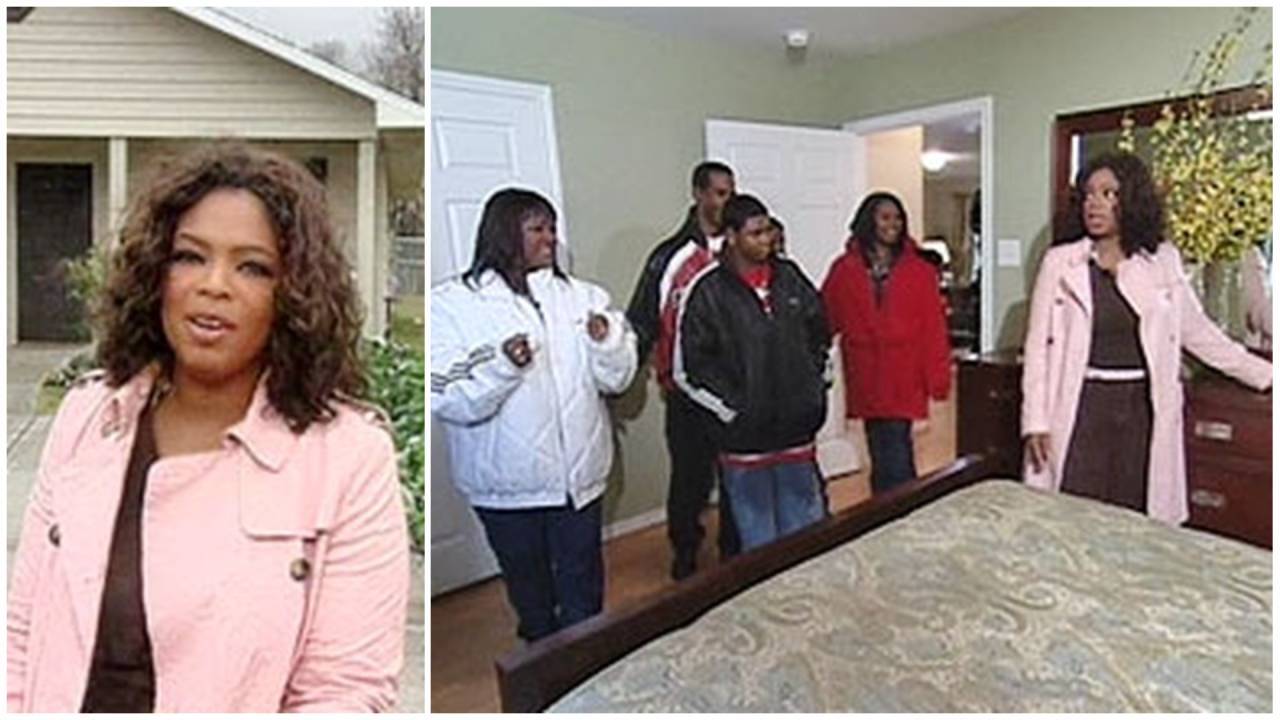
Oprah Winfrey did not send a press release or a committee of distant evaluators. She sent ten million dollars. Not to a nameless relief fund, but specifically anchored to a tract of land in Houston that would soon bear a quiet, evocative name: Angel Lane.
Numbers in philanthropy often feel weightless. Ten million dollars is a digit on a screen, a headline scrolled past on a morning commute. But concrete does not care about abstractions. Concrete cures in the heat, absorbs the weight of furniture, and holds up the walls that keep the wind away.
By the time the dust settled and the construction equipment rolled away, Angel Lane was no longer just an idea. It was sixty-five homes and a community center.
Consider what a house actually is. To an accountant, it is an asset. To a policymaker, it is a housing statistic. But to a family whose photographs are currently drying on a kitchen table in a strange city, a house is a verb. It is locking a door against the night. It is turning on a faucet and watching water run clear. It is the invisible line that separates precarity from peace.
When the Angel Lane development took shape, the architectural choices mattered as much as the funding. These were not temporary shelters or hastily erected boxes meant to manage an emergency. They were permanent structures built with permanence in mind. Porches faced one another. Sidewalks connected doorsteps. The layout was an intentional rejection of isolation.
Disaster strips away your social fabric. You lose your neighbors, your church, the corner store where the clerk knew how you liked your coffee. Rebuilding a city requires more than replacing drywall; it requires knitting those loose threads back together.
That is why the community center at the heart of Angel Lane was never an afterthought. It became the living room of the neighborhood. A place where children could open notebooks without worrying about where they would sleep next week. A place where adults, staring down the hollow exhaustion of starting over, could sit across from someone who nodded and said, I know.
We talk endlessly about the economy of disaster, but we rarely talk about its geography. When catastrophe hits, it pushes the vulnerable further and further toward the edges. It treats people like loose leaves blown down an alley. Philanthropy, at its best, acts as a windbreak. It stops the scattering.
In 2005, Angel Lane did not just house sixty-five families. It sent a message about what dignity looks like when the world has turned upside down. It proved that private capital, directed with absolute clarity toward human need, can carve a safe harbor out of chaos.
Years have passed since the hammers stopped swinging on that Houston street. The paint has weathered a few Texas summers. Lawns have grown in, marked by the untidy, beautiful evidence of children growing up and old dogs lying in the shade.
The rain still falls on tin roofs down on the Gulf Coast. Sometimes it sounds like a threat. But inside those sixty-five homes, behind locked doors and beneath solid rafters, the sound is simply the rhythm of staying put.