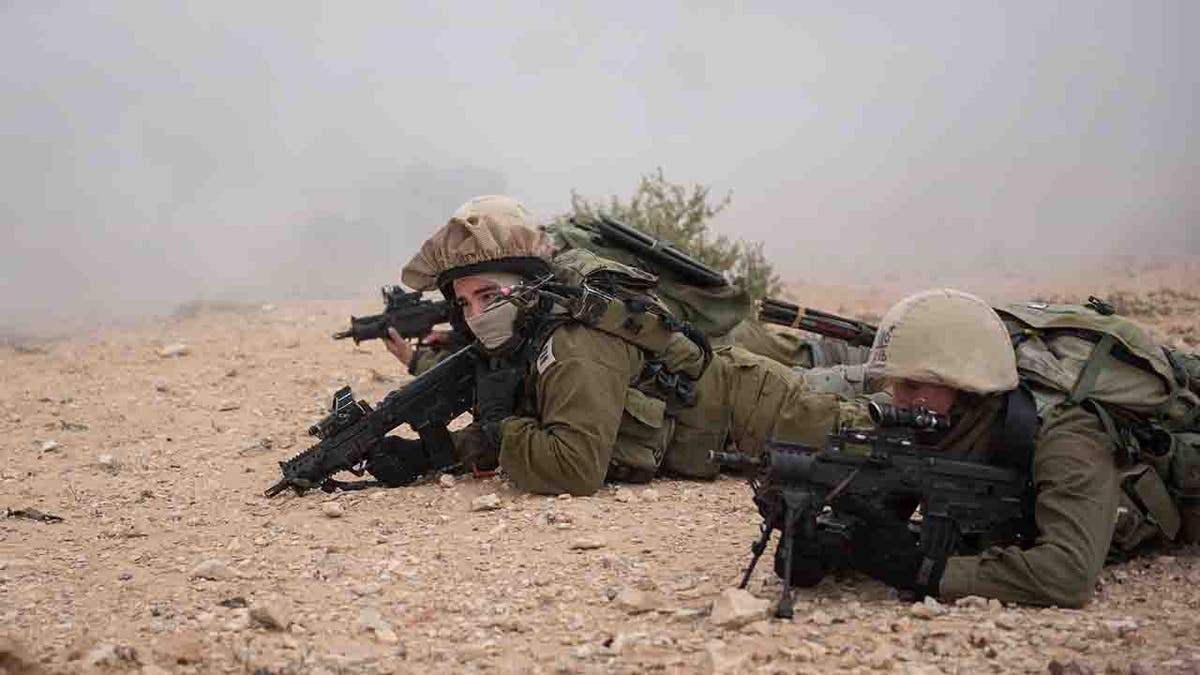
The dust in southern Lebanon has a specific weight. It clings to the wheel arches of white armored SUVs and settles in the fine creases of a polyester uniform. It is a silent witness to decades of fragmented peace. Near the village of Adchit Al-Qusayr, this dust recently mixed with something far more permanent than the exhaust of a passing patrol.
A single moment shattered the routine of a UNIFIL mission. One peacekeeper is dead. Another is fighting for breath in a hospital bed, the trajectory of their life forever altered by a sudden, violent calculation of geography and geopolitics.
To the world, this is a headline. A data point in a briefing. A "regrettable incident" mentioned in a press release from a sterile office in New York. But on the ground, the reality is a jagged piece of metal and the smell of burnt rubber.
The Geography of a Thin Blue Line
The road near Adchit Al-Qusayr isn’t just a strip of asphalt. It is a high-wire act. To the north, the rolling hills of Lebanon hide the complexities of a nation struggling to define its own sovereignty. To the south lies the most scrutinized border on the planet. Between them stands the United Nations Interim Force in Lebanon (UNIFIL).
Peacekeeping is often described as a "buffer." That word suggests something soft, like a pillow or a shock absorber. In reality, it is more like being the glass in a window during a hailstorm. You are there to provide transparency, to let the light through, and to be the first thing that breaks when the pressure becomes unbearable.
The peacekeepers involved in the recent tragedy weren't politicians. They were likely thinking about the heat, the rattling of the vehicle, or perhaps the family they left behind in a country thousands of miles away. They were wearing blue helmets—a color chosen because it doesn't belong to any flag, meant to signal "I am not your enemy."
In the modern theater of conflict, however, "not being an enemy" is no longer a guarantee of safety.
The Invisible Stakes of a Patrol
Why does a vehicle move through Adchit Al-Qusayr at all? It seems like a futile exercise in a region where tensions simmer just below the boiling point. Yet, the patrol is the heartbeat of international law.
Every kilometer covered by those white trucks is an assertion that the world is watching. When a patrol is struck, it isn't just a vehicle that is damaged. It is the very idea of international oversight that takes a hit. We are witnessing the erosion of the "neutral space."
Consider the hypothetical life of the survivor. They woke up in a barracks, drank a cup of coffee, and checked their gear. They followed a protocol designed to prevent war, only to find themselves the victims of one they weren't invited to fight. The "critically injured" label used in news reports masks a brutal recovery process—the surgeries, the phantom pains, the psychological weight of being the one who lived while a colleague did not.
This isn't a business of "synergy" or "holistic solutions." It is a business of meat and bone.
The Anatomy of an Incident
The details surrounding the strike remain under the heavy shroud of investigation. Was it a targeted hit? A case of mistaken identity? A stray round from a larger exchange? In the immediate aftermath, the why matters less to the people on the ground than the who.
The UNIFIL mission is composed of soldiers from dozens of nations. You might have an Indonesian driver, an Irish officer, and a Spanish medic all sharing a single cramped cabin. They are a microcosm of a global community that, on paper, agrees that stability is better than chaos.
When one of them dies, the ripple effect travels across oceans. A kitchen in a suburb of a far-off city suddenly becomes a place of mourning. A government has to explain to its citizens why their sons and daughters are dying in a village they can't find on a map.
The risk is baked into the job. But there is a difference between the risk of the profession and the reality of becoming a casualty in a conflict that is rapidly outgrowing the boundaries of its traditional rules.
Beyond the Buffer Zone
The strike near Adchit Al-Qusayr happens against a backdrop of escalating cross-border fire. The "Blue Line"—the withdrawal line established by the UN in 2000—is being crossed with increasing frequency. Missiles, drones, and artillery shells fly over the heads of the peacekeepers.
The UNIFIL mandate is to "restore international peace and security." It sounds noble. It sounds certain. But standing on a hillside in southern Lebanon, watching smoke rise from a distant ridge, you realize how fragile that mandate truly is. The peacekeepers have no power to stop a war; they only have the power to report on its arrival.
They are the world's early warning system. When they start dying, it means the system is failing.
The Human Cost of Observation
History tells us that when observers are targeted, the darkness follows.
During the 2006 Lebanon War, UN positions were hit, and the world recoiled. Today, the frequency of "incidents" is reaching a tempo that threatens to numb us. We see a headline about a killed peacekeeper and we move on to the next notification. We have developed a callus over our collective empathy.
But a callus is just dead skin. Underneath, the nerve endings are still raw.
The loss of life in Adchit Al-Qusayr is a reminder that there is no such thing as a "minor" escalation. For the family of the fallen peacekeeper, the escalation is total. It is the end of their world. For the injured soldier, the war will continue in the corridors of a hospital for months or years.
The stakes are not abstract. They are not "pivotal" or "paramount." They are human.
The Long Walk Back
We often assume that peace is the natural state of things and that war is the interruption. In southern Lebanon, it often feels like the reverse. Peace is the thing that requires constant, agonizing effort to maintain. It requires thousands of people in blue helmets to drive down dangerous roads, day after day, knowing they might not come back.
The tragedy near Adchit Al-Qusayr isn't just a story about a broken vehicle or a failed patrol. It is a story about the cost of trying to stand in the middle.
It is easy to pick a side. It is easy to cheer for a victory or demand a retaliation. It is much harder to be the person who stands between two fires, holding nothing but a clipboard and a mandate, hoping that your presence is enough to keep the flames apart.
The road continues past the village. The dust will settle again. Another white vehicle will eventually pass the spot where the strike occurred, its occupants looking out the windows with a bit more tension in their shoulders than they had the day before.
They will see the same hills, the same olive groves, and the same sun-baked earth. But they will also see the ghost of the man who didn't make it home. He is part of the landscape now. He is the price we pay for the hope that someone, somewhere, is still watching.
The blue helmet lies in the dirt, a small, circular defiance against the encroaching shadow.