The brutal 1982 knife attack on actress Theresa Saldana did more than just shock Hollywood. It established a grisly blueprint for the intersection of fame and psychosis that the industry still hasn't figured out how to dismantle. While the public often views these incidents as isolated bursts of madness, a closer look at the forensic history of celebrity stalking reveals a systemic failure in how we protect public figures and how the media commodifies their trauma. Saldana survived ten stab wounds outside her West Hollywood apartment, but the subsequent media circus and a bizarrely meta TV movie inadvertently fed the very obsession that nearly killed her.
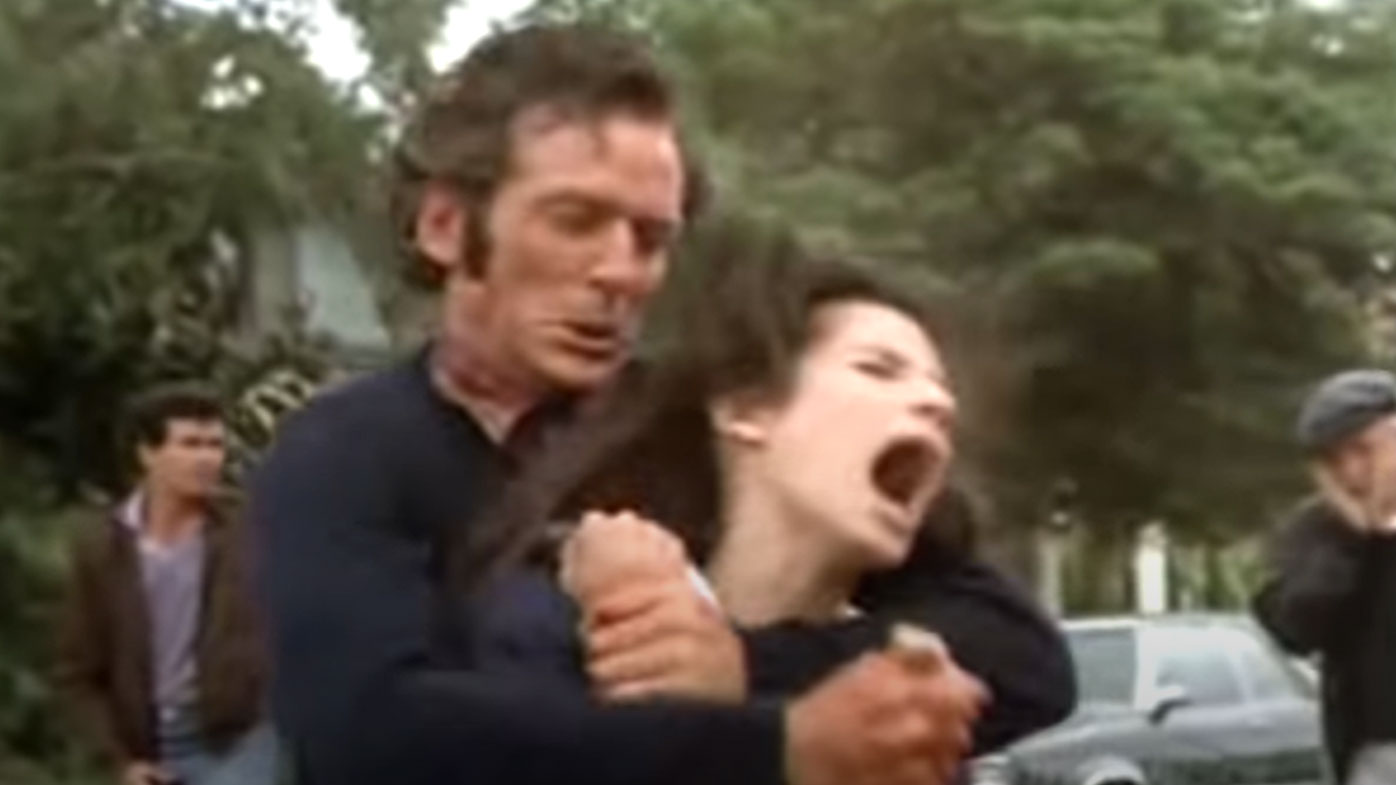
The problem with the Hollywood survival narrative is that it treats recovery as a script. When Saldana starred as herself in the 1984 television film Victims for Victims: The Theresa Saldana Story, it was hailed as an act of unprecedented bravery. It was. But it also provided her attacker, Arthur Richard Jackson, with a fresh loop of imagery to feed his fixation. This is the dark paradox of the victim-advocacy era. By turning her pain into a primetime event to help others, Saldana unwittingly gave her stalker exactly what he wanted: a permanent, televised connection to her life. Don't miss our recent post on this related article.
The Mechanic of the Fixation
To understand why this cycle repeats, you have to look at the profile of the "intimacy seeker" stalker. Arthur Jackson didn't just stumble upon Saldana. He saw her in Raging Bull and became convinced they were destined to be together. He tracked her down by hiring a private investigator who obtained her mother’s address from a DMV employee. It was that easy. This wasn't a crime of passion; it was a logistical operation.
Jackson’s behavior post-attack should have been a warning shot for the legal system. Even while incarcerated, he sent threatening letters, explicitly stating that he regretted not finishing the job. He was obsessed with the idea of a "divine union" through death. When the legal system finally faced the reality that Jackson would eventually be eligible for parole, it exposed a massive gap in stalking laws. At the time, "intent to kill" was often treated as a finite event rather than a persistent, evolving mental state. If you want more about the history here, The Hollywood Reporter provides an in-depth breakdown.
When Art Mimics Murder
The 1984 film was intended to be a tool for empowerment. Instead, it became a reference point for a new generation of obsessed fans. The industry has a habit of mining real-life tragedies for content before the blood is even dry on the pavement. This creates a feedback loop where the line between the performer and the performance vanishes.
Consider the 1989 murder of Rebecca Schaeffer. Her killer, Robert John Bardo, was reportedly influenced by the way Saldana’s case was handled. He saw that a stalker could achieve "fame" and a permanent place in an actress’s biography. Bardo used the same method as Jackson—hiring a private investigator to get home address records from the DMV. The industry watched Saldana almost die, watched her make a movie about it, and yet failed to lobby for the basic privacy protections that might have saved Schaeffer. It took a second body for the California legislature to finally pass the Driver's Privacy Protection Act.
The Professionalization of the Stalker
Modern stalking has moved from the physical shadows to the digital infrastructure. In the eighties, Jackson had to use a telephone and a private eye. Today, the tools are built into the platforms that celebrities use to build their "brands." Geotags, background clues in Instagram stories, and the constant demand for "authenticity" have turned every fan into a potential investigator.
The industry’s response has been to commodify the danger. Security firms now charge five-figure monthly retainers to scrub the internet of home addresses, yet the talent is simultaneously pressured by studios to be "accessible" on social media. It is a fundamental conflict of interest. The studio wants the engagement numbers that come from a star posting a "candid" photo from their kitchen, but the studio isn't the one standing in the kitchen when a stranger breaks through the back door.
The Myth of the Restraining Order
Law enforcement often presents the restraining order as a shield. In reality, for a truly committed stalker, it is a souvenir. It is a legal document that proves the celebrity knows they exist. It validates the connection.
We see this repeatedly in the cases of stars like Sandra Bullock or Christina Grimmie. The protective order is a piece of paper that works against the rational, but the "intimacy seeker" is rarely rational. They view the legal barrier as a challenge, a test of their devotion. The industry continues to rely on these outdated legal maneuvers because they are cheaper than providing 24/7 executive protection for every working actor on a mid-tier series.
The Psychological Toll of the Meta Narrative
Saldana’s decision to play herself was a double-edged sword that the industry has never fully reconciled. On one hand, she founded Victims for Victims, which was instrumental in passing anti-stalking legislation. On the other, the act of re-enacting her own stabbing for a camera crew is a form of psychological labor that few can comprehend.
The "victim-star" becomes a character in their own life. Every interview becomes about the trauma. Every role is filtered through the lens of the "survivor." This prevents the artist from ever truly moving past the event. The industry rewards this "bravery" with Emmys and high ratings, but it rarely accounts for the fact that this keeps the stalker’s narrative alive. The stalker becomes the co-author of the celebrity’s public identity.
The Failure of the "Inspired By" Industry
Television movies and true crime podcasts often claim to "raise awareness." Usually, they just raise ad revenue. When a production company decides to dramatize a stalking case, they are rarely interested in the mundane, grueling reality of security protocols or the long-term effects of hyper-vigilance. They want the jump scare. They want the moment of the attack.
This focus on the climax of the violence ignores the years of "pre-attack" behavior that the industry is still terrible at spotting. Studios often ignore "difficult" fans at stage doors or weird messages sent to official accounts until a physical breach occurs. They treat security as a reactive cost rather than a proactive necessity. The "inspired by" content actually sanitizes the horror, making it look like a narrative arc with a clean resolution. In the real world, there is no resolution. There is only a lifetime of looking over your shoulder.
The Cost of Access
The price of fame used to be a lack of privacy in public spaces. Now, the price is the total surrender of the private sphere. We have created an environment where fans feel entitled to the real-time location and emotional state of their favorite performers. When a celebrity pushes back, they are often labeled as "ungrateful" or "divas."
This entitlement is the soil in which stalking grows. If a fan spends 18 hours a day interacting with a celebrity's digital persona, the leap to physical interaction feels smaller and more justified in their mind. The industry’s refusal to set hard boundaries on digital access is a direct contributor to the physical danger stars face today.
Structural Changes Over Symbolic Gestures
If the industry actually wanted to stop the next Theresa Saldana or Rebecca Schaeffer situation, it would stop producing "trauma-porn" and start funding a centralized, industry-wide security clearinghouse. We need more than just laws that change after someone dies. We need a fundamental shift in how talent contracts are written, ensuring that security is as standard as craft services.
The current model relies on the individual to protect themselves. This is a staggering abdication of responsibility by the agencies and studios that reap the rewards of the "star system." They build the pedestal, but they leave the person standing on it to defend it alone.
Theresa Saldana's legacy shouldn't just be a TV movie or a foundation. It should be a reminder that the industry’s fascination with "the obsessed fan" is a lucrative, dangerous game where the artist is the only one with everything to lose. The patterns are clear, the history is written in blood, and the tools for prevention exist. The only thing missing is the will to prioritize a human life over a promotional cycle.
If you are an industry professional or an aspiring talent, start by auditing your digital footprint and demanding that your representation provide a comprehensive security assessment that goes beyond a standard background check.