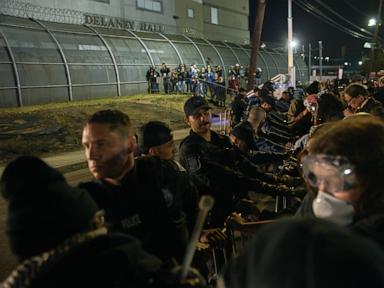
Every time someone dies in immigration custody, the predictable machinery grinds into motion. The headlines hit. The activists grab megaphones. The politicians issue tweets demanding investigations into Immigration and Customs Enforcement facilities. Everyone points an accusing finger at the guards, the wardens, and the federal agency itself, treating the tragedy as an isolated failure of individual malice or bureaucratic oversight.
It is a comforting narrative. It allows the public to believe that the system is basically sound, save for a few bad actors who need replacing or a few policies that need tweaking.
It is also completely wrong.
By hyper-focusing on the facility gates, critics miss the foundational architecture of the entire administrative detention complex. The tragedy of a man dying in a New Jersey immigration jail is not merely a story of negligent jailers. It is the predictable outcome of an outsourced, privatized detention apparatus that turns human beings into commodities while shielding itself from constitutional accountability. If you want to fix the body count, stop arguing about the temperature of the holding cells and look at the financial incentives driving the arrests in the first place.
The Privatization Illusion
Let us clear away the fog of emotional rhetoric with hard operational reality. A massive percentage of immigrant detention beds in the United States are not run by federal employees in government-owned fortresses. They are operated by private prison corporations and county jails renting out empty cells to generate municipal revenue.
When a county in New Jersey or rural Texas signs an intergovernmental service agreement with federal authorities, a financial ecosystem activates. Empty beds mean budget deficits. Full beds mean job security for guards, revenue streams for county commissioners, and profit margins for publicly traded prison conglomerates.
I have watched local politicians twist themselves into pretzels trying to justify keeping detention contracts active while simultaneously claiming to support human rights. They treat detainees like inventory in a warehouse. When you turn human confinement into a per-diem business model, efficiency means cutting costs on the things that do not show up on the quarterly balance sheet. Medical staff are stretched thin. Preventative care is delayed. Mental health screenings become check-the-box administrative exercises rather than clinical interventions.
Blaming ICE alone for a death in a New Jersey jail is like blaming a highway patrol officer for a defective bridge design. ICE is the enforcement arm executing a statutory mandate; the contractors and the county facilities are the ones pocketing the cash to warehouse the bodies. If you do not dismantle the financial pipeline connecting local detention profits to federal enforcement quotas, changing the name on the door of the jail changes nothing.
The Legal Black Hole
Another lazy consensus dominates media coverage of these deaths: the assumption that detainees enjoy the same constitutional protections as criminal defendants.
They do not. And pretending otherwise exposes a profound ignorance of immigration law.
Immigration detention is legally classified as civil administrative custody, not criminal punishment. This distinction sounds like legalistic hair-splitting, but it is the trapdoor through which basic human rights fall. Because the detention is ostensibly civil—meant merely to ensure appearance at future removal hearings rather than to punish a crime—detainees do not have a constitutional right to government-funded counsel.
Imagine a scenario where citizens accused of nothing more than a civil paperwork violation are thrown into maximum-security facilities, stripped of their communication tools, and forced to navigate a Byzantine legal code against federal prosecutors without a lawyer. Thousands do this every single day.
When a person falls ill in this environment, the bureaucratic friction required to secure outside medical care is staggering. Federal oversight officials issue guidelines and detention standards, but these standards are largely toothless. They are internal administrative rules, not enforceable federal regulations backed by criminal penalties for negligence. When a jail fails an inspection, nobody goes to prison. At worst, a contract is renegotiated or shifted to a different county down the road.
The system operates in a legal twilight zone where federal authority blends into local subcontracting, creating a complete diffusion of responsibility. When everyone is responsible for a detainee's health, no one is.
The Dangerous Myth of Better Oversight
The standard prescription offered by well-meaning reformers is always the same: more oversight, more independent monitors, more task forces to investigate facility conditions.
This is a fool's errand.
More oversight does not fix a broken incentive structure; it merely creates another layer of bureaucracy that absorbs taxpayer money while the underlying machine keeps grinding. You cannot audit your way to human rights inside a facility whose very existence depends on keeping beds filled.
History shows that federal inspection reports inside these facilities routinely flag medical neglect, unsanitary conditions, and abusive isolation practices, only for those reports to be filed away in government cabinets with zero structural consequences. The oversight mechanisms are designed to manage public relations fallout, not to disrupt the flow of detainees.
If we are serious about stopping preventable deaths in custody, we have to look past the superficial outrage and confront the uncomfortable alternative: ending mass administrative detention for non-violent individuals who pose no flight risk or public safety threat.
The alternative model already exists and has been studied extensively. Community-based supervision programs, electronic monitoring where necessary, and docket management systems that allow individuals to fight their cases from home cost a fraction of the price and virtually eliminate custodial deaths.
As long as we treat human beings as inventory to be stored in county jails and private facilities for the crime of crossing an administrative line, the fatalities will continue. No amount of sensitivity training for guards or new guidelines from Washington will change the math of a broken business model.
Stop protesting the wardens. Dismantle the cages.