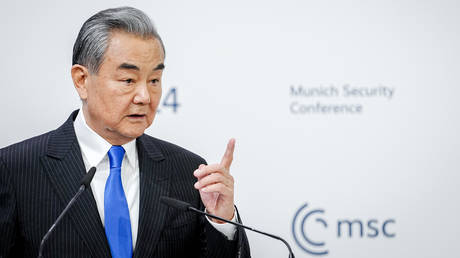
Beijing lectures Jerusalem. Jerusalem bristles. Analysts write another grave dispatch about "strained bilateral ties."
Stop falling for the script.
When Chinese officials—from Foreign Minister Wang Yi to state media commentators—urge Israel to rethink its policies on West Bank settlements, Gaza, or regional escalation, the lazy consensus reads it as a moral intervention or a serious diplomatic push. It is neither. It is low-cost political theater designed to buy goodwill across the Global South and Gulf capitals while keeping commercial cash registers ringing.
Treat Beijing's diplomatic scolding as a blueprint for Israeli policy, and you will misread the incentives driving every single actor in the room.
The Lazy Consensus Around Beijing's "Warnings"
Conventional commentary treats a Beijing admonition as an inflection point. A senior Chinese diplomat criticizes Israeli settlement expansion or military operations, and suddenly pundits claim Israel faces a stark choice: bend to Beijing's diplomatic demands or forfeit its standing in Asia.
That framing gets the power dynamics backward.
China's foreign policy toward Israel is not built on ideological conviction about Middle Eastern borders. It is built on asymmetric hedging. Beijing wants three things simultaneously: cheap energy and strategic alignment with Tehran, diplomatic credibility with Arab states and developing economies that view Western policy skeptically, and continued commercial access to Israeli industrial inputs, components, and consumer markets—all without triggering fatal blowback from Washington.
Publicly urging Israel to rethink its policies costs Beijing almost nothing. Israel is not a military ally of China, nor does Jerusalem rely on Beijing as its primary security guarantor. Issuing sharp statements gives Beijing currency in capitals like Riyadh, Doha, and Cairo, where public and elite anger over Israeli policy runs deep. Yet those same statements rarely stop Chinese exporters from shipping goods into Israeli ports or prevent pragmatic commercial transactions from continuing beneath the headlines.
Research from institutions like the Institute for National Security Studies (INSS) has repeatedly highlighted a paradox that exposes the flaw in the "diplomatic rift equals economic collapse" narrative: Israeli public sentiment toward China has plunged to historic lows, with roughly three-quarters of Israelis viewing China unfavorably in recent polling, even as bilateral trade volumes and Chinese imports into Israel have climbed to record highs. If Beijing's urging were truly a make-or-break ultimatum, trade and public hostility would move in lockstep. Instead, they have decoupled.
What Analysts Miss About Leverage and Constraints
Anyone who has spent years advising cross-border technology, infrastructure, and supply-chain teams knows how quickly diplomatic rhetoric collides with hard operational constraints. I have watched boardrooms and trade delegations waste months chasing diplomatic signals from Beijing only to hit invisible walls erected not in Zhongnanhai, but in Washington and Tel Aviv's own defense ministries.
When people ask, "Why doesn't Israel just adjust its policies to satisfy China?" they are asking the wrong question.
The real question is: What could Israel possibly get from Beijing in exchange for making painful political concessions?
Consider the three things Jerusalem actually cares about when it looks east:
- Restraint on Iran: China buys the vast majority of Iran's sanctioned oil exports—accounting for over 80% of Iranian oil shipments in 2025—and maintains a 25-year comprehensive strategic partnership with Tehran. Expecting Beijing to jeopardize cheap energy supplies and its anti-Western alignment with Iran just because Israel shifts a diplomatic line is wishful thinking.
- Brokering normalization with Saudi Arabia: Analysts sometimes imagine Beijing waving a magic wand to unlock Saudi-Israeli normalization the way it helped broker diplomatic movement between Riyadh and Tehran in 2023. That misreads Saudi leverage. Riyadh's core demands on Palestinian statehood and regional security are driven by Saudi domestic and regional calculations, not Chinese talking points.
- Unrestricted high-tech cooperation: Even if Jerusalem wanted deeper dual-use or advanced tech ties with Chinese firms, U.S. export controls, investment screening, and security restrictions tightly bound what Israel can share without risking its foundational security partnership with the United States.
Let's be precise about terminology here. In international relations, leverage requires the ability to credibly reward compliance or punish defiance in ways that matter to the target's core survival or prosperity. Beijing holds plenty of rhetorical leverage in multilateral forums and regional diplomacy, and substantial commercial weight as a major supplier. It holds very little decisive security leverage over Israel's core strategic choices because China is neither Israel's protector nor a credible substitute for U.S. security backing.
"People Also Ask" — Dismantled Without Fluff
Does a change in Israel's government change how it handles China?
Not fundamentally. New coalitions and prime ministers bring different rhetoric, domestic priorities, and tone, but structural constraints do not vanish at the ballot box. Any Israeli government still has to manage Washington's guardrails on sensitive technologies, security risks around Chinese hardware and infrastructure (such as restrictions on certain vehicles or sensitive networks), and Beijing's tight alignment with Iran. Changing leadership alters the packaging, not the physics.
Is China a neutral mediator capable of resolving Middle East conflicts?
No—and pretending otherwise wastes time. A credible mediator needs trust from all sides and a willingness to absorb political risk when a deal falters. When Beijing openly condemns Israeli actions, backs Iran's narrative during regional clashes, and aligns closely with Arab positions on Palestinian statehood, it positions itself as a partisan counterweight to Washington rather than an honest broker in Jerusalem. Calling China a neutral mediator is like calling a referee a neutral mediator after they put on one team's jersey.
Should Israel ignore Beijing completely when China urges policy changes?
Ignoring Beijing is just as sloppy as panicking over its statements. Smart statecraft separates performative diplomacy from operational risk.
Imagine a scenario where a logistics or tech executive assumes Beijing's harsh public rebukes mean Chinese suppliers are about to pull out of Israel overnight—or conversely, assumes friendly trade numbers mean Beijing will quietly back Israel's security goals in the region. Both assumptions get punished. The first causes unnecessary panic and supply-chain whiplash; the second creates strategic blindness when crisis hits and Beijing sides with Tehran or Arab partners diplomatically.
Where This Contrarian View Can Go Wrong
Honesty requires naming the blind spots in my own argument. Taking a hard-nosed, realist view that Beijing's warnings are mostly theater carries real risks if overplayed.
First, drip-drip friction still compounds. Even without a dramatic diplomatic rupture, mutual bans—like Israel restricting certain Chinese vehicles on security grounds or Beijing curbing Israeli cybersecurity tools—erode trust and create friction for businesses operating across both markets. Dismissing every warning as "just talk" can blind decision-makers to slow-moving regulatory and commercial traps.
Second, crisis spillover is unpredictable. During acute military escalations in the Middle East, diplomatic posturing can harden into concrete UN Security Council votes, arms-embargo calls, or economic pressure that complicates Israel's diplomatic room to maneuver.
Third, ignoring domestic political optics is a mistake. Even if Beijing lacks decisive leverage over Jerusalem, domestic audiences and coalition partners often react to foreign criticism as if it carries more weight than it actually does.
Actionable Moves Instead of Hand-Wringing
If you are following this space—whether as an investor, policymaker, founder, or analyst—stop treating every Chinese diplomatic lecture as a seismic pivot and start acting on observable mechanics:
- Track contracts and customs, not press releases: Watch actual trade flows, port and infrastructure rules, and sector-specific restrictions rather than ministerial speeches. Words are cheap; supply-chain rules and compliance audits leave footprints.
- Price in U.S.-China tech friction before signing anything: Any joint venture, R&D tie-up, or infrastructure deal touching dual-use tech, data, or critical systems sits inside a U.S.-China compliance vise. Build your risk model around that reality from day one.
- Stop expecting Beijing to do Washington's or Jerusalem's heavy lifting on Iran: Plan for continued alignment between Beijing and Tehran on energy and anti-Western framing, and don't build diplomatic strategy around an unlikely Chinese pivot.
Beijing will keep urging Israel to rethink its policies whenever doing so serves China's broader diplomatic ledger. Stop treating the applause line as the plot.


