Silence.
That is the thing nobody tells you about watching a 232-foot stainless-steel skyscraper fall out of the sky—not the roar of the engines, which hits your chest like a physical blow seconds later, but the terrifying, suspended quiet right before the decision is made.
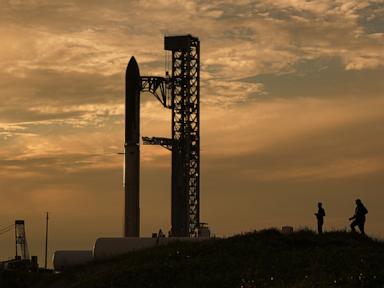
If you have ever stood on the damp sand of South Padre Island before dawn, watching the mist burn off the Laguna Madre while two miles away a tower of steel waits in the dark, you know the feeling. Your coffee goes cold in your hand. Your throat tightens. You are watching humans attempt something that, on paper, reads like sheer madness. They are trying to catch a falling rocket out of midair using two giant mechanical arms nicknamed Mechazilla.
And then, right when the world holds its breath for the catch, the tower says no.
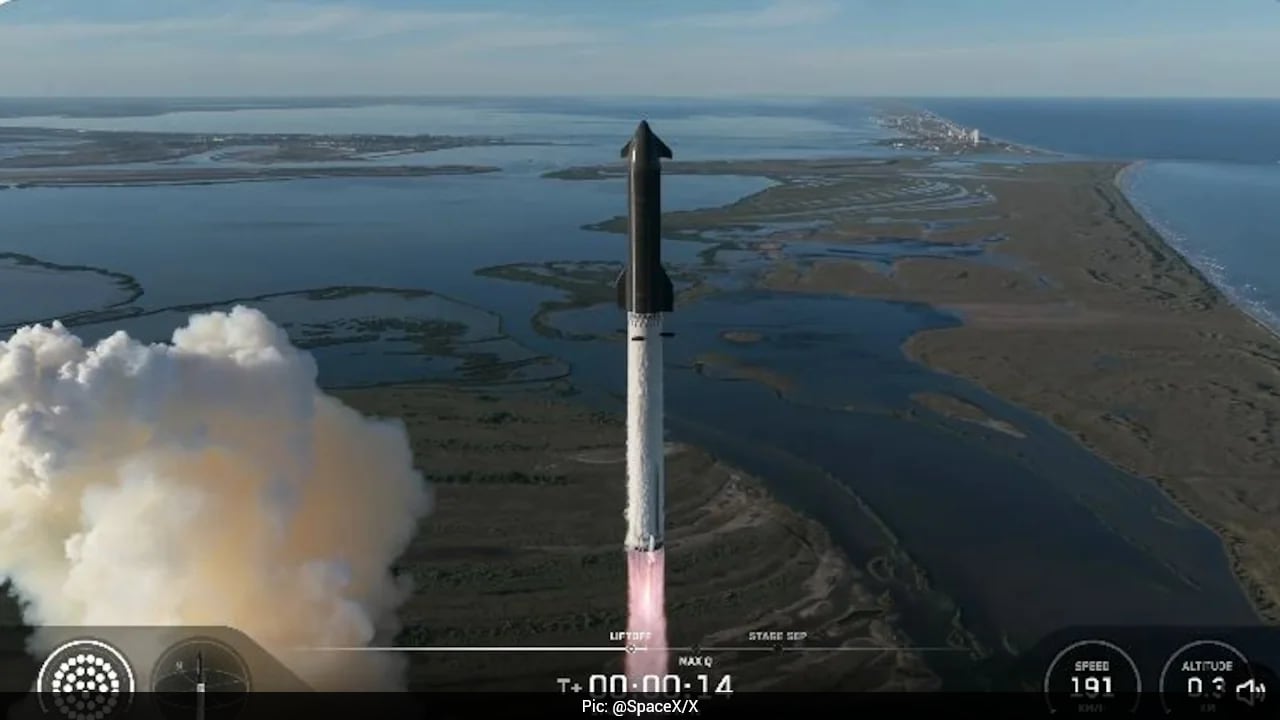
When news broke that SpaceX aborted a Starship booster recovery due to a technical issue, the standard headlines treated it like a stumble. Dry, clinical reports rolled off the wires: Launch successful, catch attempt called off, booster diverted to a controlled splashdown in the Gulf of Mexico. To a casual reader skimming a feed over breakfast, an abort sounds like a failure. A glitch. A plan gone wrong.
They have it completely backward.
In the high-wire mathematics of orbital rocketry, that split-second decision to walk away from the tower wasn't a defeat. It was proof that the machine had finally learned how to protect itself—and the dream it carries.
The Weight of a Split Second
To understand why an aborted catch matters so much, consider a hypothetical flight controller—let’s call her Elena—sitting in the dim glow of a telemetry console at Starbase in Boca Chica, Texas.
Elena isn't looking out a window. She is staring at a waterfall of green and amber numbers streaming across four monitors at sixty frames a second. Above her, the Super Heavy booster—an empty steel cylinder roughly twenty stories tall, weighing over two hundred metric tons even without fuel—is plunging back through the upper atmosphere at supersonic speed.
Inside that falling tube, thirty-three Raptor engines are cooling down after throwing the upper-stage Starship toward orbit. Now, only a handful of those engines need to relight, steer the falling giant through howling coastal crosswinds, and thread a needle so small it defies common sense. The booster must align its tiny load-bearing pins with two steel chopsticks mounted on a 480-foot launch tower, decelerating to a dead hover at the exact millimeter where the arms can snap shut.
Think of it like trying to throw a pencil across a football stadium during a thunderstorm so that it lands upright inside a thimble—except the pencil weighs as much as a commercial airliner and is carrying residual pockets of cryogenic methane and liquid oxygen.
For Elena, there is no button marked "Try Anyway." During the descent, automated health checks run continuously across thousands of sensors. Valve pressures, hydraulic actuator responses, communications links between the falling rocket and the launch tower—every single parameter has to stay inside a razor-thin corridor of green.
If a single sensor on the tower loses a heartbeat of data, or if a pressure reading in a propellant manifold drifts by a fraction of a percent, the software doesn't panic, and it doesn't gamble. It executes a pre-programmed abort criteria check. Instantly, the flight computer nudges the booster’s trajectory a few miles east, trading a dramatic tower catch for a controlled, soft splashdown in the open waters of the Gulf of Mexico.
And just like that, the show is canceled. The crowds on the beach groan. The headlines write themselves.
Why Spaceflight Used to Fear the Abort
We are conditioned to view aborts as bad news because, for decades, an abort in spaceflight meant something had gone horribly wrong—and often meant losing everything.
Look back at the history of the Space Shuttle, or the early days of the Mercury and Apollo programs. Every flight was a bespoke, hand-built miracle costing hundreds of millions of dollars. When an engine shut down early or a guidance computer threw an error code, careers hung in the balance. Engineers sweated through shirts in Houston because there was no second attempt next month. A scrubbed launch delayed science by seasons; an in-flight anomaly meant tearing down hardware and spending two years writing congressional reports.
Even in the early 2010s, when SpaceX first started landing Falcon 9 first-stage boosters on autonomous drone ships in the Atlantic, the public struggled to understand the rhythm of iterative engineering. We still have the mental scars of those early highlight reels—boosters tipping over on deck, bursting into orange fireballs against gray ocean swells. People laughed at the explosions, missing the quiet miracle happening right before impact: a rocket had just navigated from the edge of space back to a floating target the size of a football field.
Today, Falcon 9 landings are so routine they barely make the evening news. Watching a booster drop out of the clouds onto Cape Canaveral feels almost as mundane as watching a regional jet touch down at an airport.
Starship, however, is a completely different beast.
Falcon 9 uses folding landing legs—heavy, complex pieces of carbon-fiber hardware that ride all the way up to space and back down, eating into the payload mass the rocket can carry. To make spaceflight truly airline-like—to launch multiple times a day rather than a few times a month—Elon Musk and his engineering teams made a radical bet. They stripped the legs off the rocket entirely. They put the landing gear on the ground.
By catching the Super Heavy booster directly on the launch mount, SpaceX eliminates the weight of landing legs and sets the stage to inspect, restack, and refuel the vehicle right where it stands. No barge towing it back to port for three days. No cranes lifting it onto horizontal transporters. Just catch, check, fuel, and fly.
That ambition changes the stakes of every single test flight. When your landing pad is also your multi-million-dollar launch tower—covered in delicate propellant lines, massive hydraulic pistons, and thousands of feet of sensor wiring—a bad landing doesn't just cost you a rocket. It wipes out your ability to launch for six months.
The Invisible Victory in the Gulf
Here is the truth that gets buried beneath the sensationalism of space coverage: the ocean is a safety net, and hitting it softly is still an astonishing feat of aerospace engineering.
When the Super Heavy booster aborted its tower return and aimed for the water, it did not simply fall out of control like a spent firework. It flew the entire reentry profile. It survived the searing plasma of atmospheric friction. It executed its landing burn over the waves, slowing from thousands of miles an hour to a gentle hover just above the whitecaps before tipping over into the sea.
As a metaphor, think of a trapeze artist who leaps across the big top, senses the slightest tremor in the catcher’s wrists, and seamlessly tucks into a clean drop onto the safety net below instead of risking a shattered collarbone. Nobody in the circus tent calls that trapeze artist incompetent. You applaud the reflexes that kept everyone alive for the next show.
Yet when a rocket does the exact same thing, we instinctively look for blame. What broke? Whose fault was it? Is the program behind schedule?
I remember watching a launch test years ago in Texas, standing alongside a retired aerospace machinist who had worked on the Saturn V program in the late sixties. As we watched a prototype vehicle vent white clouds of liquid oxygen against a bruised twilight sky, the test suddenly scrubbed at T-minus three seconds. The crowd around us sighed in collective frustration. People started packing up their folding chairs and complaining about the drive back to Brownsville.
The old machinist didn't move. He stood with his hands in his pockets, smiling faintly at the silent rocket on the pad.
"You know what just happened?" he asked me over the sound of the wind. "Fifty years ago, we wouldn't have caught that valve lag until the engine tore itself apart ten seconds after liftoff. That computer just saved thirty people six months of night shifts."
That perspective stays with me every time a scrub or a trajectory abort flashes across a livestream screen. In hardware-rich development, flying is the easy part. Knowing when not to commit—building a nervous system sensitive enough to spot a whisper of trouble at Mach 4 and disciplined enough to bail out safely—is the hardest engineering problem on earth.
What Actually Happens When the Tower Says No
Let's strip away the mystery of what "technical issue" actually means in the context of a Starship catch. People hear those words and picture bolts shearing off or engines exploding. Usually, the reality is far quieter and infinitely more mundane.
To clear the booster for a tower catch, two completely independent systems have to agree on reality: the rocket in the sky and the tower on the ground.
First, the booster itself has to verify its own health. After enduring the violent acoustic vibration of thirty-three engines firing at liftoff and the brutal aerodynamic forces of stage separation—where the upper Starship ignites its engines while still attached to the booster, blasting the top of the lower stage with superheated exhaust—the booster has to confirm that its grid fins can steer, its attitude control thrusters have enough gas, and its central engines can gimbal smoothly.
Second, the launch tower—Mechazilla—has to confirm it is ready to receive a 200-ton projectile. The tower’s massive steel arms have to swing open to the exact angle, hydraulic dampeners have to be pressurized to absorb the kinetic shock of the catch, and the communication links between the ground computers and the flight vehicle have to be rock-solid.
Notice how high the bar is set. The catch isn't the default setting; the splashdown is.
By default, every returning Super Heavy booster is aimed at a safe patch of open water offshore. Only in the final minutes of flight, if and only if hundreds of automated criteria are satisfied simultaneously—and if a human flight director gives the final manual command—does the booster shift its aim point onto land and target the tower.
If a single sensor drops out, if a communication packet arrives a few milliseconds late, or if a ground valve doesn't confirm its position, the default stays locked in. The rocket simply keeps flying toward the water.
When you realize that the splashdown is the baseline and the catch is an earned privilege, the entire narrative flips. SpaceX didn't fail to catch the booster; the booster simply declined to take an unverified risk with a one-of-a-kind launch tower.
The Human Toll of Relentless Iteration
Of course, knowing the logic doesn't make the moment any less exhausting for the people building the hardware.
Behind every sleek broadcast graphic and crisp telemetry readout are hundreds of technicians, welders, avionics engineers, and software developers working rotating shifts in the relentless humidity of the Texas coast. Spaceflight is romantic from a distance, but up close it smells like hydraulic fluid, diesel generators, and salt air. It looks like missed birthdays, cold takeout eaten beside cleanroom benches, and the quiet dread of watching two years of your life’s work plummet toward the Gulf at twilight.
There is a real, undeniable tension inside this style of engineering. Move too cautiously, and you become paralyzed by bureaucracy, spending billions of dollars on paper studies while your rockets never leave the drawing board. Move too fast without ironclad automated safeguards, and one bad landing turns your launch complex into a twisted pile of scrap metal, setting human spaceflight back by years.
Admitting that uncertainty is part of being honest about where we are right now. Nobody—not even the brightest propulsion engineers at Starbase—knows with absolute certainty how many flights it will take before catching a twenty-story booster feels as routine as landing a commercial airliner. Every flight uncovers new physics: unexpected thermal loads on the engine bells, subtle acoustic vibrations in the propellant tanks, or tiny discrepancies between wind-tunnel simulations and the messy reality of coastal weather.
That is why the abort criteria exist. They are the guardrail that allows human beings to push right up to the edge of the impossible without falling over the cliff.
Looking Beyond the Splash
We are living through a strange inflection point in human history. For half a century, going to space meant throwing away our spaceships. Every launch was an act of controlled destruction—burning up millions of dollars of precision-machined titanium and aluminum in the atmosphere like single-use paper cups. You could never build a civilization in orbit, much less reach the Moon or Mars, with a transportation system where you had to rebuild the vehicle from scratch after every single trip.
The entire purpose of Starship—and the audacious idea of catching its booster out of thin air—is to break that curse. It is an attempt to turn spaceflight from an elite, government-funded spectacle into a durable, repeatable utility.
And utilities aren't built on lucky guesses. They are built on boring, uncompromising discipline. They are built on the willingness to look at a multi-million-dollar rocket screaming back from the edge of space, notice a tiny discrepancy in the data, and calmly steer it into the ocean instead of gambling with the future.
Picture that booster in the final seconds of its aborted flight.
High above the Gulf of Mexico, the coastal horizon curves gently into twilight. Beneath the falling cylinder of stainless steel, three Raptor engines roar to life, painting a blinding circle of turquoise fire onto the dark water. Steam erupts into the evening air as the rocket slows to a dead stop, hovering effortlessly over the swells before settling gently onto its side, safe and accounted for, miles away from any harm.
Onshore, the launch tower stands completely untouched—its massive steel arms waiting patiently in the dark for the next ship to come home.