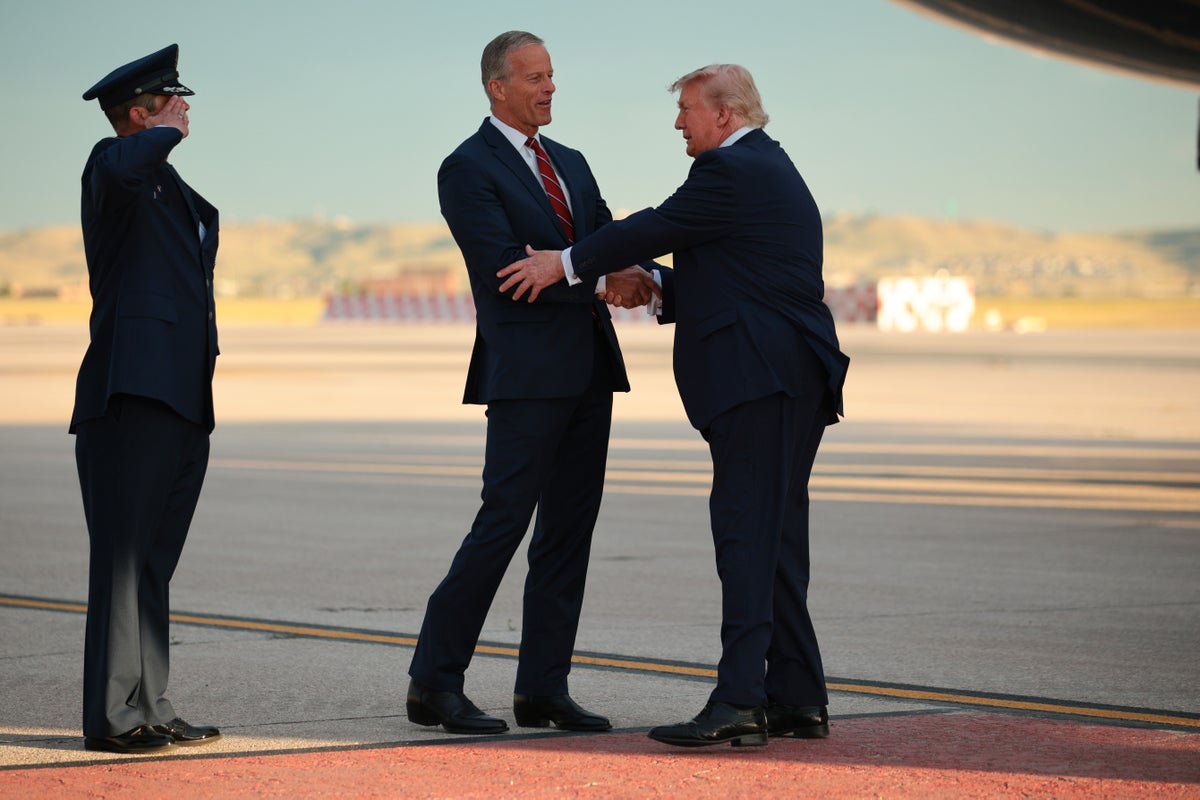
The legislative calendar is rarely a matter of life and death, yet Washington has managed to turn a routine summer recess into an existential high-stakes showdown. Former President Donald Trump recently issued a stark ultimatum to Republican leadership in the Senate: stay in Washington, deny the traditional August break, and force a vote on strict voter identification legislation. The rhetoric was characteristically blunt, framing the refusal to cancel vacation in terms of catastrophic political collapse. Beneath the hyperbole lies a strategic confrontation over election administration, legislative leverage, and the internal mechanics of a divided Congress that refuses to yield.
When political figures demand the cancellation of congressional recesses, the underlying motive is rarely just about calendar management. It is about control. The Republican push for nationwide voter identification mandates through federal statute has been a long-standing conservative priority, but executing it through a hostile or narrowly divided Senate requires extraordinary pressure. By tying the issue directly to the summer break, party strategists are creating a binary choice for lawmakers. They can either stay in the capital and fight for an issue base voters demand, or pack their bags for home districts and face primary challengers armed with accusations of legislative dereliction.
Understanding why this conflict matters requires examining the structural realities of how federal elections are administered in the United States. Under the Constitution, the authority to regulate the times, places, and manner of holding elections rests primarily with the states, though Congress retains ultimate supervisory power. For decades, federal intervention in voting laws was largely confined to civil rights protections, such as the Voting Rights Act of 1965. Proposing a federal mandate that requires specific forms of government-issued photo identification for every federal election represents a fundamental shift in this power dynamic. It federalizes a domain traditionally guarded jealously by state legislatures, creating a massive constitutional friction point that few senators are eager to litigate during a standard committee hearing.
The logistical hurdle facing any push for a federal voter ID law in the Senate is the legislative filibuster. With the upper chamber divided so closely, assembling the sixty votes required to overcome a procedural block is an arithmetic impossibility without substantial bipartisan defections. Democrats control the chamber and view federalized identification requirements as an unnecessary barrier to ballot access, designed primarily to depress turnout among low-income, minority, and transient populations. They point to existing state-level verification methods as sufficient, arguing that strict requirements solve a problem that independent studies show is statistically negligible.
Because sixty votes do not exist for this measure, any demand that the Senate stay in session until it passes runs straight into a brick wall of procedural reality. Votes do not magically materialize because senators miss their flights. The math remains stubborn. Leadership knows this, which makes the insistence on a showdown all the more fascinating. This is not about passing a bill into law this week. It is about positioning, narrative control, and signaling loyalty to a restless primary electorate that expects total combativeness from its representatives.
The public debate surrounding voter identification frequently suffers from a lack of empirical grounding, with both sides retreating into predictable talking points. Proponents argue that basic security measures are common sense, noting that identification is required for boarding airplanes, cashing checks, and entering federal buildings. They contend that public confidence in election outcomes depends entirely on the verifiable identity of every voter. If a citizen must prove who they are to participate in modern civic life, requiring the same standard at the ballot box is presented as a minor administrative hurdle rather than an infringement.
Opponents counter that the comparison to other daily activities is fundamentally flawed because voting is a constitutional right rather than a commercial transaction. They marshal research indicating that obtaining secure government-issued photo identification can involve costs, travel burdens, and documentation hurdles that disproportionately impact marginalized communities. For a voter who lacks a driver's license or birth certificate, acquiring the necessary paperwork can turn into a bureaucratic obstacle course. When the state imposes costs on the exercise of a fundamental right, critics argue, it runs afoul of foundational democratic principles.
The intersection of these ideological battles with the congressional schedule creates a volatile mix. Lawmakers value their August recess for reasons that go beyond leisure, though constituents rarely believe it. The recess period is designed for retail politics, town hall meetings, and direct engagement with voters away from the insular bubble of Capitol Hill. For a vulnerable incumbent facing a tough re-election campaign, spending August in Washington while opponents campaign back home can feel like a slow-motion political execution. Conversely, staying away from Washington while party leadership demands action on a core ideological priority hands ammunition to primary opponents who can paint the absentee lawmaker as weak or out of touch.
The pressure campaign directed at the Senate also reflects a broader evolution in how legislative bodies operate under modern media ecosystems. Traditional legislating relied on quiet compromises, committee markups, and gradual consensus-building behind closed doors. Today's legislative battles are conducted in real-time across digital platforms, where speed and emotional resonance outweigh painstaking policy drafting. A demand to cancel a vacation makes for an effective digital rallying cry because it simplifies a complex institutional stalemate into a personal test of courage and loyalty.
This environment alters the incentive structures for elected officials. The rewards for bipartisan cooperation have shrunk dramatically, while the penalties for appearing to compromise with the opposition have never been higher. When a party leader frames an administrative schedule as a moral test, individual senators find themselves with very little room to maneuver. To deviate from the prescribed script is to invite an immediate backlash from party activists and digital commentators who monitor every procedural vote for signs of betrayal.
As the debate over congressional calendars and election laws continues to simmer, the underlying structural questions remain entirely unresolved. Whether Congress possesses the constitutional appetite to fundamentally reshape American election administration through federal mandates is a debate that will outlive any single summer recess. The clash between security and access is not a problem with a neat, permanent solution; it is a permanent tension built into the American constitutional experiment.
The immediate fallout from these high-stakes ultimatums is rarely a sudden shift in legislative outcomes. Instead, it serves to harden existing divides, mobilize dedicated partisans on both sides, and further diminish the institutional patience required for traditional governance. The Senate may eventually adjourn for the summer, or it may grind through a series of symbolic votes that change not a single vote count. Either way, the underlying struggle for control over the ballot box continues unabated, indifferent to the state of any politician's travel itinerary


