Major League Baseball has spent the better part of a decade desperate to solve its demographic crisis. The crowds are aging, the pace of play remains a constant point of friction, and the cultural gap between the diamond and the street feels wider than ever. On a warm night at Camden Yards, the Baltimore Orioles attempted to bridge that chasm by leaning into the most influential figure in hip-hop history. By hosting a Tupac Shakur tribute night—complete with a bobblehead giveaway and a ceremonial first pitch from the late artist's sister, Sekyiwa "Set" Shakur—the franchise signaled a shift in how professional sports teams view their role as cultural curators.
This was not a standard promotional stunt. Usually, "Theme Nights" revolve around local heroes, Star Wars, or generic heritage celebrations. Aligning a 123-year-old baseball institution with the defiant, revolutionary spirit of a West Coast rap icon who died nearly thirty years ago is a move that carries significant weight. It is an acknowledgment that the "Baltimore" part of the Orioles' identity is inextricably linked to the Black community and the global impact of hip-hop. If you liked this post, you might want to look at: this related article.
The Baltimore Connection Beyond the Surface
To the casual observer, Tupac Shakur belongs to Los Angeles or New York. The investigative reality is different. Before he became the face of Death Row Records, Shakur spent his formative years in Baltimore. He attended the Baltimore School for the Arts, where he studied acting and dance and formed a famous friendship with Jada Pinkett Smith. This period wasn't a footnote in his life; it was the crucible where his artistic range was forged.
The Orioles decided to capitalize on this specific local history. By inviting Sekyiwa Shakur to the mound, they weren't just honoring a celebrity; they were welcoming a family member of a former neighbor. The optics of Sekyiwa, who leads the Tupac Amaru Shakur Foundation, standing on the grass at Camden Yards provided a level of authenticity that money cannot buy. It turned a corporate giveaway into a homecoming. For another perspective on this story, check out the latest coverage from CBS Sports.
The Anatomy of the Bobblehead
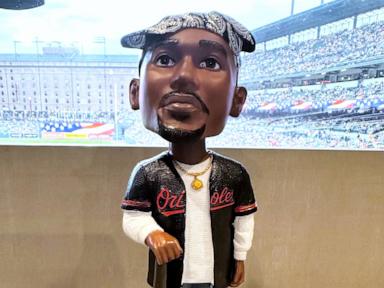
Promotional items are the lifeblood of stadium attendance. The Tupac bobblehead, featuring the rapper in a black Orioles jersey and his signature bandana, became an instant collector's item. In the secondary market, these figures are already fetching prices that dwarf the cost of a bleacher ticket.
Why does this matter? Because it proves that the "Oriole Way" is being redefined. For years, the team relied on nostalgia for the 1970s and 80s—the days of Jim Palmer and Cal Ripken Jr. But those memories don't resonate with the 18-to-34 demographic that MLB is bleeding. By merging the visual identity of the team with the iconography of a rebel poet, the front office is betting on a future where the club is seen as "cool" rather than just "traditional."
Navigating the Commercialization of a Revolutionary
There is a tension inherent in using a radical figure like Tupac to sell baseball tickets. Shakur was a man who spoke truth to power, criticized institutional systemic failures, and lived a life defined by conflict with the status quo. Major League Baseball, conversely, is a multi-billion dollar entity that has historically been slow to embrace social change.
When a team puts a bandana on a ceramic doll, they risk sanitizing the message of the man. The "Why" behind this promotion is partially rooted in the Tupac Amaru Shakur Foundation’s mission to provide resources for mental health and creative arts. The Orioles’ willingness to share their platform with the foundation suggests a deeper commitment than just filling seats on a Tuesday night. However, critics argue that the commercial machinery of professional sports inevitably dilutes the revolutionary edge of icons like Shakur.
Strategic Marketing or Social Statement
The timing of the event coincides with a period of massive transition for the Orioles. Under new ownership and with a roster full of young, high-energy talent, the team is shedding its image as a cellar-dweller. They are fast, they are loud, and they are winning. This "new" Orioles team needs a brand that matches its on-field aggression.
Tupac’s music is characterized by a blend of vulnerability and defiance. That matches the current vibe in the Baltimore clubhouse. When the lights go down and the intro music hits, the energy in the stadium needs to reflect the city outside the gates. Baltimore is a city with grit. It is a city that has been through the wringer and keeps standing. In that sense, the alignment with Shakur isn't just about rap—it’s about a shared ethos of resilience.
The First Pitch and the Power of Presence
When Sekyiwa Shakur walked to the mound, the crowd’s reaction was a mix of sports enthusiasm and genuine reverence. The first pitch is a ritual that is often wasted on local politicians or minor influencers. Using it to honor the Shakur family redirected the spotlight toward the human element of the legacy.
Sekyiwa has spent decades protecting her brother's image from being purely a commodity. Her participation gave the Orioles a "stamp of approval" that shields the promotion from accusations of exploitation. If the family is on board, the fans are on board. It legitimizes the team’s claim to a piece of Tupac’s story.
Economic Impact of Cultural Alignment
The data surrounding specialty theme nights shows a clear spike in "non-traditional" fan attendance. These are people who don't follow the box scores every morning but will show up for an event that speaks to their cultural identity.
- Retail Velocity: Merchandise sales on theme nights often exceed standard game days by 40% or more.
- Digital Engagement: The social media reach of the Tupac night far outpaced the team's standard content, hitting demographics across music, fashion, and social justice circles.
- Ticket Retention: The goal is to convert the person who came for the bobblehead into someone who comes back for the pennant race.
The Risk of the "Lifestyle" Pivot
There is a danger when sports teams try too hard to be "lifestyle brands." If the product on the field is bad, the cultural window dressing feels like a distraction. Fortunately for the Orioles, they are currently one of the best teams in baseball. This allows them to experiment with their brand from a position of strength.
The challenge moving forward is consistency. A one-off Tupac night is a great headline, but true engagement requires a sustained effort. The team must continue to integrate with the arts community in Baltimore, support the schools that Shakur attended, and ensure that their outreach isn't limited to a single night of giveaways.
The success of this promotion will likely spark a trend across the league. Expect to see other teams digging into the local cultural roots of their cities to find "cool" factors that have nothing to do with batting averages. The New York Mets might lean into the Queens hip-hop scene; the Atlanta Braves could double down on their city’s status as a music capital.
The Unspoken Truth of the Night
Ultimately, the Orioles proved that baseball doesn't have to be a museum. It can be a living, breathing part of the contemporary conversation. By embracing a figure as complex and polarizing as Tupac Shakur, the team signaled that they aren't afraid of the conversation. They are inviting the city in, bandanas and all.
The sight of thousands of fans holding a likeness of a man who once rapped about the struggles of the "Rose That Grew from Concrete" while sitting in a pristine baseball stadium is a study in contradictions. But that is modern America. We are a collection of conflicting stories, and on this night, the Orioles managed to tell a story that actually meant something to the people of Baltimore.
The stadium lights eventually dimmed, and the bobbleheads were packed into cars and carried into homes across Maryland. The game was won, the pitch was thrown, and for a few hours, the gap between the street and the dugout didn't seem so wide. The Orioles didn't just sell a toy; they claimed a piece of the city's soul.
Make no mistake, this was a calculated business move, but in the sterile world of modern corporate sports, it felt unusually human.