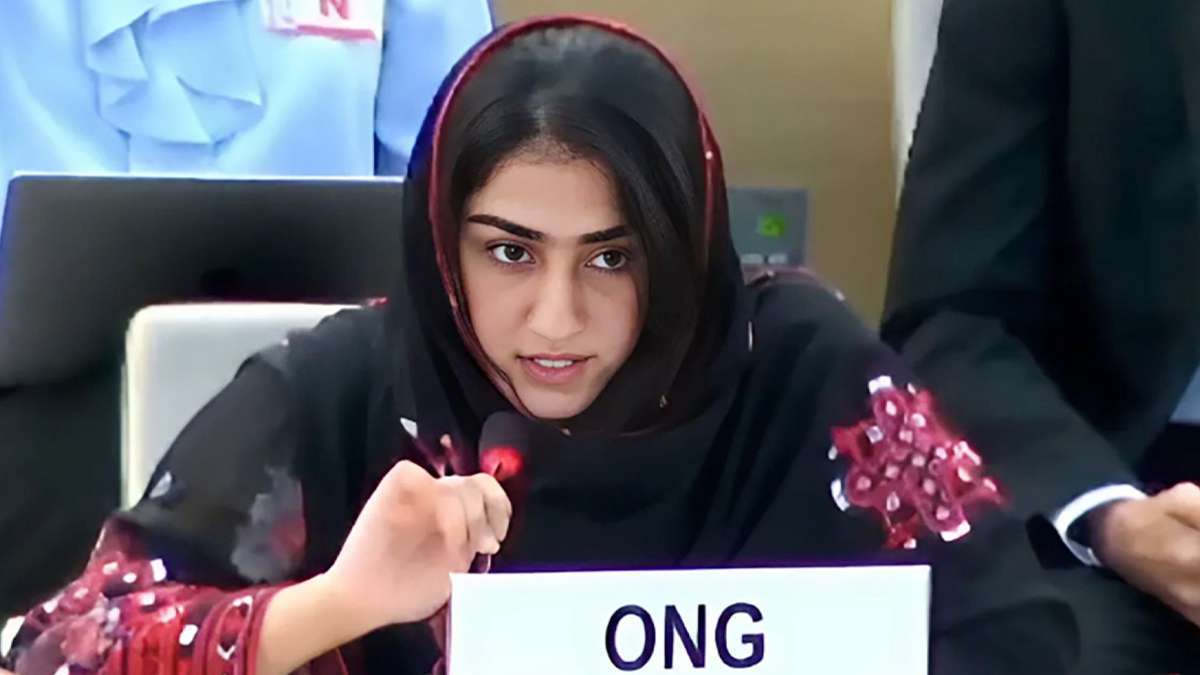
Stop crying about closed gates and start looking at the rot inside the walls. The Baloch Students Action Committee (BSAC) is ringing the alarm on the "unjust" closure of educational institutions, framing it as a sudden, malicious strike against the future of Balochistan. They are half-right, but for all the wrong reasons. The outrage is predictable. The rhetoric is exhausted. While the committee treats the physical shutdown of universities as the primary catastrophe, they are missing the brutal reality: the "academic crisis" they fear has been the status quo for decades.
Closing a university that doesn't actually educate is not a tragedy; it is a late-stage symptom of a systemic organ failure.
The Myth of the Brick-and-Mortar Sanctuary
The current narrative suggests that if we simply unlock the doors and resume classes, the "academic crisis" dissolves. This is a fantasy. I have spent years analyzing regional development in conflict zones, and the pattern is always the same: we fetishize the building while ignoring the curriculum.
In Balochistan, the "institution" has long been a shell. When you have a literacy rate that hovers at nearly half the national average and a dropout rate that spikes before high school, a university closure is just the final full stop at the end of a very long, poorly written sentence. We are mourning the loss of a lecture hall when we should be mourning the fact that the students entering those halls are often products of a primary education system that failed them ten years ago.
The BSAC argues that these closures are a targeted effort to marginalize Baloch youth. Let’s be honest—marginalization doesn't need to close a door to be effective. It happens through the stagnant appointment of faculty based on political patronage rather than pedagogical merit. It happens when the research output of a provincial university is statistically invisible on the global stage.
If your "academic career" consists of rote-learning outdated textbooks in a building with no internet, no research funding, and a faculty that hasn't published a peer-reviewed paper in five years, are you really losing an education? Or are you just losing a credential?
The Credentialism Trap
The real crisis isn't "closure." It is the Credentialism Trap.
Pakistan’s higher education system—particularly in its periphery—has become a factory for producing degrees that the market doesn't want. We are training a generation of Baloch youth for 19th-century bureaucracy in a 21st-century digital economy. When the BSAC demands the reopening of these institutions, they are demanding the right to keep running on a treadmill that leads nowhere.
Imagine a scenario where 10,000 students graduate from these reopened institutions this year. Where do they go? The local economy is largely informal or state-dependent. The private sector is anemic. The "academic crisis" isn't just about whether the lights are on in the classroom; it’s about the fact that the classroom is disconnected from any viable economic reality.
We are obsessed with "access" but indifferent to "outcome."
Security vs. Sovereignty: The False Binary
The competitor’s take focuses heavily on the "securitization" of campuses. They point to the presence of law enforcement and the heavy-handed oversight of student activities as the primary barrier to learning.
Let's strip away the political correctness. Yes, a campus that looks like a garrison is a failure of civil society. It creates a climate of fear that is antithetical to critical thinking. But here is the nuance the BSAC misses: the security apparatus didn't move in because the education was too good. They moved in because the vacuum left by a failing administrative and educational structure invited chaos.
When an institution fails to provide a path to social mobility, it becomes a breeding ground for frustration. Frustration turns into activism, and in a volatile region, activism is met with force. If you want the security forces off the campus, you don't just protest their presence—you make the institution so academically rigorous and economically vital that its disruption becomes too costly for the state to tolerate.
Right now, these universities are viewed by the state as liabilities, not assets. That is the hard truth nobody wants to say out loud.
The Digital Pivot: A Radical Alternative
If the goal is truly the intellectual advancement of Baloch youth, why are we still begging for the keys to a broken physical infrastructure?
The BSAC and similar bodies are stuck in a 1990s mindset. They believe that education must happen between 9:00 AM and 4:00 PM in a specific zip code. In 2026, that is a choice, not a necessity.
The radical, contrarian move is to stop fighting for the reopening of crumbling buildings and start fighting for the decentralization of knowledge.
- Starlink over Stone: Instead of protesting for a new wing at a provincial university, demand high-speed, uncensored satellite internet for every district.
- Global Accreditation: Why should a student in Quetta be limited to a local degree that isn't recognized in Dubai, Singapore, or London? We should be pushing for partnerships with global MOOCs (Massive Open Online Courses) and international certification bodies.
- Skill-Based Sovereignty: Replace the four-year "General Arts" degree—which is a fast track to unemployment—with intensive, six-month technical bootcamps in coding, data analysis, and remote project management.
The state can close a building. It is much harder to close a decentralized network of self-educated, digitally-fluent professionals.
The Cost of Sentimentality
The BSAC’s rhetoric is fueled by sentimentality. They speak of the "sanctity" of the institution. But there is nothing sacred about a university that charges tuition and delivers stagnation.
I’ve seen this play out in various developing markets. Millions are poured into "reopening" schools that have no teachers, or "renovating" libraries that have no books. It is a performance of progress that masks a reality of decay.
The downside of my approach? It’s lonely. It requires students to take individual responsibility for their learning rather than relying on a state-provided certificate. It requires a level of self-discipline that the current "protest-first" culture doesn't always encourage. But the alternative is to wait for a government that has shown zero interest in your development to suddenly hand you a key to a door that leads to an empty room.
Stop Asking for Permission
The most "unjust" thing about the current situation isn't the closure. It’s the idea that Baloch students are helpless victims of a lock and key.
If the institutions are closed, stop waiting for them to open. If the curriculum is outdated, stop studying it. If the local faculty is absent, find a mentor online.
The academic crisis in Balochistan is real, but the solution isn't found in a grievance petition. It’s found in the realization that the traditional university model in Pakistan is a dying horse. You can keep whipping it, or you can get off and find a new way to travel.
The gate is locked. Stop banging on it. Build a ladder or find another path. The world doesn't care about your closed university; it cares about what you can do.
Go do it.