Picture a sunlit Sunday morning in São Paulo, somewhere between the hum of a street corner espresso machine and the sudden clatter of a notary’s stamp. For millions of voters, a runoff election is a reckoning at the ballot box. Yet in October 2026, with the second round of Brazil’s presidential race looming, the real battleground was not a rally stage or a television studio. It was a stack of legal petitions filed before the Superior Electoral Court.
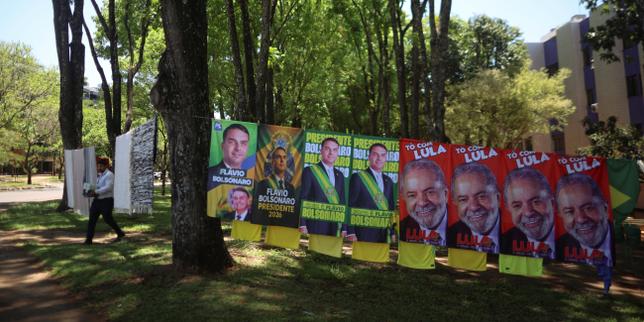
Lula. Flávio Bolsonaro. Two names carrying decades of bruised memory, rival visions of order and justice, and a fierce determination to knock the other off the board before the final tally could even speak.
Courts. Petitions. Disqualification. When campaigns trade persuasion for legal erasure in the final stretch before a runoff, democracy stops feeling like a conversation and starts looking like a knife fight in a narrow hallway.
A Hypothetical Sunday in Belo Horizonte
To understand what a courtroom disqualification battle feels like at street level, consider a hypothetical character: Mateus, a thirty-four-year-old delivery rider and part-time evening student in Belo Horizonte. (This scenario is hypothetical, created to illustrate how high-stakes electoral litigation lands on ordinary citizens.)
Mateus does not spend his evenings reading judicial briefs. He spends them weaving through rain-slicked avenues on a 150cc motorcycle, dodging potholes and answering messages from his mother in the interior of Minas Gerais. Like roughly 159 million eligible Brazilians in the 2026 cycle, his vote carries equal weight on paper. In reality, his attention is pulled in ten directions by rent, groceries, and safety in his neighborhood.
When news breaks that lawyers for Flávio Bolsonaro and President Luiz Inácio Lula da Silva are firing off mutual petitions to disqualify each other ahead of the October 25 second round, Mateus feels a familiar tightness in his chest. Not excitement. Fatigue.
"If the judges throw one of them out," he wonders aloud over a cup of strong black coffee, "did my vote in the first round even count? Or are they deciding the winner in Brasília before I ever step into the booth?"
That question sits at the center of the storm. After Flávio Bolsonaro edged ahead in the first round on October 4 with 47.03% of the vote to Lula’s 45.16%, the race shifted into an electric, bitter runoff. Instead of letting voters settle the score cleanly, both camps reached for the legal gavel.
Why Both Sides Reached for the Gavel
Mutual disqualification efforts rarely come out of nowhere. They grow out of deep mutual distrust and a hyper-polarized system where losing feels existential to both sides.
Think of an election like a championship match where both teams accuse the referee of wearing the other jersey before the final whistle. Even if the rules are written down clearly, neither side trusts that the game is fair—so both try to get the star striker suspended on a technicality. (This is a metaphor for how campaigns weaponize electoral law during tight runoffs.)
On Flávio Bolsonaro’s side, the legal push targeted how state power and digital reach were used during the campaign. His team accused Lula of abusing power, pointing to massive WhatsApp distribution promoting government actions during the electoral window, and later challenged online networks and voting-hour extensions when the dust settled. For Bolsonaro’s camp—which had surged out of the first round and leaned into a hardline security message—the argument was straightforward: an incumbent with the machinery of government and vast digital channels cannot be allowed to tilt the playing field unchecked.
On Lula’s side, the counter-offensive aimed squarely at eligibility, legality, and fitness to run. Lula and his allies have long framed the Bolsonaro family’s political project as a threat to democratic norms and the rule of law, while pointing to investigations and controversies surrounding Flávio Bolsonaro. When the stakes are this high, disqualifying an opponent isn't just about winning a seat. To Lula’s supporters, it feels like keeping a dangerous tide out of the palace.
Both sides claim they are defending the integrity of the vote. Both accuse the other of breaking the rules.
The Invisible Stakes Beneath the Legal Filings
Anyone who has watched a democratic system strain under repeated legal challenges knows the quiet toll it takes. It rarely arrives with dramatic sirens. It seeps in slowly.
First comes cynicism. When citizens see politicians trying to disqualify one another days before a runoff, millions conclude that elections are rigged by lawyers and elites—even when courts act independently. Turnout in the 2026 runoff reached 80.78%, proof that Brazilians still showed up in massive numbers despite the noise. Still, high participation does not erase exhaustion. Showing up to vote while believing the system is broken is a heavy burden.
Second comes the trap of judicialization. Electoral courts exist to enforce laws, punish genuine abuse of power, and protect fair competition. Yet when campaigns turn every aggressive post, every message, and every political grievance into a petition for disqualification, judges are forced into an impossible position. If they disqualify a major candidate days before a runoff, half the country cries coup or censorship. If they reject the petition, the losing side claims the court was soft or biased.
History shows how dangerous that cycle becomes. Across Latin America and beyond, democracies rarely collapse in a single afternoon. They wear down when political rivals treat the ballot box as a temporary nuisance rather than the final word.
Digital Megaphones and Fragile Trust
What makes a runoff fight like 2026’s even more volatile is the speed of modern information. In earlier decades, a legal filing in Brasília took days to travel through newspapers and evening broadcasts. Today, a snippet of a court petition becomes a viral graphic on WhatsApp within minutes, stripped of nuance and wrapped in fear.
During the 2026 race, digital platforms themselves became flashpoints. Lula’s campaign tangled with Meta over ad restrictions and AI tools, while Bolsonaro’s camp faced scrutiny over coordinated online activity and voter messaging. When millions of people get their political reality through forwarded messages and short clips, a nuanced legal standard—like what legally crosses the line into "abuse of economic or political power"—gets flattened into a simple slogan: They're trying to steal it, or They shouldn't be allowed to run.
Consider what happens next: once voters view the other half of the country not as neighbors with different priorities, but as cheaters or threats to survival, compromise becomes a dirty word. Even after Lula overturned his first-round deficit to win the October 25 runoff with 51.79% against Flávio Bolsonaro’s 48.21%, the legal warfare and refusal to concede showed just how raw the wound remained.
What Real Accountability Looks Like
Disqualifying a rival in court is a shortcut. Sometimes laws do disqualify candidates, and courts must enforce rules when real violations occur. Nobody wants an election where money, state coercion, or fraud buys the presidency unchecked.
Rules matter. Without them, power becomes lawless.
Yet a healthy democracy cannot survive on disqualifications alone. If a movement or a leader is rejected—or accepted—only because lawyers cleared the field, the legitimacy of the victory stays fragile. Real, durable legitimacy comes when voters weigh imperfect choices in the open, argue fiercely in public squares, and accept a clear count even when it breaks their heart.
That is why mutual disqualification suits on the eve of a runoff leave such a bitter taste. They promise a clean knockout punch through paperwork, but they leave behind a bruised public that doubts the referee, doubts the opponent, and sometimes doubts the point of lining up at dawn with an ID card in hand.
A Question That Outlives Any Verdict
Think back to Mateus on his motorcycle in Belo Horizonte, rain tapping against his visor as traffic crawls toward a green light. When the final tally is read and the legal arguments are filed away in thick folders, the city still has to function. Buses still run. Families still share Sunday lunch. Neighbors still live wall-to-wall across apartment courtyards.
Laws can remove a name from a ballot. Courts can rule on petitions and motions.
They cannot, by themselves, heal a country that has forgotten how to lose without burning the house down—or how to win without trying to erase the other side first.