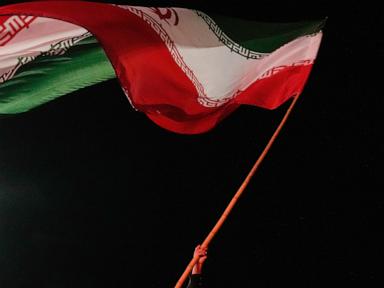
In the quiet halls of federal bureaucracy, a startling alliance has emerged. Newly unsealed internal records reveal that U.S. Immigration and Customs Enforcement (ICE) officials maintained a consistent, operational dialogue with the Iranian government throughout 2025 and into early 2026. This arrangement, orchestrated despite profound geopolitical hostilities, facilitated the deportation of more than 100 Iranian nationals across three separate flights. The documents prove that the sovereign process of American immigration enforcement was partially subcontracted to a foreign adversary, with Iranian embassy officials effectively curating the passenger manifests of these flights.
The mechanics of this arrangement operate well beyond standard diplomatic procedure. According to the correspondence obtained by the National Iranian American Council, the relationship was not merely transactional; it was iterative. In August 2025, an ICE official explicitly noted adding cases to a deportation manifest at the direct request of the Iranian Embassy. This pattern persisted for months. When an official remarked that an unexpected individual had boarded a flight—someone who was never cleared for removal—the reaction from their peers was not a formal inquiry into a security breach, but a shrug of administrative confusion.
This raises a fundamental question about the integrity of the American asylum system. If the Iranian government possesses the influence to amend deportation lists or "expedite" the removal of specific individuals, the U.S. government has effectively surrendered its own discretion to an hostile regime. For an asylum seeker, the fear of persecution is often predicated on the actions of the very state now seemingly colluding with the American authorities to secure their return.
The administrative trail suggests that this cooperation was often mediated through Qatari intermediaries, yet the primary negotiations remained starkly bilateral. The involvement of the Iranian Embassy, specifically through meetings with designated "directors," indicates a level of operational synchronization that contradicts the public-facing posture of both nations.
Consider the risk inherent in this exchange. When immigration agencies share lists or coordinate manifests with a nation like Iran, they are not merely performing a logistics task. They are managing human lives. If an official at the Iranian Embassy can request a name be added or removed, they are testing the boundaries of American sovereignty. The fact that ICE officials complied with these requests—even during periods of heightened conflict—suggests a policy priority that values the completion of a flight over the scrutiny of the individuals on it.
The internal emails characterize the logistics as a high priority, a stance that remained unchanged even as domestic warnings surfaced regarding the dangers faced by those returning to Iran. While a Department of Homeland Security spokesperson has formally denied claims that asylum application records were shared, the nuance here is critical. Whether the government explicitly shared documents or simply accepted "suggestions" for who should be deported, the result is identical. The Iranian government is gaining tactical control over the movement of its citizens inside American borders.
This is not a story about logistics. It is a story about the erosion of institutional independence. When an agency as powerful as ICE defers to the preferences of a foreign power, the rule of law becomes secondary to the efficiency of the machine. The logistical ease of chartering a flight through Qatar should never outweigh the constitutional and moral obligations inherent in the U.S. asylum process.
Observers should be watching the specific language used by the officials involved. In their emails, the deference to the "requests" from the Iranian Embassy is treated as standard procedure rather than a departure from protocol. That normalization is the most dangerous aspect of this finding. It implies that similar backchannels may exist with other nations, hidden away in the deep archives of internal government communications.
Ultimately, these flights represent a profound shift in how the United States treats the intersection of national security and international migration. By allowing an adversary to have a hand on the lever of deportation, the executive branch has created a precedent that is as fragile as it is dangerous. We are seeing a blurring of lines where the security of the state is prioritized at the expense of the very people the law was designed to protect. If the government cannot account for who exactly was on those planes, or why the manifests changed hours before takeoff, then the public can have little faith in the fairness or the legality of these removals.
The reliance on these quiet channels is an admission of failure. It is an admission that the government prefers the convenience of a secret handshake over the difficulty of maintaining a transparent, law-based system. As long as these records remain the only window into this process, the true extent of this collaboration will stay buried. The system will continue to operate in the shadows, and those who seek refuge within our borders will remain pawns in a game they never asked to play.