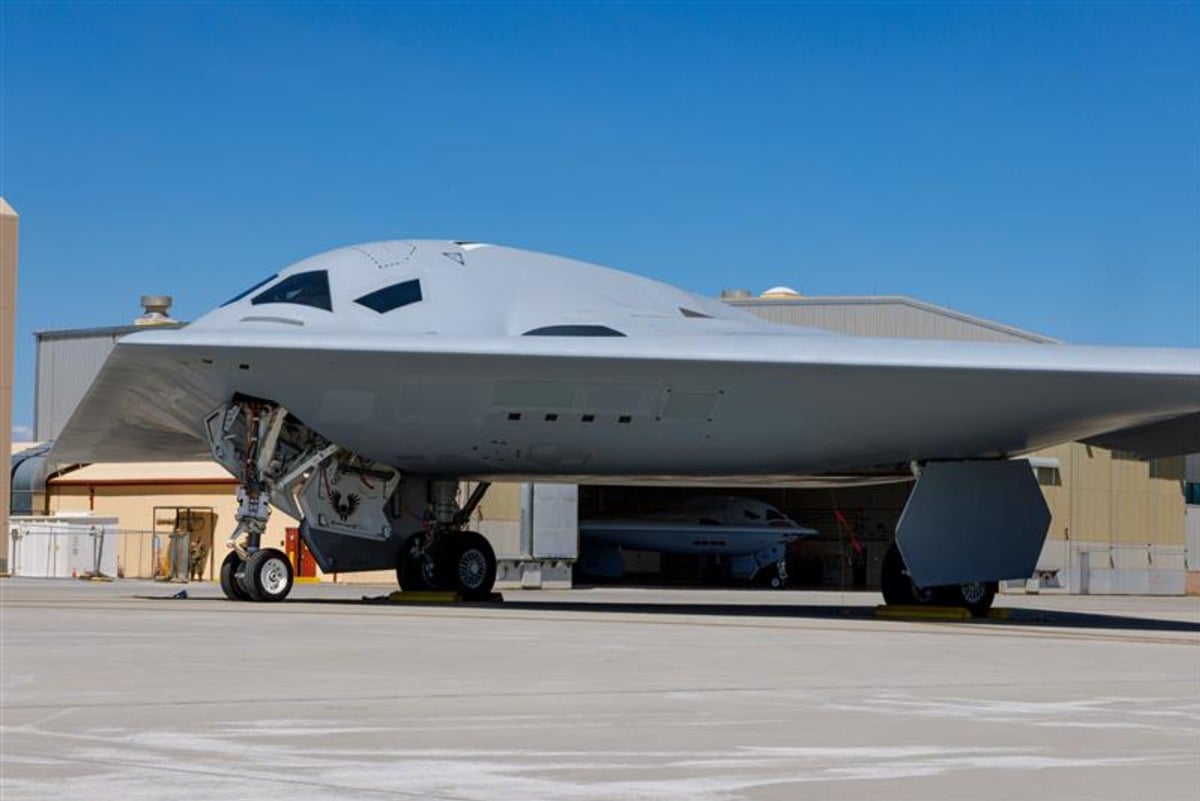
The defense press wants you to look at a 44 million dollar infrastructure contract for Ellsworth Air Force Base and applaud. They are regurgitating the official line. They tell you that buying five or six pre-engineered metal Environmental Protection Shelters for the incoming Northrop Grumman B-21 Raider is a sign of operational agility. They say it proves the weapon system is vastly superior to the maintenance nightmare that was the B-2 Spirit.
They are wrong. They are missing the entire point of what these structures actually represent. Don't forget to check out our earlier article on this related article.
This contract is not a celebration of military efficiency. It is a quiet admission of a systemic failure. The military-industrial complex is celebrating the fact that its newest, most advanced nuclear bomber cannot handle a South Dakota winter without a multi-million-dollar metal umbrella.
We were promised an aircraft that would break the curse of legacy stealth. Instead, we are building unconditioned sheds to hide a fundamental vulnerability. If you want more about the context here, Mashable offers an informative summary.
The Myth of the Carefree Stealth Coating
For a decade, the Air Force and its primary contractors have marketed the B-21 Raider as a maintenance triumph. The narrative was simple. The B-2 Spirit failed because its radar-absorbent material was too fragile. It required climate-controlled, pristine hangars. It needed hours of tape-and-glue restoration after every single flight hour. The B-21 was supposed to change all that. The engineers told us the skin used advanced composite stealth materials that were robotically woven and chemically baked directly into the structure. They promised an aircraft that could sit on a ramp in the wind, rain, and snow, ready to strike at a moment’s notice.
If those statements were entirely accurate, this 44 million dollar contract would not exist.
You do not spend tens of millions of dollars on specialized environmental shelters to protect an asset that is truly ruggedized against the elements. The official justification is that these shelters shield the aircraft from ultraviolet degradation and heavy snow loads, allowing for rapid pre-flight checks without full climate control.
Think about that logic for a second. We are talking about a strategic bomber designed to pierce deep into contested airspace, survive electromagnetic pulses, and endure the harshest flight profiles imaginable. Yet, standard solar radiation and frozen water are deemed significant threats to its readiness.
I have watched the Department of Defense burn through billions of dollars trying to optimize low-observable maintenance. The cold reality is that low-observable physics do not care about a contractor's public relations campaign. If you want a radar cross-section the size of a insect, your outer mold line must be flawless. Even if the coatings are baked into the skin, moisture ingress, thermal cycling from sub-zero South Dakota winters, and UV degradation will alter the material's electrical conductivity and radar-absorbent properties.
The procurement of these shelters is proof that the Air Force knows the Raider remains a hangar queen at heart. The requirements have merely been downgraded from a luxury suite to a heavily engineered carport.
The Ellsworth Infrastructure Money Pit
Let us look closely at the data. The Air Force is currently injecting massive capital into Ellsworth Air Force Base under the guise of preparation. This single 44 million dollar shelter contract is a tiny fraction of a much larger, darker fiscal picture.
Congress recently authorized a 4.5 billion dollar production acceleration package under the legislative banner of the reconciliation process. This cash injection aims to increase annual production capacity by 25 percent. But look where the money actually goes. It does not just build airplanes. It is being swallowed by an intense, decade-long structural rebuilding effort across Ellsworth, Dyess, and Whiteman Air Force Bases.
At Ellsworth alone, the construction footprint is staggering:
- A massive 95,000-square-foot dual-dock hangar dedicated solely to cleaning and maintaining sensitive radar-absorbent materials.
- A 70 million dollar Radio Frequency Facility hangar for testing the airframe’s stealth signatures.
- A 63 million dollar Fuel Systems Maintenance Dock.
- A 44 million dollar Weapons Loader Training facility.
- Millions more for flight simulator buildings and alert centers.
The total authorized construction for the B-21 program at this single remote base is climbing past 1.65 billion dollars.
Imagine a scenario where a private logistics firm buys a new fleet of delivery vehicles, only to realize they have to rebuild every single warehouse, driveway, garage, and service station from scratch just to keep the vehicles from breaking down. Shareholders would revolt. The CEO would be fired. In defense acquisition, this is considered a standard Tuesday.
The sheer scale of this construction proving ground undermines the argument that the B-21 is a cheaper, more deployable asset. We are building a hyper-specific, localized ecosystem. The bomber is completely tethered to these massive concrete investments.
The Strategic Vulnerability of Fixed Infrastructure
The core requirement of a modern nuclear deterrent is survivability. If an adversary knows exactly where your bombers must sleep, your deterrent loses its teeth.
The legacy consensus views the B-21 as a highly survivable asset because it can evade advanced surface-to-air missile systems like the Russian S-400 or S-500. This view ignores the launch pad. A stealth bomber is only stealthy when it is airborne. When it is sitting under a pre-engineered metal environmental protection shelter at Ellsworth Air Force Base, it is a static target.
By concentratedly building out these massive, highly visible infrastructure projects, we are drawing a giant bullseye on South Dakota. Modern near-peer adversaries do not need to shoot down a B-21 over foreign airspace. They can destroy it on the ground using long-range hypersonic cruise missiles or submarine-launched ballistic strikes.
Because the B-21 is smaller than the B-2—with a wingspan estimated between 145 and 155 feet and a significantly reduced payload capacity—the Air Force needs more of them to achieve the same destructive mass. They want at least 100 aircraft, and some commanders are pushing for 145.
Where will they park them? They cannot just disperse them to civilian airports or austere runways during a crisis. A civilian regional airport does not have a 95,000-square-foot low-observable restoration facility. It does not have specialized environmental shelters to keep the skin from degrading under the midday sun. It does not have the secure, hardened maintenance kiosks required to feed data into the aircraft’s classified command and control architecture.
Every single environmental protection shelter built at Ellsworth reinforces a rigid, centralized basing posture. We are trading operational flexibility for local concrete contracts.
Deconstructing the Official Justification
Let us address the common defense of these expenditures. Military planners will argue that the environmental protection shelters are an asset-protection measure. They will point to the harsh weather of the Northern Plains, where severe thunderstorms, hail, and heavy blizzards can ground an entire wing. They claim that by spending 44 million dollars now, they save hundreds of millions later in avoided skin repairs and faster turnaround times.
This argument falls apart under scrutiny. It assumes that the current design path is the only viable method of long-range strike.
If the goal is rapid, all-weather global precision strike, why are we prioritizing a platform that requires specialized physical shelters at its home station to ensure a decent turnaround time? We are spending hundreds of billions of dollars on a platform that mimics the operational philosophy of the 1980s while ignoring the realities of modern standoff warfare.
Consider the alternative path we rejected. For the cost of developing, building, and housing a single 700 million dollar B-21 Raider—along with its share of the billion-dollar base upgrades—the military could procure thousands of long-range conventional and nuclear cruise missiles. These missiles can be launched from legacy platforms like the B-52, which do not require specialized composite skin facilities, can sit outside in a blizzard without their wings rotting, and can operate from almost any runway capable of supporting a heavy transport.
The decision to double down on manned, low-observable penetrating bombers is driven by institutional inertia, not tactical logic. The Air Force likes bombers because it has always had bombers. Defense contractors like bombers because they generate decades of high-margin infrastructure maintenance contracts. The 44 million dollar shelter award is not an isolated line item. It is a feature of a system designed to extract wealth through continuous facility modification.
The True Cost of Technical Compromise
There is an inherent downside to challenging this infrastructure buildup. If you stop building these shelters, your 700 million dollar stealth aircraft will degrade faster, readiness rates will plunge, and the fleet will become non-operational. We have trapped ourselves in a corner. We have designed an aircraft that cannot survive without an expensive artificial habitat, so we have no choice but to build the habitat.
But let us at least stop pretending this is a triumph of engineering.
The B-21 Raider program may be meeting its low-rate initial production milestones for a 2027 entry into service. It may be avoiding some of the catastrophic cost overruns that killed the B-2 program. But it has not solved the fundamental problem of stealth. Low-observable assets remain fragile, capital-intensive instruments that warp the entire military budget around their upkeep.
When you look at the new metal shelters rising from the tarmac at Ellsworth Air Force Base, do not see a modern air force ramping up its capabilities. See what is truly there: a monument to a design compromise we refused to acknowledge, paid for by taxpayers who were promised a weapon system that could actually handle the real world.