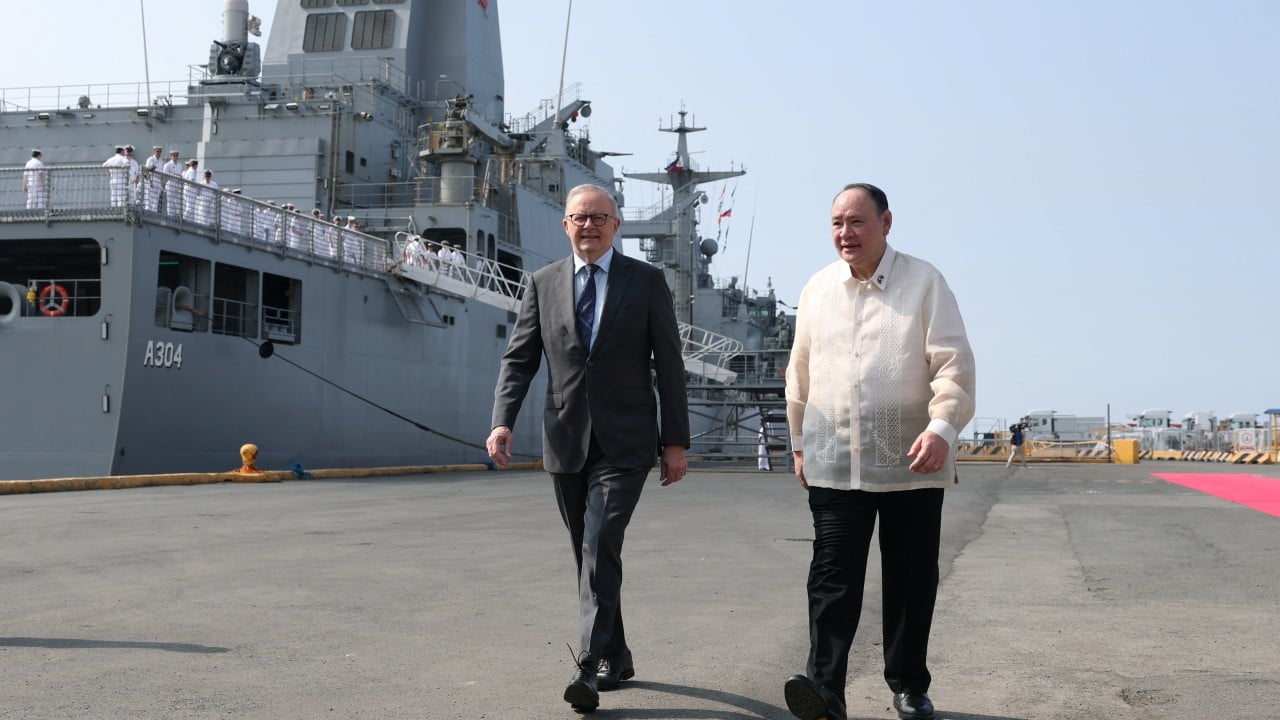
Every time Canberra and Manila sign another bilateral defense agreement, conduct joint maritime patrols in the South China Sea, or upgrade their Status of Visiting Forces framework, the foreign policy commentary class reaches for the same tired autopsy report.
"ASEAN centrality is dead."
"The regional architecture is fracturing."
"Minilateralism is hollowing out Southeast Asia."
That diagnosis gets the entire history and function of Southeast Asian security upside down. The deepening security alignment between Australia and the Philippines does not expose a flaw in ASEAN’s architecture. It proves the architecture is doing the exact job its founders built it to do.
If you judge a screwdriver by how well it drives nails, you will write endless think pieces about how broken the screwdriver is. That is what happens every time Western analysts—and quite a few pundits in Singapore and Jakarta—evaluate the Association of Southeast Asian Nations as if it were supposed to be an Indo-Pacific NATO.
The Myth of Broken Centrality
To understand why the "weak architecture" narrative fails, look at what critics actually claim. The standard argument goes like this: China militarizes reefs in the South China Sea and uses gray-zone coercion against Philippine resupply missions at Second Thomas Shoal. ASEAN, bound by its consensus rule and the principle of non-interference, fails to issue a unified condemnation or mount a collective naval response. Therefore, Manila is forced to bypass the bloc and lean on external middle powers like Australia, Japan, and the United States. Ergo, ASEAN is failing.
Every step of that syllogism rests on a false premise.
ASEAN was never designed to be a collective defense pact. When five foreign ministers signed the Bangkok Declaration in 1967, they were not building a military alliance to deter external great powers. They were building a diplomatic shock absorber to stop Southeast Asian states from going to war with each other while domestic insurgencies raged inside their borders. The famous "ASEAN Way"—informal consultation, non-interference, and consensus—was deliberately engineered to prevent any single member from dragging the others into an external confrontation against their will.
I have sat in Track 1.5 dialogues in Kuala Lumpur and Jakarta where Western diplomats visibly lost their patience because ASEAN refused to take a hard operational line on maritime security. They kept waiting for a mechanism that does not exist. Expecting ten—and with Timor-Leste's accession, eleven—wildly divergent economies and political systems to form a unified military deterrent against their largest trading partner is pure fantasy.
Laos and Cambodia do not share the Philippines' maritime geography. Thailand and Vietnam have completely different historical and continental security calculus. Indonesia and Malaysia balance fierce sovereignty concerns with deep economic interdependence with Beijing. If ASEAN tried to force a binding, hard-security consensus on the South China Sea, the organization would not become stronger. It would shatter overnight.
What the Australia-Philippines Deal Actually Does
Look closely at the mechanics of the Australia-Philippines security relationship. Upgraded to a Strategic Partnership in 2023, backed by the Status of Visiting Forces Agreement (SOVFA) in force since 2012, and reinforced through recurring Exercise Alon amphibious drills and joint maritime cooperative activities in the West Philippine Sea, this partnership is surgical.
It solves a specific operational problem that ASEAN was never meant to touch.
Manila faces an immediate asymmetry problem in its Exclusive Economic Zone. The Armed Forces of the Philippines have spent decades focused on internal counterinsurgency rather than external territorial defense. Modernizing naval and air domain awareness takes years and billions of dollars. Australia, meanwhile, possesses advanced maritime surveillance assets, amphibious capabilities, hydrographic expertise, and deep interoperability with both the United States and regional partners, without carrying the historical baggage or superpower escalatory weight of Washington.
When Australian P-8A Poseidon aircraft or Royal Australian Navy vessels operate alongside Philippine forces, they are not replacing ASEAN. They are filling a tactical capability gap.
More importantly, they are buying time for diplomacy to remain viable.
Think about the alternative. Suppose Australia and other external partners stayed out of the South China Sea to preserve some abstract notion of "pure" ASEAN centrality. What happens on the water? Without external deterrence and capacity-building, Manila faces a binary choice: capitulate to gray-zone pressure and surrender sovereign rights under the 2016 Arbitral Tribunal ruling, or escalate unilaterally with under-equipped forces and risk a kinetic clash that would drag the entire region into crisis.
Bilateral and minilateral deals like Australia-Philippines act as pressure valves. They raise the cost of coercion just enough to stabilize the tactical environment, which keeps the broader regional diplomatic track alive.
Why Critics Confuse "Minilateralism" With "Fragmentation"
A major source of confusion in contemporary security analysis is the false binary between multilateralism and minilateralism.
- Multilateralism (ASEAN, the East Asia Summit, the ASEAN Regional Forum) exists to maintain baseline communication, establish diplomatic norms, prevent miscalculation among great powers, and manage economic integration. It requires low entry barriers and broad inclusion.
- Minilateralism (the Squad—Australia, Japan, the Philippines, the US—or bilateral pacts like Canberra-Manila) exists to generate operational deterrence, share intelligence, and build physical military capacity among states with aligned threat perceptions. It requires high trust and shared capability.
These two layers do not compete. They stack.
In international relations theory, scholars like Victor Cha and Amitav Acharya have long examined how "patchwork" or "complex patchwork" security architectures operate in Asia. Unlike Cold War Europe, which relied on a single rigid bloc structure, the Indo-Pacific relies on overlapping spokes, bilateral treaties, trilateral dialogues, and ASEAN-convened forums.
When commentators argue that the Australia-Philippines pact exposes ASEAN’s weakness, they are treating a multi-layered system as if it were a zero-sum game. If Canberra and Manila train together, they assume Jakarta and Bangkok lose out.
In reality, the exact opposite occurs. Quietly, behind closed doors, several ASEAN capitals that publicly preach strict neutrality benefit enormously from the fact that Australia, Japan, and the US are willing to underwrite maritime deterrence in the South China Sea. It allows non-claimant or quieter claimant states to maintain profitable trade and infrastructure ties with China while external partners prevent any single power from achieving uncontested maritime hegemony over critical sea lanes.
Let us be blunt about the hypocrisy in regional commentary: many of the same voices lamenting that bilateral deals undermine ASEAN unity would panic the moment Australian and allied naval assets actually withdrew from Southeast Asian waters.
Answering the Questions Nobody Wants to Ask
When readers search for what the Australia-Philippines pact means for Southeast Asia, they usually bring the wrong assumptions to the table. Let us dismantle the three biggest misconceptions directly.
Does the Australia-Philippines pact violate ASEAN centrality?
No. ASEAN centrality means ASEAN sits in the driver's seat of regional diplomatic convening—hosting the East Asia Summit, the ASEAN Defense Ministers' Meeting-Plus (ADMM-Plus), and setting the agenda for regional trade frameworks like RCEP. It has never meant that sovereign ASEAN member states require permission from the Secretariat in Jakarta before signing bilateral defense treaties.
Every major ASEAN member maintains external security arrangements. Singapore hosts US rotational deployments and participates in the Five Power Defence Arrangements (FPDA) alongside Australia, the UK, New Zealand, and Malaysia. Thailand is a formal US treaty ally. Vietnam conducts regular defense dialogues and naval port calls with India, Japan, and the United States. Singling out the Philippines for working with Australia ignores fifty years of standard Southeast Asian statecraft.
Can ASEAN reform its consensus rule to handle hard security?
It cannot, and it should not try. Removing the consensus requirement on security matters would immediately split the bloc into pro-Washington and pro-Beijing camps. Once ASEAN splits, its only superpower—its ability to get China, the United States, India, Japan, Australia, and Russia into the same room every year—vanishes.
If you want to see what happens when regional institutions try to force hard-security alignment on members with diverging threat perceptions, look at the paralysis in other global bodies. ASEAN survives precisely because it refuses to break itself over issues it cannot resolve.
Is Australia overextending itself in Southeast Asia?
Here is the genuine vulnerability that most cheerleaders of the Australia-Philippines deal miss—and the real risk worth watching.
While the pact does not break ASEAN, it does stretch Australia. Under its 2023 Defence Strategic Review and 2024 National Defence Strategy, Canberra committed to a strategy of denial across its northern approaches while simultaneously funding the massive AUKUS nuclear-powered submarine enterprise.
Australia’s surface fleet is undergoing a painful transition, with aging Anzac-class frigates retiring faster than new general-purpose frigates and Hunter-class vessels enter service. Every Australian frigate or surveillance aircraft deployed to the South China Sea is an asset not operating in the Timor Sea, the Coral Sea, or the South Pacific.
Furthermore, deeper operational entanglement with Manila increases Australia’s exposure to gray-zone incidents. If a Chinese Coast Guard vessel uses water cannons or executes dangerous blocking maneuvers against a joint Australia-Philippines patrol, Canberra faces an immediate escalation dilemma without the automatic mutual defense treaty trigger that the US possesses under its 1951 Mutual Defense Treaty with the Philippines.
What Policymakers and Analysts Should Do Instead
If you are analyzing Indo-Pacific security—or advising governments and enterprises operating across Southeast Asia—stop using 20th-century European alliance metrics to score 21st-century Asian statecraft.
- Stop grading ASEAN on deterrence. Measure ASEAN by what it actually produces: tariff reductions, digital economy frameworks, diplomatic de-escalation channels, and the prevention of intra-ASEAN conflict. Since 1967, zero founding ASEAN members have fought a conventional interstate war against one another. In a region once dubbed the "Balkans of the East," that is an extraordinary return on investment.
- Track operational interoperability, not summit communiqués. If you want to know where real security alignment is shifting in Southeast Asia, ignore the annual ASEAN Chairman’s Statement. Watch logistics agreements, reciprocal access treaties, coast guard training exchanges, and shared maritime domain awareness networks. That is where actual deterrence lives.
- Treat minilateralism as structural reinforcement, not demolition. A building has load-bearing columns and flexible expansion joints. Bilateral and minilateral defense pacts like Australia-Philippines are the steel columns taking the structural load of maritime coercion. ASEAN is the expansion joint absorbing the political friction so the whole structure does not crack under stress.
The pundits claiming that Canberra and Manila have exposed ASEAN's fatal weakness are staring at the expansion joint and complaining that it bends. Bending is the entire point. Without the flexibility of ASEAN on one side and the hard operational steel of bilateral partnerships on the other, Southeast Asia would have snapped a decade ago.


