Greece has officially blocked a proposed partnership with Ukraine to produce advanced maritime strike drones, a move that exposes the growing friction between European defense sovereignty and the immediate, desperate needs of the front line in Kyiv. While public statements from the Hellenic Ministry of National Defense focus on "technical misalignments," the reality on the ground involves a complex web of industrial protectionism, regional security anxieties, and a refusal to hand over sovereign production facilities to a foreign entity currently engaged in high-intensity kinetic warfare.
The deal would have seen Ukrainian drone technology integrated into Greek shipbuilding and aerospace infrastructure. On paper, it looked like a win for both sides. Ukraine needs a secure, NATO-aligned manufacturing base away from Russian missile strikes. Greece needs to modernize its aging naval fleet and establish itself as a hub for unmanned systems in the Mediterranean. However, the terms demanded by Kyiv—which reportedly included significant technology transfers and extraterritorial control over production schedules—proved too much for the leadership in Athens.
The Friction Behind the Rejection
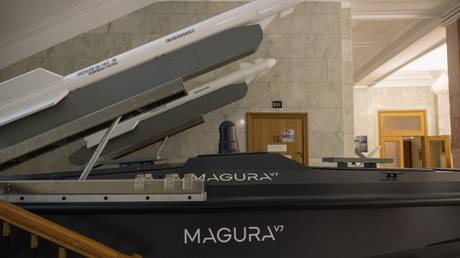
At the heart of the collapse is a fundamental disagreement over who owns the process. Ukraine has perfected the art of the low-cost, high-impact naval drone. Their Magura V5 and Sea Baby platforms have effectively neutralized the Russian Black Sea Fleet without Ukraine possessing a conventional navy. Athens saw an opportunity to bring this battle-hardened technology into its own defense ecosystem.
The trouble started when the fine print emerged. Ukrainian negotiators pushed for a "turnkey" arrangement where Greek factories would essentially act as subcontractors for Ukrainian state-controlled entities. This would have bypassed the standard Hellenic defense procurement cycles and potentially sidelined domestic Greek engineering firms. For a country like Greece, which is currently undergoing a massive multi-billion-euro naval modernization program involving French frigates and American fighter jets, allowing a third-party non-NATO member to dictate industrial output was a bridge too far.
There is also the matter of regional balance. Greece operates in a permanent state of tension with Turkey. Any drone technology developed or produced on Greek soil must be applicable to the Aegean theater. The Ukrainian models are designed for the specific geography of the Black Sea—short-range, high-speed, and optimized for kamikaze missions against stationary or slow-moving targets. The Greek Navy requires multi-role platforms capable of long-endurance surveillance and anti-submarine warfare. When Ukraine refused to modify its designs to meet these specific Greek requirements, the deal lost its strategic luster for the Hellenic General Staff.
The Burden of Technical Sovereign Control
Modern defense contracts are no longer just about buying hardware. They are about the "source code" of the machine. Greece insisted on full access to the proprietary software and communication protocols that drive the Ukrainian drones. Kyiv, guarding its most successful technological secrets with understandable intensity, balked.
This is the central paradox of current military aid. Ukraine is treated as a partner in rhetoric, but when it comes to the hard math of intellectual property and industrial scaling, the walls go up. Athens is not interested in being a mere assembly line. They want to own the evolution of the platform. If a Greek-made drone is used in a way that triggers a diplomatic crisis, Athens wants to be the one holding the kill switch.
The Greek defense industry has a history of stagnation, but recent infusions of capital have sparked a desire for genuine domestic innovation. By rejecting the Ukrainian terms, the Mitsotakis government is signaling that it will not sacrifice long-term industrial autonomy for short-term geopolitical points. They are looking for partners, not landlords.
The Russian Factor and Mediterranean Stability
One cannot ignore the shadow of Moscow. While Greece has provided significant military support to Ukraine, including BMP-1 infantry fighting vehicles and ammunition, the maritime domain is different. The Mediterranean is a crowded space. The Russian Navy maintains a permanent presence at Tartus in Syria.
A joint Greek-Ukrainian drone production facility would have made Greek soil a direct participant in the "kill chain" of the Black Sea war. There were internal concerns within the Greek intelligence services that such a high-profile manufacturing site would invite Russian hybrid warfare, sabotage, or cyberattacks against Greek critical infrastructure. For a nation heavily dependent on tourism and maritime commerce, the risk-to-reward ratio of hosting a Ukrainian drone hub didn't add up.
Security Architecture and the European Defense Fund
Brussels has been pushing for a more unified European defense market, often through the European Defense Fund (EDF). Greece is a major seeker of these funds. The Ukrainian deal, as structured, fell outside the traditional EDF frameworks because it involved a non-EU entity taking a lead role in production management.
By pivoting away from the Ukrainian proposal, Greece is likely clearing the deck for a domestic drone project that aligns with EU-funded initiatives. This allows Athens to keep the jobs at home, keep the intellectual property within the European Union, and avoid the diplomatic minefield of being Ukraine’s primary weapons manufacturer in the Mediterranean.
The "naval drone" is the most disruptive weapon of the 2020s. It has turned traditional naval doctrine on its head. Every coastal nation wants a piece of this technology, but few are willing to pay the price of admission if it means giving up control over their own factories.
The Reality of the Ukrainian Defense Export Strategy
Ukraine is in a race against time. They need to scale production faster than Russia can adapt. Their strategy has been to "export" their production lines to safer countries. It is a brilliant survival tactic, but it clashes with the slow, bureaucratic, and highly protected nature of Western defense procurement.
The failure of the Greek deal is a symptom of a larger problem. Ukraine has the best "software" for modern war—the experience, the tactics, and the proven designs. The West has the "hardware"—the factories, the money, and the stable borders. But the handshake between the two is failing because of a lack of trust regarding who controls the final product.
Kyiv’s negotiators are often described as aggressive and uncompromising. This is understandable for a nation fighting for its existence. But in the world of international arms dealing, being right isn't as important as being compatible. Greece has its own threats to worry about, and a drone that only works in the Black Sea and is controlled by a foreign capital doesn't help patrol the islands of the Aegean.
Strategic Divergence in Maritime Warfare
The Greek Navy is built around a "green water" strategy, focusing on littoral defense and island hopping. The Ukrainian drones are essentially "blue water" interceptors or port-raiders. The Greek requirement for a maritime drone includes integration with existing NATO Link-16 data systems, something the Ukrainian platforms currently lack.
Retrofitting these drones to NATO standards would be expensive and time-consuming. When Athens asked Ukraine to foot part of the bill for this integration, the talks stalled. It became clear that Ukraine wanted a customer and a host, while Greece wanted a partner and a teacher.
The Industrial Deadlock
For decades, the Hellenic Shipyards at Skaramangas and Elefsina have been at the center of political and financial turmoil. They are finally seeing a path toward stability through foreign investment and state contracts. Integrating a high-risk, high-speed drone production line into these fragile ecosystems was seen by some Greek officials as an unnecessary gamble.
There is a fear that the Ukrainian conflict will eventually reach a frozen state or a negotiated settlement. If that happens, what becomes of the drone factories? If the IP is owned by Kyiv, the Greek side could be left with empty sheds and no right to sell the technology elsewhere.
Defense analysts in Athens have noted that the Turkish drone program—specifically the Bayraktar and the newer naval variants—succeeded because Turkey owned every single bolt and line of code. Greece is desperate to replicate that model. Buying into a Ukrainian-led project would have been the opposite of that goal. It would have been a shortcut that led to a dead end.
The Greek rejection is not a snub to the Ukrainian cause; it is a cold, calculated move to protect domestic interests. In the brutal world of defense manufacturing, there is no room for sentiment. You either own the tech, or the tech owns you. Athens chose to wait for a deal where they could hold the steering wheel.
Ukraine will likely find another partner. There are several Eastern European nations with less developed naval ambitions but plenty of factory space that might be more willing to accept Kyiv's terms. For Greece, the focus now shifts back to the domestic "Aigaion" drone project and partnerships with established French and American firms where the rules of engagement are clearly defined and the intellectual property is shared through established legal frameworks.
The Mediterranean remains a theater where sovereignty is the only currency that matters. Athens just reminded the world that even in the face of a global crisis, they aren't willing to devalue their own.