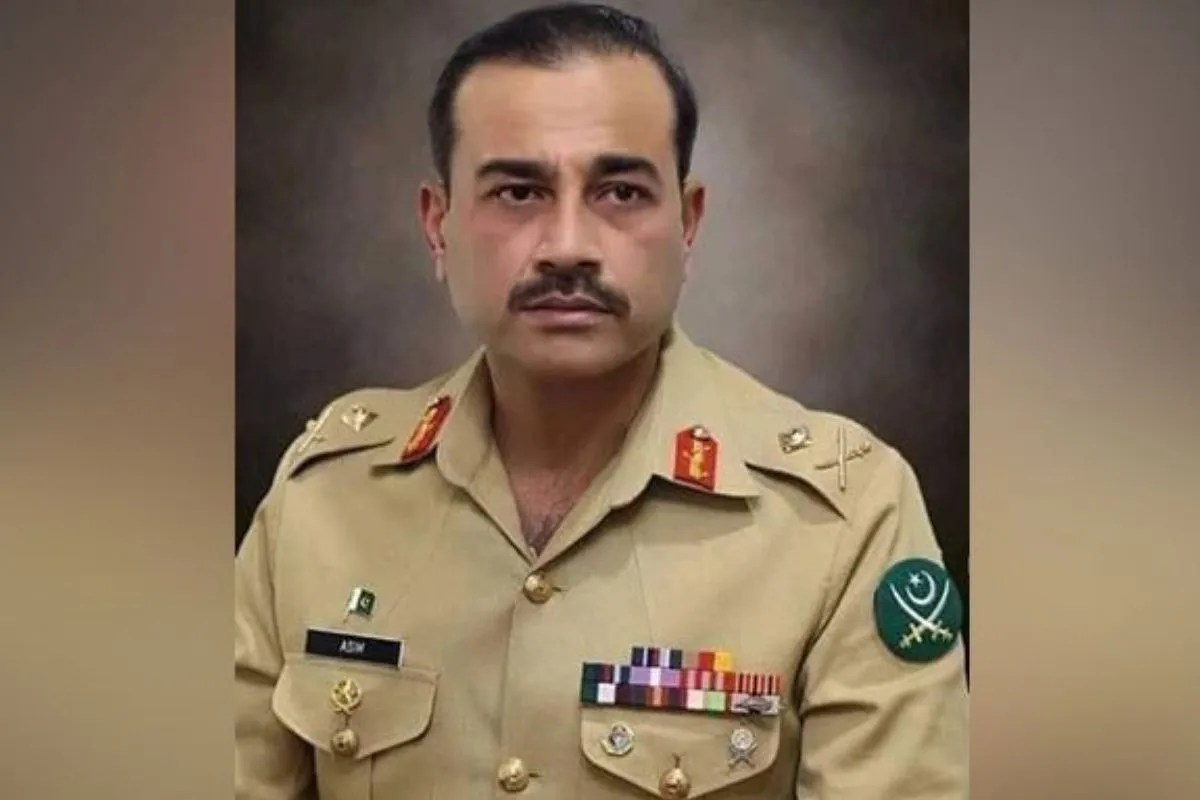
The lazy consensus running through every mainstream desk in Islamabad and foreign policy office in Washington reads like a tired script from a 1990s political drama. The narrative is neat, comforting, and completely detached from how power actually operates in Rawalpindi. General Asim Munir, so the story goes, is sharpening his knives to dismantle the political dynasties of the Pakistan Muslim League Nawaz and the Pakistan Peoples Party. Analysts nod sagely at tea stalls and conference panels, whispering about a grand military design to crush civilian dynasties, sideline Nawaz Sharif, clip Asif Ali Zardari's wings, and establish permanent, unadulterated khaki dominance.
It is a lazy diagnosis built on a fundamental misunderstanding of institutional survival. If you liked this article, you might want to read: this related article.
Munir does not want to destroy the Sharifs or the Bhuttos. Destroying them would be an administrative nightmare and a strategic disaster for the General Headquarters. The military establishment does not need fewer civilian politicians; it needs the right kind of civilian politicians—weak, compromised, and utterly dependent on the GHQ to keep the lights on. Stripping away the political scaffolding of the Sharif and Bhutto families would not usher in a golden age of technocratic reform or clean democracy. It would shatter the carefully calibrated political buffer that absorbs public anger, leaving the military exposed as the sole, naked manager of a failing state economy.
Let us look at the structural mechanics that mainstream commentators consistently miss. For another look on this event, see the recent update from The New York Times.
The Fallacy of Civilian Elimination
Every few years, a new crop of strategic analysts convinces themselves that the military is tired of sharing space with political families. They point to judicial crackdowns, media restrictions, and behind-the-scenes engineering during election cycles as proof of an existential war against dynastic politics. This view treats the military as an ideological crusader driven by a desire for clean governance.
History shows the exact opposite. When politicians are strong, they challenge the brass. When politicians are completely eliminated, the military owns every single economic collapse, every rupee devaluation, and every international bailout condition.
Think of the political dynasties as institutional lightning rods. When inflation hits record highs, when electricity tariffs skyrocket, and when the International Monetary Fund dictates fiscal policy, who takes the public rage? Shehbaz Sharif stands at a podium defending a brutal budget while the military remains safely above the fray. If Asim Munir were to actually succeed in permanently breaking the political machinery of the PML-N and the PPP, the public would have no institutional proxy to blame. The crosshairs of public fury would point directly and exclusively toward Rawalpindi.
A rational military leadership understands this dynamic intimately. Munir is not trying to eradicate the political class. He is managing their obedience. By keeping the Sharifs and Bhuttos perennially insecure, facing legal pressures, and needing military benevolence to survive, the establishment ensures that civilian leaders remain compliant subcontractors rather than independent sovereign actors.
The Economics of Dynastic Survival
Why do the Sharif and Bhutto families endure every political winter? Because dynastic politics in Pakistan are not merely about personal ambition; they are financial and social conglomerates deeply entrenched in local patronage networks, agricultural supply chains, and industrial syndicates.
Critics love to talk about feudal mindsets and dynastic greed, but they ignore the cold economic reality of how votes are mobilized in rural Punjab and interior Sindh. Local power brokers do not align with abstract democratic ideals or technocratic manifestos. They align with whoever controls the state patronage pipeline and can deliver local development funds, police postings, and administrative protection.
When the military exerts pressure on these families, it rarely cuts off the financial roots entirely. Instead, it adjusts the water supply. A little pressure here, a legal case revived there, a coalition reshuffled in the background—it is a masterclass in coercive equilibrium. The family in power gets to enjoy the perks of office and patronage distribution, provided they do not cross red lines regarding defense budgets, foreign policy toward Washington and Beijing, or core strategic appointments.
To imagine that Munir is planning a total political cleanse is to ignore decades of institutional muscle memory. The GHQ tried a radical political experiment a few years ago with Imran Khan and the Pakistan Tehreek-e-Insaf, hoping to bypass traditional dynasties altogether with a populist wave. Look at how that experiment aged. It produced the most polarizing political deadlock in the nation's history, ruptured civil-military trust from within, and nearly broke the institutional cohesion of the armed forces.
Munir learned the hard lesson of that experiment. The traditional dynasties are predictable. They understand the unwritten rules of engagement. They know when to push back and when to fold. An unpredictable populist movement anchored by social media fervor and ideological zeal is infinitely more dangerous to the establishment's comfort than a compromised Sharif or a pragmatic Zardari.
The Real Power Equation Under Munir
Under Asim Munir, the military has shifted from overt political engineering to institutional consolidation via economic dominance. Through the Special Investment Facilitation Council and various corporate-military ventures, the establishment has embedded itself directly into agricultural modernization, mining, and foreign investment channels.
In this new framework, politicians are not rivals for state control; they are administrative facilitators. The civilian government is tasked with doing the dirty work—passing painful stabilization reforms, signing off on unpopular tax measures, and managing international creditors—while the military orchestrates the strategic horizon.
If the Sharifs or Bhuttos lose their political rसूख (clout), it will not be because Munir launched a crusade to establish a clean meritocracy. It will be because they failed to deliver public compliance efficiently enough to justify their upkeep. The moment a political family becomes a net liability rather than a useful buffer, the establishment simply shifts its patronage to a rival faction within the existing civilian ecosystem.
Stop looking at the daily theater of court cases and parliamentary brawls as a mortal combat between the military and political dynasties. It is a renegotiation of terms within a locked-in partnership. The house always wins, and the house needs the players at the table to keep the game going.


