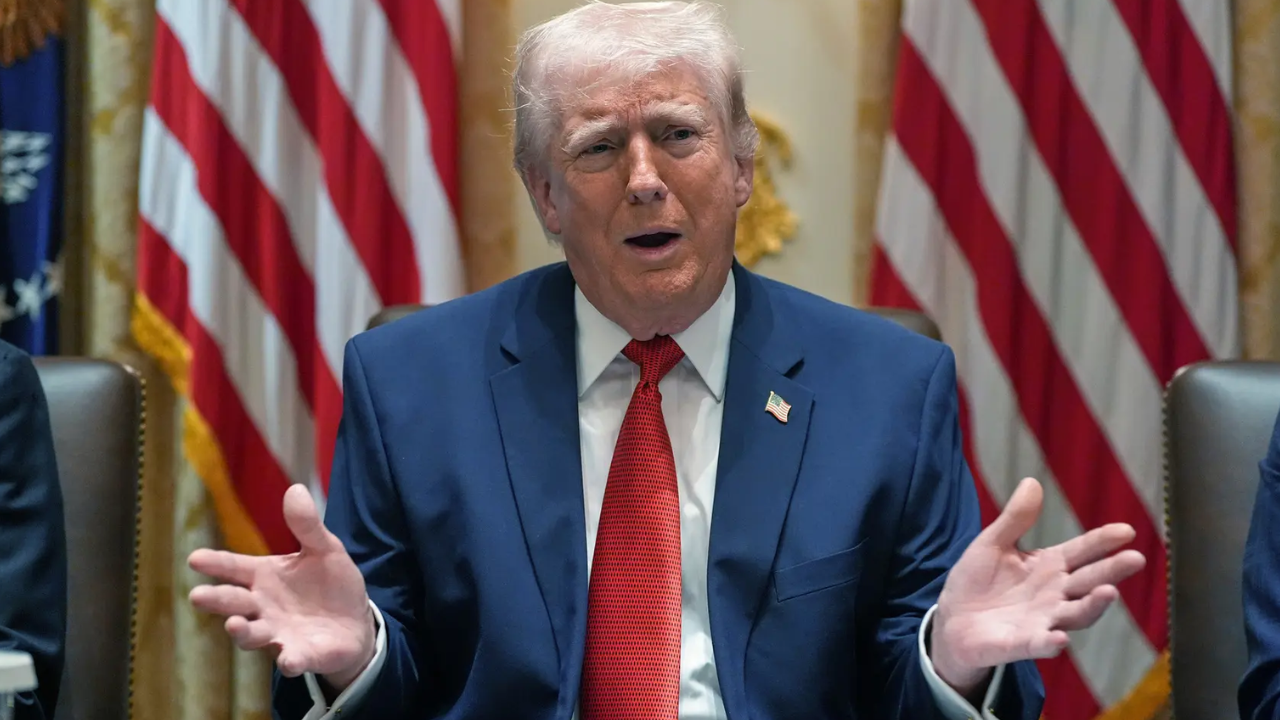
The air in the room changes when a threat is delivered with a smile. It isn't just about the words. It is about the silence that follows. When Donald Trump stood before a bank of microphones to declare that Iran was "begging" for a deal, he wasn't just reciting a foreign policy update. He was performing a classic leverage play, the kind practiced in smoke-filled boardrooms and back-alley negotiations long before it ever reached the West Wing.
Politics often feels like a game of chess played by people who have never met. But at this level, it’s more like a staring contest where the first person to blink loses their entire stake. Trump’s rhetoric—a mix of "keep blowing them away" warnings and claims of desperation from the other side—is designed to do one thing: strip the opponent of their dignity before the first offer is even signed. Recently making headlines in this space: The Kinetic Deficit Dynamics of Pakistan Afghanistan Cross Border Conflict.
The Mechanics of Desperation
Imagine a small business owner on the brink of foreclosure. They walk into a bank, suit pressed, spine straight, trying to look like they don’t need the money. They know that the moment the loan officer smells fear, the interest rate jumps two points. Now, scale that up to a nation-state with a collapsing currency and a population growing restless under the weight of global sanctions.
That is the hypothetical "beggar" Trump is describing. Additional details into this topic are detailed by USA Today.
By claiming Iran is "begging" for a deal, he is performing a public deconstruction of their leverage. In the world of high-stakes negotiation, perception is the only reality that matters. If the world believes you are desperate, your seat at the table gets smaller. Your demands look like pleas. Your red lines look like suggestions.
Trump’s strategy relies on a specific type of psychological pressure. It is the "Maximum Pressure" campaign voiced not in white papers or diplomatic cables, but in the language of a heavyweight champion taunting a challenger. It’s effective because it’s simple. It’s dangerous because it leaves the opponent with no path to a "win" that saves face.
The Invisible Toll on the Ground
While the headlines focus on the bravado, the human element is often buried under the weight of "geopolitics."
Consider a family in Tehran. They aren't thinking about uranium enrichment levels or the nuances of the JCPOA. They are thinking about the price of eggs, which has doubled in a month. They are thinking about the medicine that is no longer on the pharmacy shelves because the supply chain has been strangled by financial blacklists.
When a leader says "keep blowing them away," the "them" isn't just a government or a military wing. The "them" is the economic fabric of a country. Sanctions are a clean word for a messy reality. They are a siege without a single shot fired. For the strategist in Washington, they are a dial to be turned up. For the parent in Shiraz, they are a tightening knot in the stomach every time they check their bank balance.
This is the invisible stake. The "deal" being discussed isn't just a piece of paper; it is the oxygen for millions of people. By framing the negotiation as a desperate plea, the human cost is rebranded as a tactical success. It turns suffering into a metric of progress.
The Gambler’s Logic
Every negotiation has a breaking point.
Trump operates on the belief that if you push hard enough, the other side will eventually crack. It is the logic of the developer who waits for a property owner to go bankrupt so he can buy the land for pennies on the dollar. But nations aren't pieces of real estate. They have histories, pride, and internal pressures that don't always follow the rules of a balance sheet.
The risk in the "begging" narrative is that it backs a cornered animal into a position where the only way to prove they aren't begging is to bite. When you tell a proud culture that they are on their knees, the natural response isn't always to reach for a pen. Sometimes, it’s to reach for a weapon.
History is littered with deals that fell apart because one side felt too humiliated to sign. You can't just offer a better price; you have to offer a way for the other person to walk back to their own people and claim they won. Trump’s current rhetoric intentionally removes that exit ramp. He wants the world to know he won, and he wants the world to see the other side lose.
The Sound of the Warning
"Keep blowing them away."
It’s a haunting phrase. It suggests a process that is already in motion, a momentum that won't be stopped until the objective is met. It’s the language of an ultimatum.
In the corridors of power, this kind of talk serves two audiences. To the domestic base, it sounds like strength. It sounds like a leader who won't be bullied and who knows how to "win" again. To the international community, it sounds like a volatile unpredictable element. And in a negotiation, being unpredictable is a massive advantage.
If the opponent doesn't know where your limit is, they have to assume you don't have one.
But there is a thin line between being a master negotiator and being a pyrotechnic. If you blow everything away, there is nothing left to negotiate over. You end up standing alone in a field of rubble, holding a contract that no one is left to sign.
The Final Calculation
We are watching a live-action experiment in human ego and national survival.
The facts are clear: the sanctions are hurting, the rhetoric is escalating, and the stakes are moving beyond the reach of simple diplomacy. The "deal" is the ghost in the room—everyone knows it’s there, everyone wants it, but no one wants to be the one to admit they need it.
Trump’s claim that they are "begging" might be a factual observation of a desperate economy, or it might be a calculated lie designed to force a collapse. In the end, the truth doesn't matter as much as the outcome.
If a deal is reached, it will be hailed as the greatest triumph of the "art" of the squeeze. If it fails, and the warnings of "blowing them away" turn from metaphor to reality, the cost won't be measured in political points. It will be measured in the lives of people who never asked to be part of the game in the first place.
The microphones are eventually turned off. The cameras go dark. But the pressure remains, a heavy, silent weight on the shoulders of an entire region, waiting for someone to finally blink.