The rain in Shanghai does not fall softly. It drives sideways, turning the concrete grey and heavy, sticking to the fabric of every coat, every jacket, every uniform on the street.
Meet Lin. (A hypothetical name, but a real pulse.) Lin spends ten hours a day navigating a labyrinth of traffic, alleyways, and elevators. His vehicle is a battered electric scooter. His cargo is hot soup, cold groceries, packages wrapped in yellow tape, and the expectations of a city moving at terminal velocity. For years, Lin was invisible. Not because people didn't see him—they swerved around him, after all—but because the city looked through him. He was part of the machinery. A moving shadow carrying your dinner.
Then came the red cloak.
Or rather, the twenty-euro jacket that changed everything.
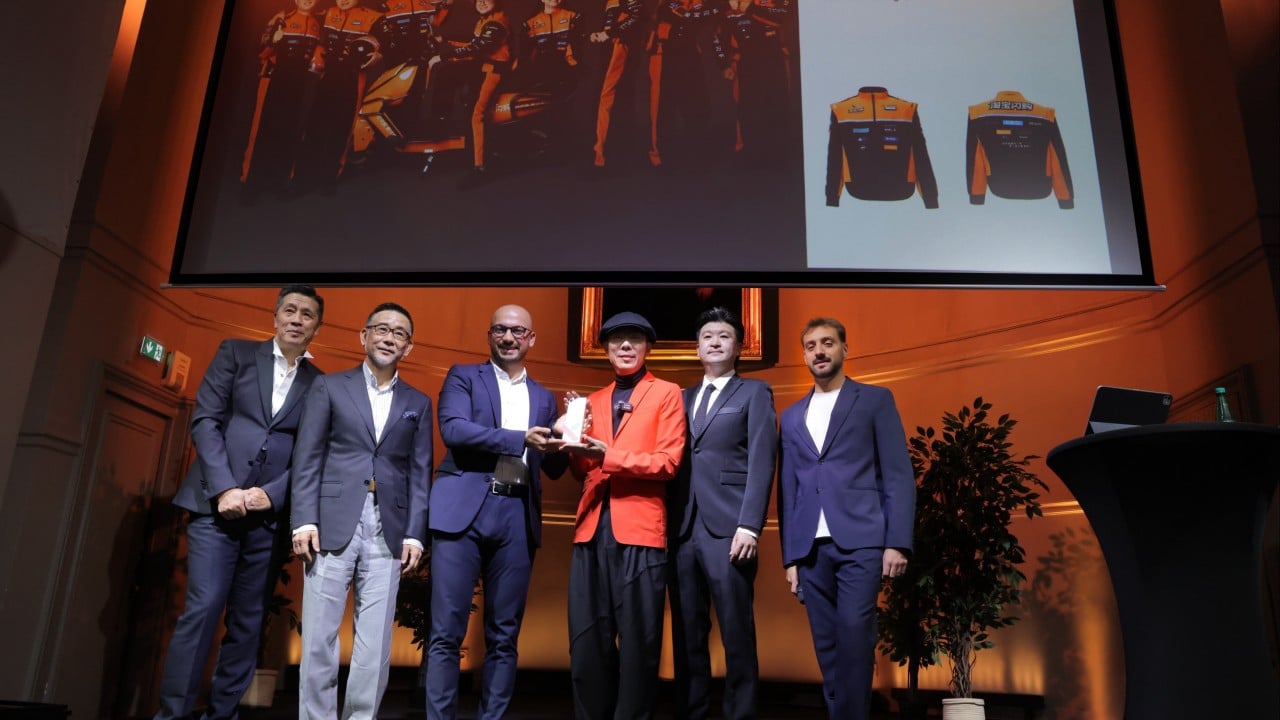
Across Europe, in the quiet, exacting halls of design juries, a panel of judges leaned over photographs and fabric swatches. They were used to evaluating thousand-dollar cashmere coats, ergonomic office chairs crafted from aerospace aluminum, and minimalist lamps that cost more than a month of groceries. They were not used to looking at a delivery uniform. Specifically, they were not used to looking at a standardized, mass-produced garment designed for the couriers of China's delivery giant, Ele.me.
Yet, there it was. Winning a top European design prize.
How did a cheap, functional piece of workwear capture the attention of high design?
The Weight of the Invisible
To understand the jacket, you have to understand the body it covers.
We live in an era of instant gratification. Tap a screen. Hot food arrives at your door thirty minutes later. We judge the service by the speed, complaining bitterly if the dumplings are lukewarm or the fries have gone soft. We rarely think about the physics of that delivery. We rarely think about the wind chill at forty miles per hour on an open-air scooter. We rarely think about the tear at the shoulder seam where the backpack rubs against the fabric fifty times a day.
For a long time, delivery uniforms were an afterthought. Cheap nylon. Poor breathability. In the summer, they trapped heat like a greenhouse. In the winter, they offered about as much protection as a wet paper towel. They were designed to brand the worker, not to protect them.
Consider what happens when a corporation looks at its workforce as an expense rather than a lifeline. The gear reflects that math. Frayed cuffs. Broken zippers. A silhouette that screams do not look at me.
Then, the philosophy shifted. Someone asked a radical question: What if the people keeping the urban economy alive were actually treated like human beings?
Engineering Dignity for Twenty Euros
The twenty-euro price tag is the most shocking part of the story. In the world of industrial design, cheap usually means disposable. It means cut corners, toxic dyes, and seams that unravel after three washes.
The Ele.me uniform broke that rule.
The designers did not start with aesthetics. They started with sweat, rain, and motion. They rode alongside the couriers. They watched how a driver's shoulder rotates when checking blind spots. They measured the exact angle of the torso against a handlebar in a downpour. They integrated reflective materials not as an afterthought strip sewn on the back, but as a core structural element that respects the human form even in the dark.
Waterproof. Breathable. Durable. Ergonomic.
These are not just buzzwords. They are physical necessities when your office is a highway and your ceiling is the open sky. The fabric breathes so the rider doesn't drown in his own exertion. The cut allows for layering without restricting movement.
When the European design jury gave the award, they weren't just praising a clever cut of cloth. They were acknowledging a truth that Silicon Valley and corporate boardrooms often forget: utility and dignity are not mutually exclusive.
The Shift in the Streetscape
Walk through Beijing or Shanghai today, and look at the rivers of color flowing through the traffic. Blue jackets, yellow jackets, red jackets. They are modern armor.
When a uniform is designed with genuine empathy, it changes how the wearer moves through the world. Slumped shoulders straighten just a fraction. There is a quiet pride in wearing something that doesn't look like a trash bag. Passersby look twice—not because the courier made a mistake in traffic, but because the garment itself has a sharp, clean architectural integrity.
Design is not just for the elite.
For decades, high design has been an exclusive club. It was reserved for the wealthy living in glass penthouses, buying designer chairs and bespoke suits. It treated the working class as consumers of cheap plastic trash.
This award turns that model on its head. It proves that the most important design challenges of our time are happening at the bottom of the economic ladder, not the top. When you solve a problem for the person who has the least margin for error, you create something exceptionally pure.
The Final Turn
Lin doesn't care about European design juries. He cares about whether his jacket will keep him dry through the next four hours of deliveries. He cares about whether he can stretch his arms without ripping the fabric.
But when he zips up that jacket against the biting wind, something subtle happens. He isn't just a shadow darting between cars anymore. He is part of a system that, for once, engineered something specifically to keep him safe, comfortable, and seen.
The twenty-euro jacket didn't just win a prize. It proved that respect can be manufactured at scale.
And on a wet street in Shanghai, that changes everything.