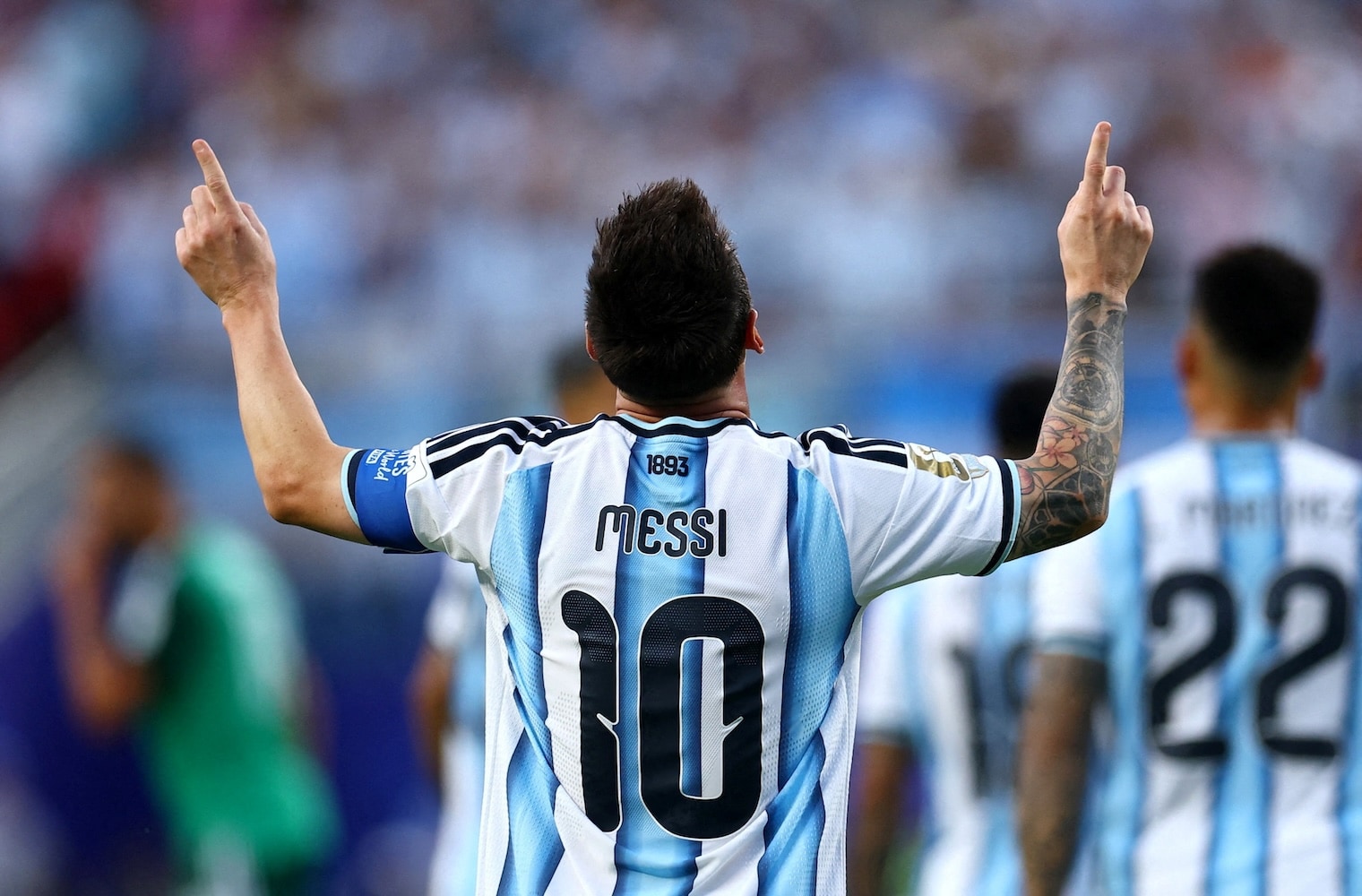
Lionel Scaloni is selling a myth, and the football world is buying it wholesale. Following Argentina's recent opening match, the manager stood before the press and delivered a line that was instantly regurgitated by every major sports outlet as gospel: "It won't happen that we get complacent; it will be difficult to beat us."
It sounds resolute. It sounds like the elite mentality of a world-conquering squad.
It is actually a profound misreading of sports psychology and tactical evolution.
The lazy consensus in football media is that winning breeds an unbreakable armor of confidence. The narrative dictates that once a team cracks the code of international success—winning the Copa América, the Finalissima, and the World Cup in succession—they possess a permanent immunity to complacency. Scaloni is banking on this narrative to shield his squad.
He is wrong. The very defiance Scaloni projects is the first symptom of the rot he claims to be fighting. When a manager feels the need to publicly assure the world that his players will not lose their edge, the edge has already started to dull.
The Defiance Fallacy: Why Believing You Can't Slumber is the First Step to a Crash
Every dynasty falls the same way. The collapse never begins with a sudden drop in technical ability. It begins with the subconscious belief that the shirt, the history, and the recent trophies will carry you across the finish line when the running gets brutal.
Scaloni’s assertion that "it will be difficult to beat us" shifts the burden of proof entirely onto the opponent. It assumes Argentina is a static fortress that others must figure out how to breach. In modern international football, no fortress remains unmapped for more than six months.
Look at the historical precedents that the mainstream media conveniently ignores when hyping up reigning champions:
- France (2002): Arrived as reigning World Cup and European champions. Zero goals scored, group stage exit.
- Italy (2010): Marcello Lippi relied on the veteran core that won in 2006, convinced their tournament DNA would suffice. Finished bottom of a group containing Paraguay, New Zealand, and Slovakia.
- Spain (2014): Vicente del Bosque maintained the exact same core that pioneered tiki-taka. They were systematically dismantled 5-1 by a Dutch side that simply refused to respect the hierarchy.
- Germany (2018): Joachim Löw believed the mechanical perfection of 2014 was permanent. Knocked out by South Korea.
In every single one of these scenarios, the managers gave interviews identical to Scaloni’s debut press conference. They preached focus. They denied complacency. They insisted their team was too hardened by victory to fall into the trap.
They failed because complacency is not a conscious choice. A player does not walk onto the pitch and decide to give 80%. Complacency is a microscopic delay. It is the extra half-second spent celebrating a progressive pass instead of tracking the runner. It is the subtle drop in intensity during a counter-press because you assume your teammate has the angle covered. Argentina is not immune to this; no collection of human beings is.
The Structural Danger of the Scaloni Matrix
To understand why Argentina is highly vulnerable right now, we have to look past the emotional narrative of Lionel Messi’s twilight years and analyze the tactical mechanics of how this team functions.
Argentina’s golden run was built on a very specific tactical ecosystem: an aggressive, high-intensity mid-block that suffocated spaces, combined with an hyper-efficient transition game designed to maximize Messi’s final-third touches. Players like Rodrigo De Paul, Alexis Mac Allister, and Enzo Fernández did not just provide quality; they provided a frantic, borderline desperate work rate. They played like men who had never won anything and were willing to burn their lungs to change that.
What happens when that desperation evaporates?
The Midfield Friction
When you analyze Argentina's recent matches with a cold, analytical lens rather than a fan's enthusiasm, the warning signs are visible. The press is slightly less synchronized. The distances between the defensive line and the midfield line have widened by an average of three to four meters during defensive transitions.
In elite football, a three-meter gap is a highway for a counter-attack.
[Traditional Scaloni Block]
Defensive Line <--- 10-12m ---> Midfield Trio <--- 8m ---> Forward Line (Compact, Suffocating)

[The Current Reality]
Defensive Line <----- 15m -----> Midfield Trio <----- 12m -----> Forward Line (Stretched, Vulnerable)
Against lower-tier opposition, individual brilliance masks these structural fissures. A recovery tackle from Cristian Romero or a moment of magic from Lautaro Martínez saves the day, and the pundits write articles about "finding a way to win." But relying on individual rescue acts is a unsustainable strategy for a tournament cycle.
People Also Ask: Dismantling the Flawed Premises
The football public continuously asks the wrong questions regarding Argentina’s current status. Let us address them with brutal honesty.
"Hasn't Scaloni already proven he can adapt after losing to Saudi Arabia in 2022?"
This is the most common defense used by Scaloni loyalists. They point to the opening match of the Qatar World Cup as proof that this coaching staff knows how to handle a wake-up call.
The flaw in this logic is context. In 2022, the defeat to Saudi Arabia happened before Argentina had achieved the ultimate glory. The hunger was still ravenous. The shock served as fuel because the ultimate objective—the World Cup—was still unfulfilled.
Today, the objective has been fulfilled. The monkey is off the back. You cannot use the same psychological lever twice. A shock defeat now does not generate a furious renaissance; it generates panic and finger-pointing because the players know what the mountaintop feels like and subconsciously resent the grueling climb required to get back there.
"How can a team with Lionel Messi be complacent?"
This question fundamentally misunderstands Messi's role in the squad's current dynamic. Messi is a tactical cheat code, but he is also a luxury asset that requires a massive defensive subsidy from the rest of the eleven.
As Messi has adjusted his game to conserve energy for explosive bursts in the final third, the other nine outfield players must run harder, cover more ground, and absorb more physical punishment. This system only works if the supporting cast is operating at 105% capacity. If the midfield drop their intensity by even 5%, the entire tactical scaffolding collapses. Messi cannot fix a broken counter-press from 40 yards away.
The Tactical Counter-Intuition: What Argentina Must Do to Survive
If Scaloni wants to avoid the classic champion's trap, he needs to abandon the rhetoric of continuity and embrace radical disruption. The current approach—playing the trusted generals and relying on squad harmony—is a recipe for a slow, agonizing exit.
1. Ruthlessly Bench the Immortals
The hardest thing for a manager to do is drop a player who won him a trophy. It feels like betrayal. But international football is a business of absolute pragmatism, not gratitude.
Scaloni needs to introduce elements into the starting eleven who have absolutely no attachment to the previous cycle's success. Young hungry players who view the veterans not as idols to protect, but as obstacles to overcome for a starting spot. If the dressing room feels safe, the dressing room is dead.
2. Change the Tactical Identity Entirely
Opponents have spent four years studying how Argentina builds up from the back. They know the trigger points for De Paul's movements. They know how to isolate Argentina's full-backs.
Instead of trying to perfect a system that every video analyst from Europe to South America has fully memorized, Scaloni needs to pivot. If Argentina spent the last two years mastering a possession-oriented style, they should deliberately cede the ball in key matches and transform into a devastating low-block counter-attacking unit. Force the opposition to solve a problem they didn't prepare for.
The Hard Truth Nobody Admits
The narrative of the untouchable champion is a commercial product designed to sell jerseys and generate pre-match hype. It has zero basis in the reality of high-performance sports.
The moment a manager tells the press that his team cannot be beaten by complacency is the exact moment the opposition smells blood. Scaloni’s words aren't a statement of strength; they are a shield for a creeping vulnerability that he can see, but refuses to publicly acknowledge.
Argentina is not going to lose because their opponents suddenly grew technically superior. If they fall, it will be because they believed their own press releases. They will look at their medals, look at their manager's confident quotes, and realize too late that the hunger that made them immortal has been replaced by the quiet comfort of being full.
Stop looking at the trophy cabinet. Start looking at the tracking data. The decline is already underway, and no amount of defiance at a microphone will stop it.