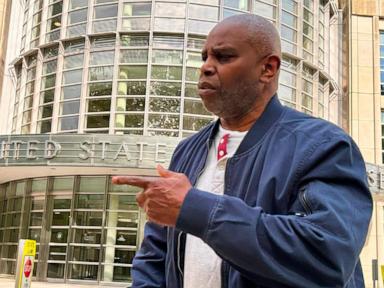
The erosion of capital in private real estate investment often stems not from market volatility, but from the exploitation of institutional prestige. When a former member of the judiciary is accused of orchestrating a multi-million dollar fraud, the mechanism of the "affinity swindle" undergoes a structural shift. The perpetrator is no longer just leveraging personal relationships; they are weaponizing the perceived infallibility of the legal system. This analysis deconstructs the specific mechanics of the alleged real estate investment scheme, the psychological arbitrage of the "Judge" title, and the systemic failure points that allow such high-level financial misappropriation to persist.
The Anatomy of the Prestige Arbitrage
The core of this alleged fraud rests on a concept defined here as Prestige Arbitrage. In finance, arbitrage is the simultaneous purchase and sale of an asset to profit from a difference in price. In a judicial-led fraud, the perpetrator "buys" the trust of the public through years of public service and "sells" it to investors at an inflated premium.
Investors operate under a heuristic—a mental shortcut—that assumes a former judge possesses an inherent alignment with the law. This creates a dangerous "diligence deficit." When a counterparty is a former magistrate, the investor often relaxes standard verification protocols, assuming that the individual's prior role acts as a permanent, government-vetted background check. The perpetrator exploits this by substituting a track record of legal expertise for a track record of fiscal performance.
The Three Pillars of the Real Estate Investment Scheme
The operational structure of the alleged swindle typically relies on three distinct functional failures. By categorizing these, we can identify exactly where the capital was diverted and why the internal controls of the investors failed to trigger an alert.
1. The Fiction of the Underlying Asset
In a standard real estate investment, the value is derived from the property’s cash flow or its appreciation potential. The alleged scheme creates a "Ghost Asset" scenario. Capital is solicited for specific acquisitions—multi-family units, commercial developments, or distressed debt—that either do not exist or are already encumbered by undisclosed liens. The fraudster provides documentation that mimics legitimate closing statements, effectively decoupling the investment from the physical reality of the real estate.
2. Commingling and the Velocity of Capital
A primary indicator of the transition from a failing business to a criminal enterprise is the collapse of the "Chinese Wall" between investment funds and personal expenditures. In these cases, the perpetrator utilizes a single pool of liquidity to fund a lifestyle that maintains the illusion of success. The velocity of capital—the speed at which money enters and exits the accounts—is high, designed to prevent investors from noticing that their "returns" are simply the principal of the next participant.
3. The Legalistic Smoke Screen
The unique variable in a judicial-led fraud is the use of complex legal jargon to stall or intimidate. When investors begin to question the lack of distributions or the status of a title, the perpetrator employs their deep knowledge of procedural law to create "friction." This includes:
- Drafting convoluted addendums that strip investors of their right to sue.
- Citing non-existent regulatory hurdles or "judicial stays" to explain delays.
- Threatening defamation suits against whistleblowers, leveraging their stature to make the threat credible.
The Cost Function of Institutional Betrayal
The damage of such a scheme extends far beyond the immediate loss of millions. We must quantify the "secondary drag" this places on the local real estate market and the legal profession.
The first cost is the Increased Risk Premium. Following a high-profile betrayal by a trusted figure, local private lenders and angel investors increase their required rate of return to account for "integrity risk." This makes it more expensive for legitimate developers to secure the early-stage capital necessary for urban renewal or housing projects.
The second cost is the Due Diligence Inflation. Every future real estate deal in that jurisdiction must now undergo a more rigorous—and expensive—legal audit. The "Trust Tax" is paid in the form of higher billable hours for forensic accountants and third-party escrow verification services that should have been redundant if the counterparty's reputation had been valid.
Logical Flaws in Investor Defense Strategies
The reason these schemes persist is often found in the flawed logic of the victims' recovery strategies. Most investors wait until the total collapse of the fund to seek legal recourse, operating under the Sunk Cost Fallacy. They believe that by providing the "judge" more time or more capital, they can help the individual "fix" the problem and recover their initial investment.
This creates a feedback loop where the perpetrator uses the delay to hide assets further or move funds into offshore accounts. The delay doesn't facilitate recovery; it facilitates the scrubbing of the audit trail.
Structural Vulnerabilities in Real Estate Oversight
The state’s regulatory apparatus often fails to catch these individuals because of a "Regulatory Gap" between judicial oversight and financial regulation. A judge is overseen by a judicial inquiry commission, but once they leave the bench, they enter the private sector as a "consultant" or "private investor."
Unless they are actively practicing law, the State Bar may have limited visibility into their business dealings. Simultaneously, private real estate syndications (under SEC exemptions like Regulation D) are often lightly regulated, relying on the "accredited investor" status of the participants to bypass intense scrutiny. This creates a vacuum where a high-profile individual can operate for years without a single regulatory body performing a deep-tissue audit of their books.
Identification of Red Flags in High-Prestige Offerings
Professional capital allocators must move beyond the "who" and focus exclusively on the "how." The following structural anomalies should be treated as terminal indicators of fraud, regardless of the individual’s pedigree:
- Asymmetric Information Flow: If the principal refuses to provide direct access to the title company or the primary lender for the project, the asset likely does not exist in the stated form.
- Guaranteed High Returns in Volatile Segments: Real estate is subject to interest rate fluctuations and construction delays. Any offering that promises a "guaranteed" double-digit return, particularly from a single-point-of-failure principal, violates the basic tenets of the risk-reward ratio.
- Escrow Bypass: Requests to wire funds directly to a personal or "operating" account rather than a dedicated project escrow account held by a neutral third party.
The Strategy for Capital Recovery and Risk Mitigation
For those currently exposed to similar high-prestige investment vehicles, the window for recovery is narrow. The standard "wait and see" approach is a liquidation of the remaining value.
- Demand an Immediate Verified Statement of Assets: This is not a summary provided by the principal, but a direct report from the financial institutions holding the funds.
- Trigger the "Bad Actor" Clause: Most sophisticated investment agreements contain clauses that allow for the immediate removal of a manager in the event of suspected malfeasance. If such a clause is missing, the investor's first priority should be the immediate filing of a "lis pendens" on any known property to prevent its sale during litigation.
- Coordinate with Law Enforcement Early: The civil court system is designed for dispute resolution between honest actors. It is poorly equipped to claw back funds from an individual skilled in the art of asset concealment. Criminal intervention, specifically through the FBI’s financial crimes division or the State Attorney General’s office, is the only mechanism with the power to freeze assets across multiple jurisdictions before they are dissipated.
The ultimate protection for the real estate market lies in the decoupling of "authority" from "authenticity." The prestige of a former office must never be traded as collateral for a financial transaction. Until the market treats a former judge with the same clinical skepticism as a first-time developer, the architecture of judicial deception will remain a profitable enterprise for the unscrupulous.
Move all remaining liquid capital into third-party managed escrow accounts immediately upon the first missed distribution, and initiate a forensic audit of the General Ledger. Any delay is a direct contribution to the perpetrator's exit strategy.