Eradicating an invasive mammalian herbivore from a micro-insular ecosystem demands an operational precision that simple culling cannot achieve. When conservation managers targeted the European rabbit population on Cabbage Tree Island, New South Wales, the objective was not population suppression, but complete structural elimination. Partial removals fail because density-dependent reproductive compensation rapidly fills ecological vacuums. Achieving an absolute zero-population state requires sequencing biological vectors, targeted toxicological distribution, and intensive verification protocols.
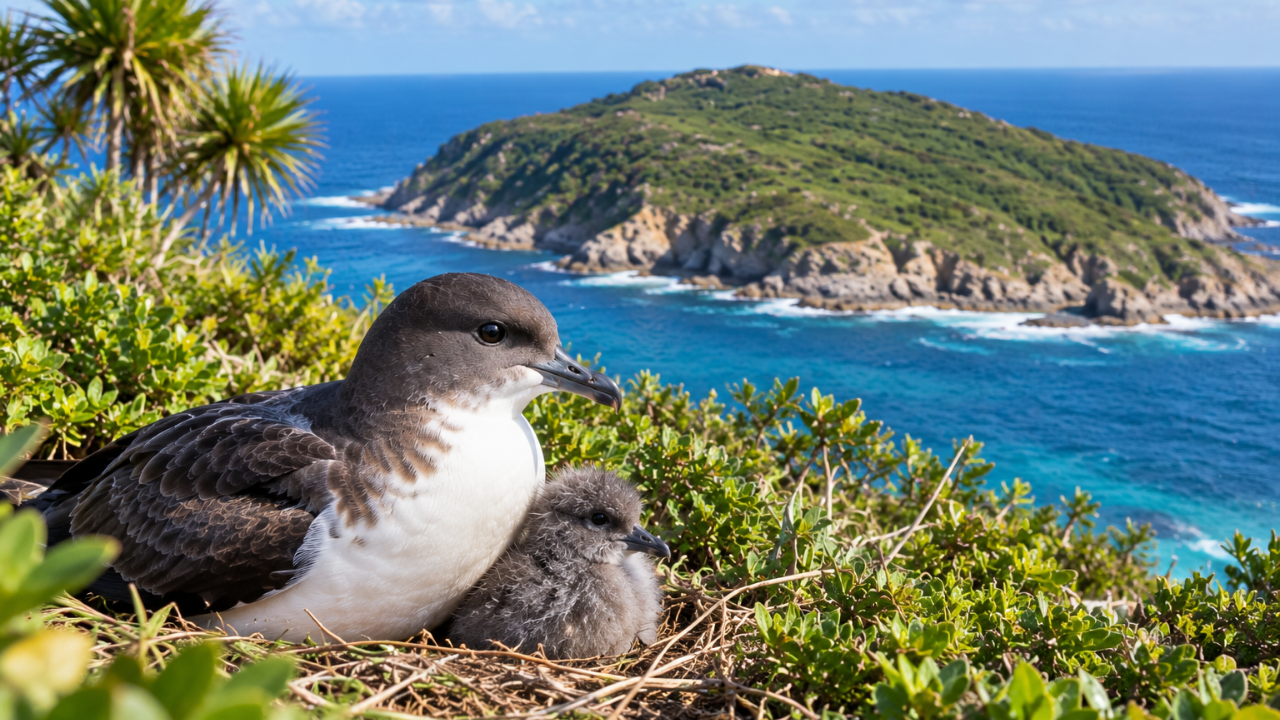
The degradation of the Gould’s petrel breeding grounds was driven by a multi-variable environmental feedback loop. European rabbits stripped the island understory of native vegetation, altering the micro-habitat structure. This denudation exposed nesting areas to secondary environmental hazards, specifically the sticky seeds and fruits of the birdlime tree, which immobilized adult and juvenile petrels upon ground contact. Furthermore, native predators such as the pied currawong exploited the compromised canopy cover, increasing predation pressure on an already bottlenecked seabird population. Solving the petrel population deficit required severing this feedback loop at its primary ecological driver: the rabbit-induced habitat degradation.
The eradication protocol executed in 1997 relied on a synchronized two-stage eradication funnel. First, the introduction of the rabbit hemorrhagic disease virus reduced the dense baseline population by over fifty percent without requiring direct human access to untamable terrain. This biological vector lowered the population to a threshold where mechanical and chemical interventions became economically and logistically viable. Second, an aerial distribution of baits containing brodifacoum, an anticoagulant rodenticide, targeted the remaining survivors. Telemetry monitoring confirmed that the terminal phase eradicated all remaining individuals within a strict thirteen-day operational window.
Ecosystem response metrics recorded between 1997 and 2000 demonstrate the velocity of ecological rebound when structural constraints are removed. With rabbit grazing pressure eliminated, the island's understory vegetation regenerated, removing the physical entrapment hazards for nesting seabirds. Breeding pairs of Gould’s petrels scaled from fewer than two hundred and fifty pairs in the early 1990s to over eight hundred breeding pairs by 2000, accompanied by an annual output exceeding four hundred fledglings. This exponential recovery validates the premise that invasive herbivores impose an artificial carrying capacity ceiling that, when breached downward, releases native species into rapid demographic expansion.
Single-island endemism creates a systemic vulnerability profile known as concentration risk. Concentrating the entire global reproductive output of an endangered subspecies onto a single geographical landmass leaves the population exposed to stochastic catastrophic events, including severe storms, fires, or accidental introduction of secondary predators. Consequently, operational strategy must transition from local habitat restoration to multi-site portfolio diversification.
Conservation managers mitigated this structural risk by establishing secondary breeding colonies on adjacent secure landmasses, such as Boondelbah Island and Montague Island. Replicating the core breeding demographic across geographically distinct reserves breaks the single-point-of-failure vulnerability. Future resource allocation must prioritize maintaining biosecurity quarantine protocols on these secondary habitats while scaling continuous acoustic and genetic monitoring to track demographic stability across all established colonies.