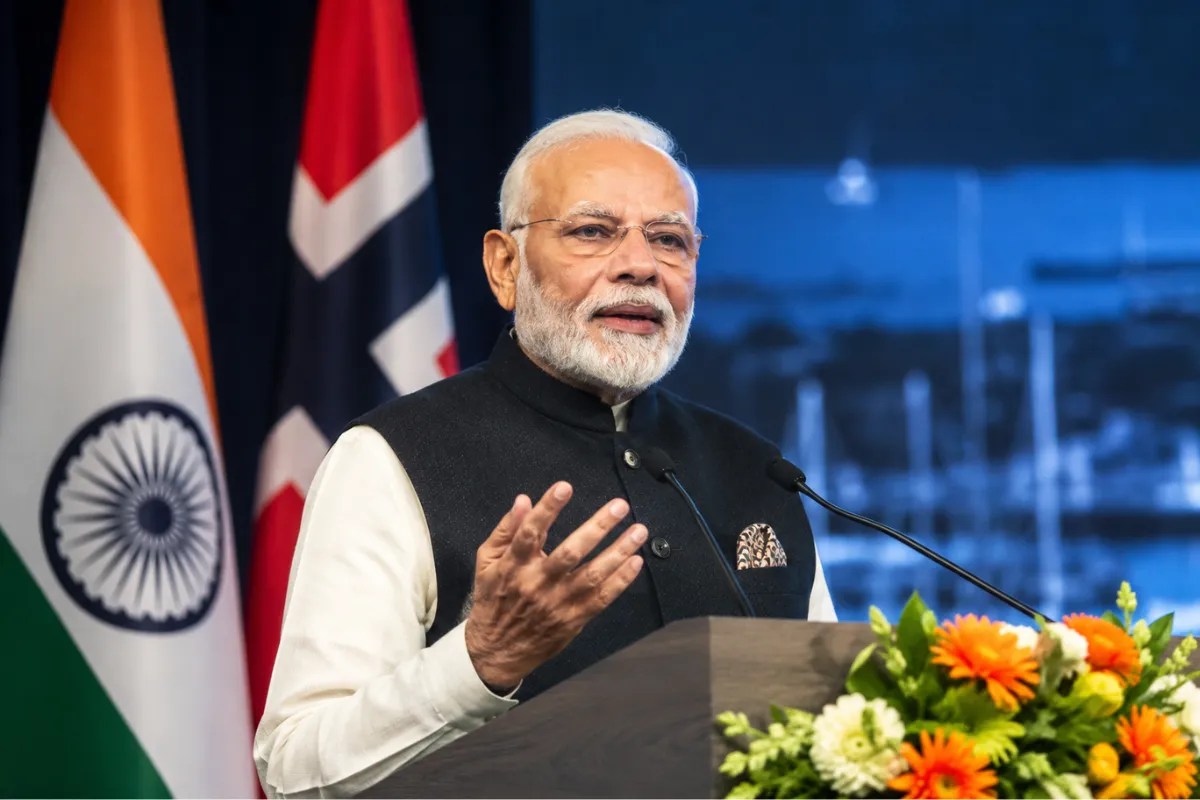
The operationalization of the India-European Free Trade Association (EFTA) Trade and Economic Partnership Agreement (TEPA) redefines how emerging markets negotiate bilateral trade pacts. Historically, free trade agreements focused primarily on tariff line liquidations and market access parameters. TEPA alters this conventional framework by introducing a legally binding investment objective: $100 billion in foreign direct investment (FDI) into India from the EFTA states—Switzerland, Norway, Iceland, and Liechtenstein—coupled with the projected generation of one million direct jobs over a fifteen-year horizon.
The mechanism establishes a structural precedent. For India, the agreement acts as a capital acquisition pipeline designed to reinforce domestic manufacturing under its industrialization programs. For the EFTA bloc, it provides access to a highly competitive digital ecosystem and a expanding consumer base, while insulating specialized European industries from global supply chain shocks. Understanding the operational realities of this agreement requires analyzing its capital distribution timeline, enforcement mechanisms, and sector-specific exclusions.
The Two-Tiered Capital Infusion Mechanism
The $100 billion investment commitment is not a front-loaded capital deployment. It operates under a bifurcated timeline that dictates a clear velocity of capital accumulation.
- Phase I (Years 1–10): A target of $50 billion in foreign direct investment stock.
- Phase II (Years 11–15): The remaining $50 billion investment tranche.
The structural definition of this capital is critical. The text of the agreement specifies that the $100 billion target explicitly excludes Foreign Portfolio Investment (FPI). Portfolio flows, characterized by their high volatility and susceptibility to global macro shifts, do not construct physical infrastructure or expand manufacturing capacity. By isolating FDI as the sole valid metric of fulfillment, the framework ensures that the incoming capital contributes directly to long-term asset creation and physical business infrastructure within Indian borders.
The Reciprocal Enforcement Matrix
The core structural innovation of TEPA is its conditional enforcement framework. Critics of traditional trade agreements note that investment promises frequently lack teeth. TEPA addresses this by linking EFTA's tariff concessions directly to the real-world execution of the investment target.
If the EFTA private sector fails to meet the specified capital thresholds at the ten- and fifteen-year review points, India is not left without recourse. The agreement outlines a three-stage consultation procedure to address capital shortfalls.
[Target Shortfall Identified]
             │
             ▼
[Three-Stage Consultation Procedure]
             │
             ▼
[Three-Year Grace Period for Correction]
             │
             ▼
[Suspension or Modification of Tariff Concessions]
Should the consultation fail to correct the capital trajectory, India retains the legal right to suspend or modify its tariff concessions on an equivalent basis. This creates a direct financial incentive for EFTA governments to align their domestic policies, export credit guarantees, and investment promotion strategies to encourage their private entities to deploy capital into the Indian market.
Structural Asymmetries in Tariff Elimination
The liberalization architecture reveals a deliberate asymmetry calculated to protect domestic vulnerabilities while maximizing export advantages for high-value sectors.
EFTA has eliminated or sharply reduced tariffs on 92.2% of its tariff lines, representing 99.6% of India's total export value to the region. This gives Indian exporters duty-free access to high-income European markets for industrial goods and processed agricultural products.
India's tariff reduction schedule is more conservative, covering 82.7% of its tariff lines, which accounts for 95.3% of EFTA's export value. To prevent immediate domestic disruption, India implemented a strict exclusion list. Highly sensitive sectors, including dairy, soya, coal, and primary agricultural goods, are entirely insulated from tariff concessions.
While gold represents more than 80% of India's total imports from EFTA—primarily sourced from Switzerland—the effective import duty on gold remains untouched by the agreement. This deliberate exclusion preserves India’s domestic revenue collection and prevents destabilizing shifts in its current account balance.
Sectoral Allocations and the Green Strategic Partnership
The operationalization of the agreement focuses on high-technology, capital-intensive verticals. Rather than competing on low-margin commodity manufacturing, the agreement structures capital flows toward sectors requiring precision engineering and advanced research.
Life Sciences and Med-Tech
Switzerland’s pharmaceutical and medical diagnostics industries face an optimized regulatory landscape in India. During negotiations, India protected its generic pharmaceutical sector by resisting EFTA demands for data exclusivity. The final framework balances intellectual property protection at standard TRIPS levels while encouraging Swiss enterprises to establish localized production facilities, capitalizing on India's competitive operational cost structures.
The Green Energy Transition
The bilateral alignment between India and Norway highlights the industrial logic of the agreement. The formal elevation of ties to a Green Strategic Partnership establishes a framework for direct technology transfers. Norway's expertise in deep-water marine technology, offshore wind infrastructure, carbon capture storage, and green hydrogen aligns with India's infrastructure requirements. The partnership transforms trade from a simple transaction of goods into a co-development matrix for decarbonization technologies.
Services Mobility and Mutual Recognition
While goods trade forms the baseline, services represent India's primary economic advantage. Prior to the agreement, Indian service professionals faced non-tariff barriers, localized labor market tests, and visa restrictions across Europe. TEPA provides structural solutions across three critical service modes:
- Mode 1 (Cross-Border Delivery): Standardized data-sharing and lower digital friction for IT and business process management.
- Mode 2 (Commercial Presence): Clear pathways for Indian firms to establish European footprints.
- Mode 4 (Movement of Natural Persons): Enhanced regulatory certainty for temporary professional transfers.
To operationalize these modes, the agreement provides for Mutual Recognition Agreements (MRAs) in professional services. Under this system, professional regulatory bodies in India and EFTA states align their licensing criteria for specialized fields such as nursing, accountancy, and architecture. This structural harmonization permits Indian professionals to have their qualifications recognized in EFTA markets without undergoing redundant, localized recertification processes.
Operational Bottlenecks and Risk Factors
Despite the structured upside, execution risks exist within the framework. The foremost limitation is that the $100 billion commitment originates from the private sector, not sovereign wealth funds or state pension vehicles. EFTA governments do not directly control corporate investment decisions. If India's domestic ease of doing business indicators degrade, or if macroeconomic instability occurs, the European private sector may choose to absorb the tariff penalties rather than deploy capital into sub-optimal assets.
Furthermore, reducing logistics friction remains an urgent operational priority. The Ministry of Commerce and Industry has highlighted that the success of the agreement relies heavily on reducing port dwell times and optimizing transit corridors. Tariff removal alone cannot bridge the competitive gap if systemic bureaucratic delays or infrastructure deficiencies increase the total cost of landed goods.
The structural play for corporate enterprises requires an immediate evaluation of supply chain geometry. Companies utilizing precision components, advanced chemicals, or seeking specialized European engineering inputs must audit their sourcing frameworks to leverage the phase-in of these lower tariff lines. Concurrently, Indian service organizations must proactively align their internal compliance protocols with the incoming MRAs to capture the early-mover advantage in the northern European services sector.


