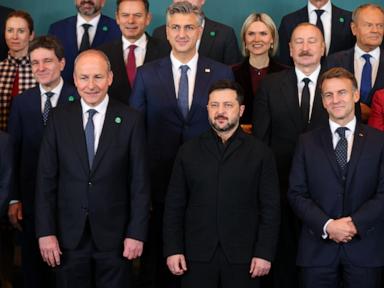
Sending a unified pan-European diplomatic delegation to the Ukraine peace talks represents a structural shift from fragmented bilateral statecraft to institutional collective bargaining. Rather than allowing individual national capitals to negotiate separate security and economic arrangements, the European Union is consolidating its diplomatic weight to prevent unilateral concessions, secure a permanent seat at the negotiating table, and bind post-war reconstruction financing directly to continental security guarantees.
The Structural Shift from Bilateralism to Institutional Bargaining
Historically, European crisis diplomacy suffered from a severe collective action problem. When external powers—specifically Washington and Moscow—engaged in high-stakes territorial or security negotiations, individual European states frequently pursued divergent national interests. Larger member states favored bilateral backchannels to protect domestic energy and trade priorities, while frontline Eastern European states demanded maximalist deterrence. Read more on a related issue: this related article.
By assembling a pan-European team of diplomats drawn from across the continent, Brussels is attempting to eliminate this internal arbitrage. In negotiation theory, when a fragmented coalition consolidates into a single bargaining unit, it raises the reservation price for the opposing party. Russia can no longer exploit divisions between Western European pragmatism and Eastern European hawkishness to extract sequential compromises.
This mechanism operates through three distinct structural adjustments: Additional analysis by The Guardian delves into comparable perspectives on the subject.
- Mandate Consolidation: Individual diplomats no longer represent sovereign foreign ministries; they operate under a unified European External Action Service (EEAS) and Council mandate. Any deviation from the agreed baseline requires formal consensus in Brussels, slowing down rapid, coercive concessions.
- Geographic Representation: Including diplomats from Nordic, Baltic, Central, and Western European states neutralizes the internal political critique that peace terms are being dictated solely by Paris and Berlin without regard for frontline security realities.
- Institutional Memory and Continuity: A standing continental delegation prevents domestic election cycles in individual member states from derailing long-term negotiating positions.
The Three Pillars of European Negotiating Power
A diplomatic delegation is only as effective as the material power backing its demands. Europe’s strategic blueprint relies on linking diplomatic presence to three non-negotiable forms of structural power that neither Washington nor Moscow can replicate independently.
1. The Financial Reconstruction Mechanism
Post-war Ukraine requires hundreds of billions of euros in capital expenditure to rebuild critical infrastructure, energy grids, and industrial capacity. The United States has consistently signaled that the financial burden of long-term reconstruction belongs primarily to Europe. By tying European Union accession milestones and multi-year financial facilities directly to the diplomatic settlement, the European delegation holds a decisive veto over the economic viability of any peace agreement. A ceasefire that leaves Ukraine economically unviable or politically unstable undermines the return on European capital, giving Brussels direct material standing in defining the territorial and legal parameters of the settlement.
2. The Sanctions and Frozen Assets Architecture
The vast majority of immobilized Russian central bank assets—approximately two-thirds of the global total—are held within European financial jurisdictions, primarily Euroclear in Belgium. Furthermore, European trade restrictions, maritime insurance bans, and energy embargoes form the core of the economic pressure campaign against Moscow. Washington cannot unilaterally lift European sanctions, nor can it release immobilized sovereign assets held under European law. Placing continental diplomats directly in the negotiating room forces any discussion of sanctions relief to pass through Brussels, transforming legal and financial jurisdiction into active diplomatic currency.
3. Continental Security Guarantees and Force Generation
Any durable settlement requires a credible deterrence mechanism to prevent a renewed offensive. Because American strategic bandwidth is increasingly divided across multiple global theaters, European states must provide the bulk of the long-term military training, air defense integration, and defense-industrial production for Ukraine. Diplomats representing the continent’s defense ministries and industrial base are required at the table to calibrate military commitments with political realities, ensuring that security guarantees are operationally feasible rather than purely aspirational.
The Coordination Bottleneck and Decision-Making Friction
While consolidation increases collective bargaining power, it simultaneously introduces severe operational friction. A multi-national European delegation must navigate the structural tension between speed and consensus.
In bilateral negotiations, a single envoy can pivot rapidly, trade concessions in real time, and finalize agreements within hours. A pan-European team operates on a hub-and-spoke communication model. Every tactical adjustment proposed at the negotiating table must be transmitted back to Brussels, debated among 27 permanent representatives, and approved by national capitals—some of which maintain openly skeptical stances toward deeper European involvement in the conflict.
This creates a predictable operational vulnerability:
- Information Leakage: Broadening the circle of diplomatic participants increases the surface area for unauthorized disclosures to the press, which can prematurely collapse sensitive backchannel compromises.
- Lowest-Common-Denominator Mandates: To secure unanimous approval from all member states, the delegation’s initial negotiating parameters risk becoming overly rigid, limiting the envoys' tactical flexibility when confronted with unexpected proposals.
- Parallel Track Confusion: If Washington and Brussels fail to synchronize their red lines prior to engaging Moscow, the presence of a separate European team risks creating competing diplomatic tracks, allowing Russian negotiators to play American urgency against European institutional caution.
Strategic Alignment with Transatlantic and Frontline Interests
The deployment of a pan-European team is also a direct response to shifting dynamics within the transatlantic alliance. European policymakers recognize that unilateral American diplomacy could prioritize rapid conflict termination over long-term continental stability. A bilateral Washington-Moscow framework risks treating European security architecture as a secondary variable.
By institutionalizing a continental presence, Europe forces a trilateral—or quadrilateral, including Kyiv—negotiating structure. This prevents a scenario where European governments are presented with a pre-packaged diplomatic settlement that they are expected to finance and police without having shaped its terms.
For Kyiv, the presence of a unified European delegation serves as a critical diplomatic counterweight. Ukrainian negotiators gain an institutional partner whose long-term survival and security are geographically bound to the outcome of the war, offsetting potential pressure from non-European actors to accept premature territorial concessions.
Operational Execution for the Continental Delegation
To prevent the pan-European delegation from collapsing under its own bureaucratic weight, European leadership must enforce strict operational discipline before formal talks commence. The delegation cannot function as a debating society; it must operate as a unified executive instrument.
First, Brussels must pre-negotiate a tiered mandate with clear escalation thresholds. Envoys need pre-authorized tactical autonomy on technical issues—such as ceasefire monitoring mechanisms, prisoner exchanges, and humanitarian corridors—while reserving sovereign questions of territorial recognition and sanctions removal for the European Council.
Second, the European team must establish a joint secretariat with Ukrainian negotiators prior to engaging external parties. Presenting harmonized European-Ukrainian positions on reconstruction, EU accession timelines, and security protocols will prevent adversaries from exploiting differences between Kyiv and Brussels.
Third, European diplomats must anchor every negotiation session to verifiable, phased reciprocity. Rather than offering upfront sanctions relief or diplomatic normalization in exchange for promises of de-escalation, the delegation must structure the settlement as a strict conditional sequence: verified military withdrawals and compliance metrics must precede any release of financial constraints or institutional integration steps. Only by enforcing this mechanical linkage between security compliance and economic incentives can Europe convert its collective diplomatic presence into a durable continental settlement.


