The heavy oak doors of the basilica shut out the roar of the midday traffic, but they cannot shut out the noise of the century. Inside, the air smells of melted beeswax, old stone, and the faint, sweet trace of frankincense. A woman sits in the third pew from the back, her fingers tracing the fraying edge of her coat pocket. She is not thinking about theology. She is thinking about her medical bills, her son who no longer speaks to her, and the persistent, low-grade anxiety that seems to hum through the floorboards of modern life.
She represents a quiet epidemic. We live in an era of profound disconnection, where the digital tether is tight but the human bond is frayed. Discover more on a similar issue: this related article.
A few miles away, a group of men in vestments are preparing a ritual that dates back centuries, attempting to answer that very modern ache. The US Catholic bishops are collectively consecrating the nation to the Sacred Heart of Jesus. To an outsider, it sounds like an archaic exercise in medieval mysticism. To the secular observer, it looks like a political stunt or an outdated performance.
But look closer. Beneath the heavy velvet and the Latin phrasing lies a desperate, radical attempt to re-anchor a drifting culture. It is an act of spiritual open-heart surgery. Additional reporting by USA Today delves into comparable perspectives on this issue.
The Anatomy of an Ancient Symbol
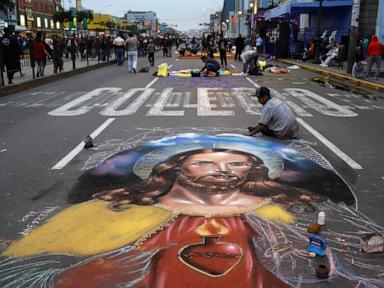
To understand why this matters now, we have to look past the kitsch. Anyone who grew up in or around a Catholic household knows the image. It hangs in Grandmas' hallways or sits on nightstands: a surreal, bleeding heart, encircled by thorns, topped with a miniature flame, and radiating an unsettling light.
As a child, it terrified me. It felt gory, visceral, and entirely disconnected from the sterile, polite religion I was taught in school.
The history of the symbol clarifies its intensity. The devotion gained its modern shape in 17th-century France, largely through the mystical visions of a visitation nun named Margaret Mary Alacoque. At the time, the religious world was infected by Jansenism—a rigid, cold heresy that viewed humanity as fundamentally corrupt and God as a distant, terrifying judge. You had to be perfect to approach Him. The bar was impossibly high, the air too thin to breathe.
The Sacred Heart was the antidote. It was a visual declaration that the divine engine driving the universe is not a cold calculator, but a passionate, vulnerable human heart.
Consider the mechanics of a physical heart. It pumps roughly 2,000 gallons of blood a day. It beats 100,000 times without you ever asking it to. It is the only organ that speaks in a rhythm everyone recognizes. When the bishops point to this image, they are trying to shift the cultural conversation from the head to the chest. They are arguing that our current crises cannot be argued away with better legislation or smarter algorithms. They believe the wound is deeper.
What Does Consecration Actually Mean?
The word "consecration" has a heavy, metallic ring to it. It sounds like ownership, or perhaps an eviction notice. In reality, the Latin root means simply "to make holy with."
Think of it less like a magic spell and more like a title deed transfer. Imagine a historic house that has fallen into disrepair. The windows are smashed, the roof leaks, and squatters have turned the living room into a garbage dump. The owner decides to hand the keys over to a master architect. The architect doesn't just paint the walls; he moves in, clears the debris, and claims every square inch as his own.
When the bishops consecrate the nation, they are not claiming that every citizen suddenly belongs to a specific church. They do not possess the political power to enforce that, nor is that the theological intent. Instead, they are offering the country’s collective pain, its fractured politics, and its lonely citizens up to a higher power. They are handing over the keys.
But the real problem lies elsewhere. How does an ancient ritual translate to a culture obsessed with efficiency and self-reliance?
For the average person in the pew, the ceremony is an acknowledgment of bankruptcy. It is an admission that the American project, for all its material wealth, is suffering from a severe case of spiritual malnutrition. We have more ways to communicate than at any point in human history, yet a third of Americans report feeling chronically lonely. We have optimized our lives for comfort, only to find that comfort is a terrible substitute for meaning.
The Invisible Stakes of a Visible Ritual
The ceremony itself is deceptive in its simplicity. Prayers are recited. Incense rises. A formal formula is read aloud by men who bear the weight of a institutions plagued by their own historical scandals and failures. The vulnerability here is mutual; the church offering the prayer is just as broken as the culture it prays for.
Critics will argue that this is an escape from reality. They see people kneeling in a dim church and assume they are hiding from the problems of the world.
The opposite is true. True consecration is an engagement with reality at its most brutal level. The image of the heart is not a valentine; it is wrapped in thorns. It acknowledges that to love is to be willing to bleed.
Let us look at a hypothetical scenario to ground this. Suppose a community is torn apart by economic collapse. A factory closes, jobs vanish, and opioids fill the vacuum. The local parish decides to focus on the Sacred Heart. This does not mean they stop running the food pantry or cancel their job training programs. Instead, it changes why they run them. The volunteers stop viewing the struggling townspeople as clients to be managed or numbers on a spreadsheet. They begin to see them as individuals carrying the same wounds as the figure on the altar.
The social fabric changes when the motivation shifts from civic duty to shared brokenness.
The Friction with Modernity
We are allergic to dependency. Our entire modern ethos is built on the myth of the self-made individual. We are told to curate our brands, protect our peace, and cut off anyone who drains our energy. We treat our lives like corporations, constantly optimizing for maximum return on investment.
The Sacred Heart rejects this entire framework. It offers an economy of waste. It is a heart outside the body, exposed, unprotected, and poured out for people who might not even care.
It is a terrifying way to live.
When you look at the cultural landscape, you see a desperate search for what the anthropologists call a "sacred center." Lacking a traditional religious framework, we sacralize politics, fitness, diet, and identity. We turn our ideological camps into churches, and we excommunicate those who disagree with us. The desire for devotion hasn't vanished; it has just gone feral.
The bishops’ initiative is an invitation to domesticate that desire, to direct it back toward a source that claims it can handle the weight of human expectation.
Beyond the Velvet and the Smoke
The ritual ends. The smoke from the thurible dissipates into the high arches of the ceiling. The bishops return to their administrative duties, facing the same grim headlines and institutional headaches they woke up to this morning. The woman in the third pew stands up, buttons her coat against the chill, and steps back out into the bright, noisy street.
Nothing has changed externally. The traffic is still loud. The bills are still due. The son still hasn't called.
Yet, everything has shifted. She walks with the quiet confidence of someone who knows that her personal ache is part of a larger, older story. She has seen the architecture of a love that does not flinch at wounds, a love that has claimed her city, her country, and her own fragile chest as its home.
The true test of the consecration will not be found in the grand statements of the hierarchy or the media coverage that follows. It will be found in the quiet, microscopic decisions of individuals who choose to live as though their hearts are no longer their own to break.