Brazil’s updated Nationally Determined Contribution (NDC) for 2025 represents a pivot from reactive environmental policing to an integrated macroeconomic strategy, yet its success remains tethered to a fragile "Command and Control" infrastructure. The plan targets a reduction in net greenhouse gas emissions to a range of 850 million to 1.05 billion tons of $CO_2$ equivalent by 2035. This goal translates to a 59% to 67% reduction compared to 2005 levels. While the headline figures suggest a bold leap, the underlying mechanics reveal a high-stakes reliance on the "LULUCF" (Land Use, Land-Use Change, and Forestry) sector to offset structural emissions growth in the energy and industrial blocks.
The Biome Divergence Problem
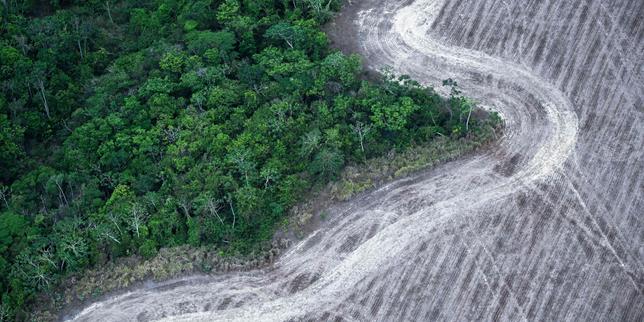
The central pillar of the Brazilian strategy is the pursuit of "Zero Deforestation" by 2030. However, treating the Brazilian territory as a monolith ignores the distinct economic drivers affecting different biomes. The Amazon and the Cerrado operate under different legal and market pressures, creating a displacement effect where successful enforcement in one region inadvertently accelerates degradation in another.
- The Amazonian Enforcement Ceiling: Reductions in Amazonian deforestation have historically relied on satellite monitoring (DETER/PRODES) and field interventions by IBAMA. The limitation here is the "Last Mile" of enforcement. As large-scale clear-cutting diminishes, it is replaced by "selective logging"—small-scale degradation that is harder to detect via traditional optical sensors and requires higher operational expenditure per hectare protected.
- The Cerrado Leakage: The Cerrado remains the frontier for global agribusiness. Current Brazilian legislation (The Forest Code) allows for significantly higher legal deforestation percentages in the Cerrado (up to 80% on some private lands) compared to the Amazon (20%). Without a structural alignment of these legal thresholds, the NDC’s targets will be undermined by "legal" land clearing that offsets "illegal" Amazonian gains.
The Economic Elasticity of Restoration
The 2025 plan introduces a massive reforestation component, yet the economic feasibility of "Restoration at Scale" is often overestimated. To transition from a carbon source to a carbon sink, Brazil must manage the marginal cost of land.
The Cost Function of Land Restoration ($C_r$) can be expressed as:
$$C_r = L_a + I_s + O_m - V_c$$
Where $L_a$ is the opportunity cost of land (foregone agricultural revenue), $I_s$ is the initial investment in silviculture, $O_m$ is the multi-year maintenance cost, and $V_c$ is the realized value of carbon credits or sustainable timber.
The bottleneck is $L_a$. In regions where soy or cattle yields are high, the value of $V_c$—even at premium voluntary market prices—rarely reaches parity with agricultural profits. This creates a "Compliance Gap" where restoration only occurs on marginal, low-productivity lands, which may not be the areas of highest biodiversity or carbon sequestration potential.
Modernizing the Energy Matrix: The Biofuel Paradox
Brazil possesses one of the cleanest energy matrices in the G20, yet the NDC faces a challenge in the transport sector. The strategy relies heavily on the expansion of "RenovaBio" and the scaling of Sustainable Aviation Fuel (SAF) and Green Hydrogen.
The paradox lies in the land-use implications of bioenergy. If Brazil increases ethanol and biodiesel production to meet domestic and export demands, it places additional pressure on the "Agricultural Land Boundary." This creates a feedback loop:
- Increased biofuel demand raises land value.
- Rising land value increases the opportunity cost ($L_a$) of reforestation.
- The resulting land-use tension can trigger indirect deforestation (iLUC), where cattle ranching is pushed further into the forest frontier to make room for fuel crops.
Structural Bottlenecks in Climate Finance
The transition requires an estimated annual investment that far exceeds current domestic budgetary allocations. The strategy assumes a significant influx of international capital through the "Amazon Fund" and new "Green Bonds." However, three specific risks threaten the stability of this capital:
- Jurisdictional Risk: International investors require "Additionality" proof—meaning they want to see that their money caused a reduction that wouldn't have happened anyway. If Brazil’s baseline is already improving through better policing, proving additionality becomes technically complex.
- Currency Volatility: Long-term restoration projects (20-30 years) are highly sensitive to the BRL/USD exchange rate. A weakening Real inflates the cost of imported monitoring technology and specialized equipment.
- The Sovereign Credit Link: If the NDC is seen as a fiscal burden rather than a growth engine, it could impact Brazil’s credit rating, ironically making the cost of "Green Debt" more expensive.
The Technological Transition of the Cattle Industry
Methane emissions from enteric fermentation remain a "Hard-to-Abate" sector in the Brazilian profile. The strategy moves toward "Low-Carbon Agriculture" (Plano ABC+), focusing on:
- Pasture Recovery: Degraded pastures sequester minimal carbon. By intensifying cattle per hectare through better soil management, Brazil can theoretically freeze its agricultural footprint while increasing output.
- Genetic and Nutritional Optimization: Reducing the time to slaughter directly correlates with lower lifetime methane emissions per animal.
The execution risk is the "Rebound Effect." If intensification makes cattle ranching more profitable, it may encourage further expansion unless paired with strict, permanent land-use freezes. The strategy must move beyond voluntary adoption of ABC+ practices toward a mandatory traceability system that links livestock movement documents (GTA) with high-resolution satellite imagery.
Institutional Fragility and Regulatory Continuity
The most significant non-quantifiable risk is the "Political Pendulum." Environmental policy in Brazil has historically shifted from high-intensity regulation to purposeful neglect based on the executive branch's priorities. For the 2025 NDC to be credible, the transition must be "Institutionalized"—meaning it must be embedded into the permanent bureaucracy of the Central Bank and the Ministry of Finance, rather than residing solely within the Ministry of Environment.
The creation of a domestic regulated carbon market (SBCE) is a necessary step to provide a price signal that survives political cycles. By putting a price on carbon, the government shifts the burden of enforcement from the state to the balance sheets of private corporations.
Strategic Deployment of the Native Vegetation Protection Law
The most effective tactical move for the Brazilian government is the full implementation of the "Rural Environmental Registry" (CAR). While the registry exists, the validation process is stalled.
- Step 1: Accelerate automated validation of the 7 million+ entries in the CAR database using AI-driven spatial analysis to identify overlaps and illegal clearings.
- Step 2: Link the CAR validation to the provision of subsidized agricultural credit. Farmers with "Red" status on their land records should be systematically barred from both public and private credit markets.
- Step 3: Convert the "Forest Code" liabilities into "Environmental Reserve Credits" (CRA). This allows landowners who have preserved more than the legal requirement to sell credits to those who are in deficit, creating a market-based compliance mechanism that requires zero government spending.
The success of the 2025 NDC will not be measured by the sincerity of the diplomatic rhetoric in Belém or Baku, but by the integration of satellite data into the daily workflows of the Brazilian banking system. The climate plan is no longer an environmental policy; it is a trade and solvency policy. Brazil’s ability to remain a global agricultural powerhouse depends entirely on its ability to prove that its commodities are not the byproduct of ecological liquidation. The roadmap requires moving from the "Heroic Ranger" model of forest protection to a "Digital Ledger" model where every hectare of carbon is tracked, priced, and defended as a national asset.
Would you like me to analyze the specific impact of the Brazilian Regulated Carbon Market (SBCE) legislation on the industrial sector's competitiveness?