The desert does not yield easily. For generations, the peninsula jutting into the Persian Gulf knew a specific kind of quiet, broken only by the shifting of dunes and the low hum of fishing boats along the coast. It was a place defined by what it lacked. Then came a shift that rewritten the map of global power, driven largely by the sheer will of one man.
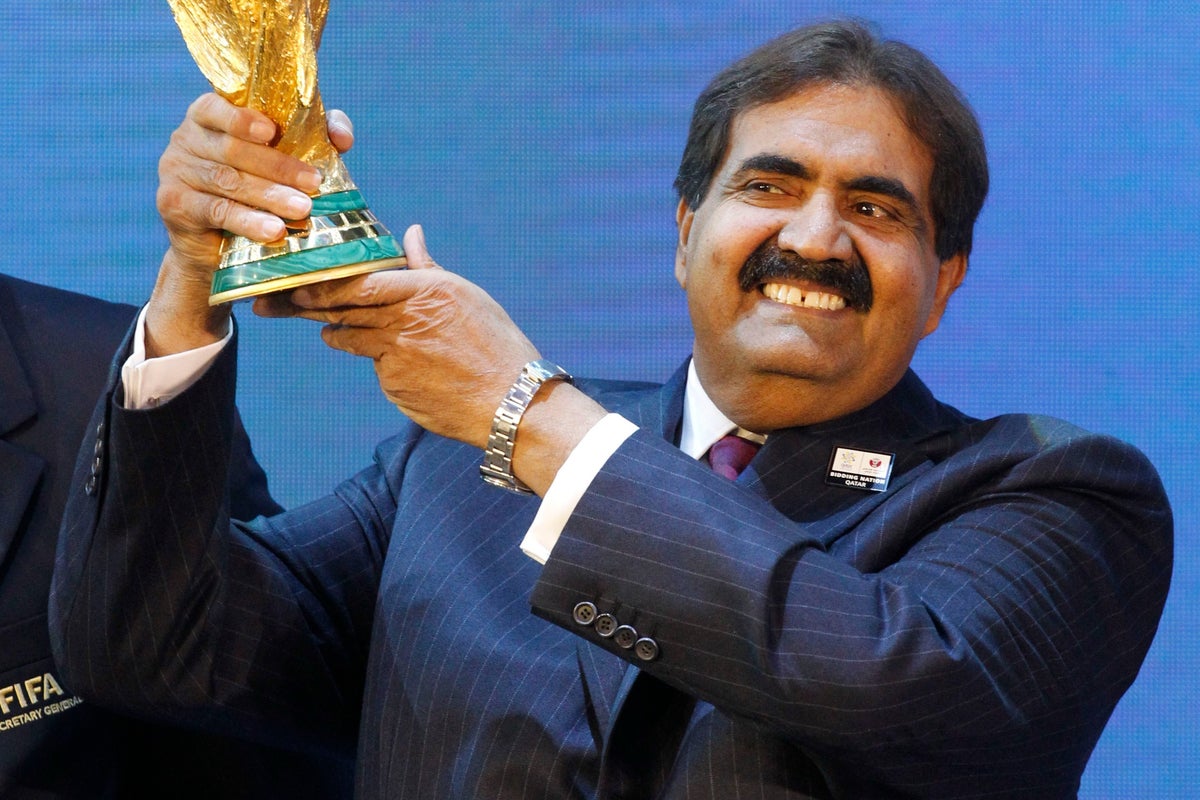
News broke from the state media apparatus that Sheikh Hamad bin Khalifa Al Thani, the former ruler who single-handedly transformed Qatar from a quiet pearl-diving backwater into a towering global titan, has died at the age of 74.
To understand the weight of this loss, you have to look past the standard, dry tickers of international news alerts. You have to look at the skyline of Doha, a hyper-futuristic glass metropolis that seems to rise directly out of the sand like a mirage. That skyline did not happen by accident. It was willed into existence.
The Day the World Shifted
Picture a scorching summer morning in 1995. The air is thick with humidity, the kind that sticks to your skin the moment you step outside. While his father was vacationing in Europe, the young, ambitious Crown Prince Hamad made a move that would permanently alter the geopolitical chessboard. It was a bloodless palace coup, executed with quiet precision.
Imagine the sheer audacity required to call your father in a Swiss hotel to tell him you are now running the country.
He didn’t do it for personal luxury. He did it because he saw a future nobody else could visualize. At the time, Qatar was sitting on a goldmine it didn't know how to use: the North Field, a massive underwater reservoir of natural gas. The problem? Natural gas is notoriously difficult to move. Unlike oil, you can't just pump it into a tanker and sail away. You have to supercool it to minus 260 degrees Fahrenheit, turning it into a liquid, before shipping it across the oceans in specialized, incredibly expensive vessels.
It was a staggering gamble. The country was deeply in debt, and international oil companies were skeptical. Skeptics called it a fool's errand.
But Hamad bet the entire kingdom on liquefied natural gas (LNG).
He partnered with foreign energy giants, built massive liquefaction plants, and created a fleet of cryogenic ships. Within a decade, the gamble paid off. The country went from struggling to pay its bills to boasting the highest per capita income on the planet. Wealth flooded into the peninsula at a pace never before seen in human history.
Soft Power and the Loudest Voice
Wealth alone, however, does not buy security, especially when you are a small country sandwiched between giant, muscle-flexing neighbors like Saudi Arabia and Iran. Hamad understood a fundamental truth about the modern world: if you don’t have a massive army, you need to make yourself indispensable.
He bought influence, but more importantly, he bought relevance.
In 1996, he funded a tiny satellite television network called Al Jazeera. In a region where state television consisted of dry broadcasts of government officials shaking hands, Al Jazeera was an explosion. It showed raw, unfiltered debates, gave voice to dissidents, and completely upended the Arab media ecosystem. It made Qatar a powerhouse of soft power. Suddenly, the tiny peninsula had the loudest microphone in the Middle East.
Then came the investments. Through the Qatar Investment Authority, the sovereign wealth fund Hamad established, the tiny nation began buying up the world.
Think of it as a global shopping spree with a grand strategic purpose.
The fund bought iconic London landmarks like Harrods, the Shard, and the Olympic Village. It acquired massive stakes in Volkswagen, Barclays, and Tiffany & Co. If you walked through the streets of London or New York, you were walking through properties quietly owned by the treasury in Doha.
The Handover
Most autocrats leave office in a casket or a coup. Hamad chose a different path, one that shocked the Arab world. In 2013, at the height of his power and influence, he voluntarily stepped down, handing the reins of the state to his 33-year-old son, Sheikh Tamim.
It was a calculated, graceful exit. He became known simply as the "Father Emir," a towering figure who stepped into the shadows but whose presence was felt in every decision the country made. He watched from the sidelines as his son navigated massive regional blockades and successfully hosted the 2022 FIFA World Cup—the ultimate realization of the Father Emir's dream to put his nation on the global stage.
His passing at 74 marks the end of an era of breakneck transformation. It leaves a country that is unrecognizably wealthy, fiercely independent, and permanently etched into the fabric of global politics.
The desert wind still blows across the peninsula, but it no longer carries the quiet hum of fishing boats. It whistles past shimmering glass towers, international corporate headquarters, and bustling transit hubs that connect the East to the West. The man who built the modern desert is gone, but the metropolis he conjured from the sand remains, defiantly charting its own course.