Water in the American West is never just water. It is currency. It is a signed treaty scribbled in dust and blood. It is the invisible tether keeping millions of people alive in places where nature intended nothing more complex than a cactus and a passing coyote.
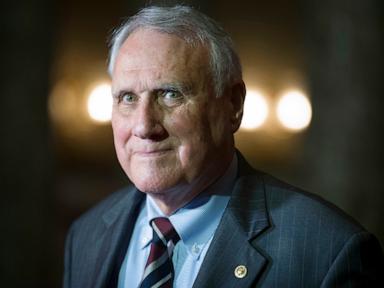
For decades, the invisible hand holding that tether steady belonged to a man who looked less like a lawmaker and more like an accountant who had spent too many afternoons arguing with irrigation districts. Jon Kyl did not raise his voice. He did not need to. In a legislative body built on theatrical posturing and the frantic search for television cameras, Kyl possessed a terrifying weapon: an exhaustive, encyclopedic grasp of how things actually worked. Also making headlines in this space: The Structural Economics of Institutional Failure The Kennedy Center Closure Breakdown.
When he passed away at eighty-four, the headlines called him a workhorse. They used words like policy and bipartisan. They missed the poetry entirely.
To understand what Kyl actually did, you have to stand on the banks of the Central Arizona Project canal on a blistering July afternoon. The water moving through that concrete trench is not a gentle creek; it is a stolen river, hauled uphill against gravity and common sense, destined to fill swimming pools in Paradise Valley and cool data centers in the desert fringe. It is a logistical miracle born of human stubbornness. And for thirty years, every time that miracle threatened to collapse under the weight of tribal water rights, interstate squabbling, and shrinking Colorado River snowpacks, Jon Kyl was the guy in the room who had read the footnotes everyone else skipped. Further information into this topic are detailed by NBC News.
Politics usually rewards the loud. Kyl was ruthlessly quiet.
He understood a fundamental truth that escapes most modern leaders: the desert does not care about your political party. A dry well is bipartisan. A shrinking reservoir does not check your voter registration before it drops below the intake valve. While others grandstanded about environmental collapse or agricultural ruin, Kyl sat in windowless rooms with tribal leaders, state legislators, and federal bureaucrats, hammering out compromises that took years to build and seconds to tear down.
Consider the settlements he engineered for Arizona’s Native American tribes. For generations, the federal government promised water to indigenous nations and then spent decades looking the other way while white settlers dug deeper wells and siphoned the aquifers dry. It was a slow-motion theft, legal on paper and devastating in practice. Kyl didn't approach this as a moral crusade. He approached it as a ledger that needed balancing. He understood that peace in the desert required certainty, and certainty required water rights that could actually be measured, delivered, and defended.
He spent years stitching together the complicated architecture of the Arizona Water Settlements Act. It was a massive, unwieldy beast of a law. No one tweeted about it. No cable news network interrupted their broadcast to explain the cubic-feet-per-second flow rates of the Gila River. But because of that quiet, agonizing labor, communities that had been parched for a century finally had a legal claim to wet their soil.
There is a specific kind of loneliness that comes with being the person in the room who actually knows the material.
You become the indispensable bottleneck. Every faction wants a piece of you, and every compromise leaves someone muttering about betrayal. Kyl absorbed it all with a stoic indifference that drove his opponents crazy and occasionally frustrated his allies. He was a conservative’s conservative—unflinchingly loyal to his party, deeply suspicious of federal overreach, and yet capable of looking across the aisle to say, Look, if we don't fix this canal today, our grandchildren are going to be packing their bags for Ohio by Tuesday.
He retired from the Senate, came back when John McCain’s passing left a gaping wound in the state's political soul, and then stepped back into the quiet shadows from which he had operated for most of his adult life. That return was telling. It wasn’t about ego. It was about mechanics. The machine was wobbling, someone needed to tighten the bolts, and he happened to have the wrench.
We live in an era that worships the charismatic disruptor. We want our leaders to be rock stars, revolutionaries, or moral avatars shouting from digital pulpits. We reward the burn-it-all-down rhetoric because it feels passionate.
Kyl offered the exact opposite antidote: competence as a form of grace.
He reminded us that civilization is a thin, precarious varnish. Beneath it lies thirty feet of caliche and a water table that drops an inch every time someone turns on a kitchen tap in Phoenix. Maintaining that varnish isn't glamorous. It doesn't look good on a campaign poster. It requires sitting in a chair until your back hurts, reading ninety-page legal briefs about drainage basins, and arguing about the phrasing of a sub-clause in a fifty-year-old compact.
When you drive through the Valley of the Sun today, past the endless sprawl of green lawns fighting a losing battle against the asphalt, you are driving through Jon Kyl's monument. It is not made of bronze or marble. It is made of wet concrete, complex legal settlements, and the stubborn refusal to let the desert reclaim what we stole from it.
The water keeps flowing. The taps keep running. And the man who kept the valves from locking up has finally laid his papers down.