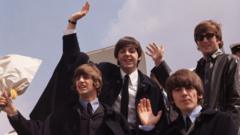
The transformation of 3 Savile Row—the site of The Beatles’ final performance on January 30, 1969—from a historic office space into a dedicated museum represents a shift from passive cultural heritage to active asset monetization. This is not a project rooted in sentimentality; it is a strategic deployment of location-based entertainment (LBE) physics. By anchoring a permanent commercial attraction at the precise geographic coordinate of a singular historical event, the developers are leveraging the scarcity of authentic sites to capture high-intent global tourism spend. The success of this venture depends on the interplay between historical preservation, high-throughput visitor management, and the conversion of intellectual property (IP) into a three-dimensional experience.
The Scarcity Premium of 3 Savile Row
Cultural assets derive value from a combination of narrative resonance and physical exclusivity. While The Beatles' music is a non-rivalrous good—available to millions simultaneously via digital platforms—the physical space of the Apple Corps headquarters is a finite resource. The rooftop concert serves as the "anchor event" that defines the site's market positioning.
The economic logic of this conversion rests on three distinct pillars:
- Contextual Integrity: Unlike a curated gallery in a neutral location, a site-specific museum utilizes the building itself as the primary artifact. This reduces the marketing overhead required to establish "authenticity."
- The Pilgrimage Loop: Beatlemania-driven tourism in London currently operates on a fragmented model, moving between Abbey Road, the London Palladium, and Marylebone. Integrating 3 Savile Row into this circuit creates a centralized monetization point in the high-rent district of Mayfair.
- IP Layering: The museum serves as a physical interface for the Apple Corps/Universal Music Group catalog, allowing for integrated retail and exclusive media licensing opportunities that cannot be replicated in a standard retail environment.
The Mechanics of Site Specificity and Visitor Flow
Converting a 19th-century townhouse into a high-capacity museum presents a significant structural bottleneck. The original architecture of Savile Row was designed for private commerce, not mass-market throughput. To optimize the site, the project must solve for the "Dwell-Time Paradox": maximizing the depth of the experience to justify high ticket prices while maintaining a high turnover rate to ensure volume.
The visitor journey must be engineered as a linear progression. Effective LBE strategy dictates a "Hub and Spoke" or "Linear Path" design. Given the vertical nature of the Savile Row site, a linear vertical path is the only viable model.
- Entry and Orientation (Basement/Ground): Establishing the historical stakes of 1968–1969.
- The Content Core (Middle Floors): Utilization of the Get Back session footage to provide a sensory layer over the physical architecture.
- The Rooftop Terminal: The climax of the experience must be the rooftop itself. However, safety regulations and weather variability in London create a "Functional Ceiling" on how many people can occupy the space at once.
The rooftop is the "Value Peak." If access is limited by fire codes, the museum must utilize a tiered pricing structure or a timed-entry algorithm to prevent a total operational collapse at the final stage of the tour.
Quantifying Cultural Weight into Revenue Streams
The project's financial viability is tied to its Average Revenue Per User (ARPU). In high-rent districts like Mayfair, ticket sales alone rarely cover the operational expenditure (OPEX) and the initial capital expenditure (CAPEX) of a heritage restoration. The revenue model must be diversified across several streams:
Direct Admission Tiers
General admission provides the baseline volume, but "Premium Access" packages—offering extended rooftop time or private guided analysis of the Let It Be sessions—capture the consumer surplus of high-net-worth fans.
Retail and Exclusive Editions
Traditional gift shops are low-margin. The strategy here should focus on site-exclusive physical media and high-end apparel that aligns with the Savile Row tailoring brand. The location provides a unique opportunity to merge rock-and-roll history with luxury fashion, a synergy already established by the street's reputation.
Corporate and Private Events
The site’s historical pedigree makes it a prime location for high-level corporate hosting. By closing the rooftop for evening private events, the museum can generate high-margin revenue that offsets the lower margins of daytime public tours.
Structural Risks and Limitations
The primary threat to the museum is "Asset Fatigue." If the experience relies solely on the 42-minute window of the rooftop concert, the repeatability of the visit diminishes. The Beatles' catalog is deep, but the specific narrative of 3 Savile Row is narrow—it is a story of a breakup and a final act of defiance.
A second limitation is the surrounding environment. Savile Row is a functional center for world-class tailoring. An influx of high-volume tourism risks a "NIMBY" (Not In My Backyard) backlash from neighboring businesses who rely on a quiet, exclusive atmosphere for their clientele. The museum must implement "Invisible Logistics"—managing crowds, waste, and noise in a way that does not degrade the high-status signaling of the neighborhood.
Technical Implementation of the Narrative
To compete with modern immersive experiences, the 3 Savile Row museum cannot rely on static plaques. It must utilize "Augmented Reality (AR) Windows." By pointing devices or looking through fixed-lens AR viewfinders on the rooftop, visitors can see a digital overlay of the 1969 crowd, the police intervention, and the band’s original equipment setup. This solves the problem of the rooftop being currently empty and functionally different from its 1969 state.
This creates a "Temporal Bridge." The goal is to move the visitor from the present-day reality of a renovated office building into the specific acoustic and visual environment of the concert. High-fidelity directional audio is critical here; the sound of the wind, the street-level chatter, and the raw Ampeg-amplified output of the band must be recreated to provide a visceral rather than intellectual experience.
Long-Term Strategic Valuation
The opening of this museum marks the final stage of The Beatles’ transition from a living musical group to a permanent institutionalized brand. Much like the Elvis Presley estate transformed Graceland into a sustainable ecosystem, Apple Corps is moving toward a decentralized museum model.
The strategy should be a three-phase rollout:
- The Commemorative Launch: Focused on the core fan base and the Get Back documentary momentum.
- The Luxury Integration: Partnering with Savile Row tailors for "Beatles-Inspired" bespoke collections, bridging the gap between music and fashion.
- The Digital Twin: Utilizing the 3D scans of the building to sell "Virtual Access" to those who cannot physically travel to London, effectively decoupling the experience from physical capacity constraints.
The 3 Savile Row project is a test case for whether a single, brief moment in time—42 minutes of music—can be stretched into a multi-decade revenue-generating asset. The result will provide a blueprint for how other high-value IP holders manage their "Last Performance" sites globally. Success is not measured by the quality of the nostalgia, but by the efficiency of the conversion from history to high-margin experience.