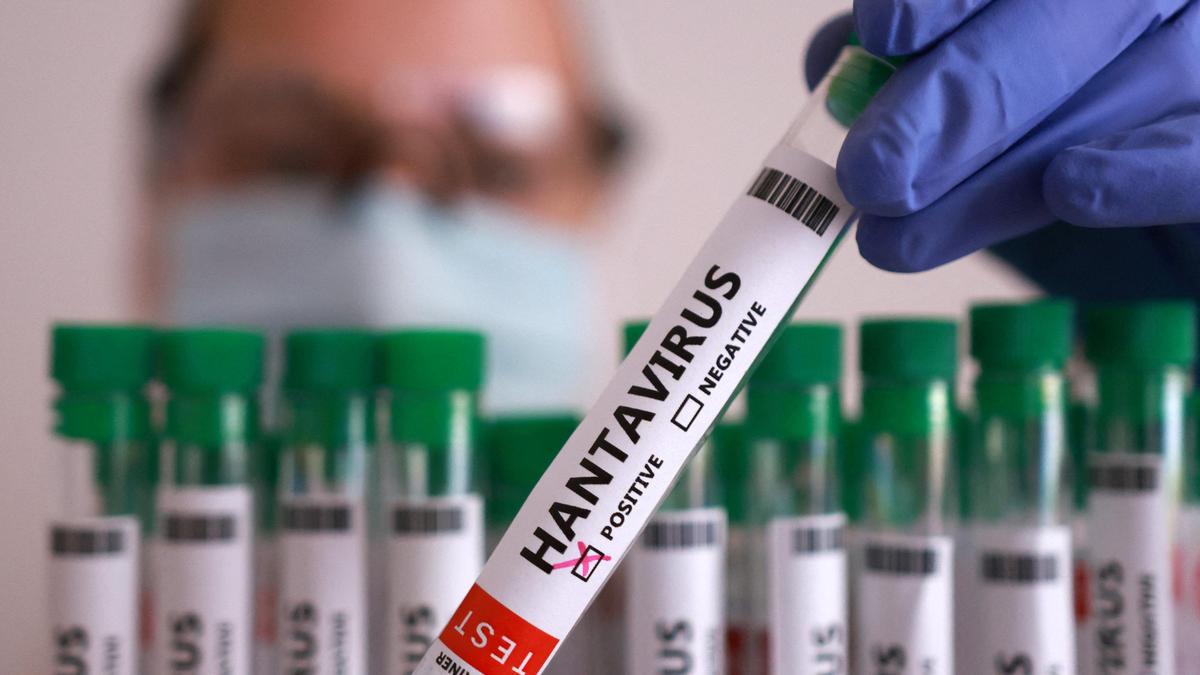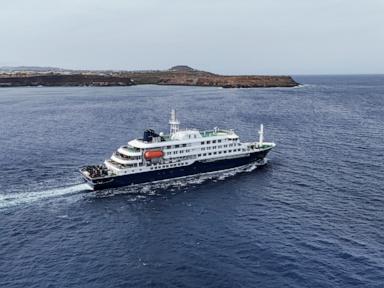
A Dutch-flagged cruise ship, the MV Hondius, is currently the center of an international health crisis following a confirmed outbreak of the Andes hantavirus that has claimed three lives. The vessel, which departed from Argentina in early April 2026, was intercepted by health authorities after a cluster of passengers developed severe respiratory distress, leading to a frantic medical evacuation that landed two critically ill patients in Dutch and German hospitals on Wednesday. While the World Health Organization (WHO) has categorized the public risk as "low," the presence of the Andes strain—the only hantavirus known to facilitate human-to-human transmission—is a stark reminder that geographical barriers are increasingly irrelevant to modern pathogens.
The crisis began quietly in the South Atlantic. By the time the ship reached the coast of Cabo Verde, seven individuals were symptomatic, presenting with a terrifyingly rapid progression from fever and muscle aches to acute pneumonia and shock. This is not the typical "flu-like" illness often associated with viral outbreaks; this is Hantavirus Pulmonary Syndrome (HPS), a condition where the lungs fill with fluid, effectively drowning the patient from the inside. Expanding on this idea, you can find more in: Why 14 Million Euro Medicine Seizures are a Distraction from the Real Health Crisis.
The Argentine Connection
The primary hypothesis from investigators points to a breach in biosecurity during a shore excursion in Ushuaia, Argentina. A Dutch couple, currently among the confirmed cases, reportedly visited a landfill site for bird-watching—a common but risky activity in regions where the long-tailed pygmy rice rat thrives. These rodents are the primary reservoir for the Andes virus. Unlike other hantaviruses found in Europe, such as the Puumala or Seoul strains which typically cause mild kidney issues, the Andes variant is a different beast entirely.
It is highly resilient. The virus can survive in dried rodent excrement for up to two weeks, waiting to be inhaled as dust. When the couple boarded the MV Hondius, they likely brought more than just souvenirs; they brought an incubation period that can last up to 60 days. This lag time is the industry's greatest vulnerability. By the time a passenger shows a fever, they may have already spent weeks in the close, recirculated environment of a luxury vessel, sharing air and surfaces with hundreds of others. Observers at Everyday Health have provided expertise on this trend.
Why Containment Often Fails
The medical evacuation to the Netherlands has exposed the friction between national sovereignty and global health security. Two patients were flown into Amsterdam's Schiphol airport under high-containment protocols, with one redirected to a specialized facility in Dusseldorf. However, the ship itself remains a floating question mark.
The MV Hondius is carrying 147 passengers and crew from 23 different nationalities. While the Dutch Foreign Ministry and the UK Health Security Agency (UKHSA) are tracking their respective citizens, the logistics of a multi-country contact tracing effort are a nightmare. The Andes strain is the "black sheep" of the hantavirus family because it doesn't always need a rat to spread. Close contact between humans—the kind that happens in dining halls and narrow ship corridors—can be enough.
The current public health response relies heavily on active symptom monitoring for a 45-day window. This is a reactive measure, not a preventative one. If the virus has already moved from the initial Argentine exposure to a second or third generation of hosts on the ship, the window for containment may have already closed.
The Diagnostic Delay
Hantavirus is notoriously difficult to catch early. The initial symptoms—fever, headache, and nausea—are indistinguishable from a dozen other common travel ailments. In the case of the MV Hondius, laboratory confirmation only arrived after the first deaths occurred. PCR testing for hantavirus is not a standard tool in every port, and by the time samples were flown to specialized labs in South Africa and Senegal, the cluster had already expanded.
Early medical intervention, including mechanical ventilation and oxygen therapy, is the only way to improve survival rates, as no specific antiviral cure exists. For a patient in the middle of the South Atlantic, "early" is an impossibility.
A Structural Vulnerability
The cruise industry has spent billions on sanitation since 2020, yet these measures are largely designed to combat norovirus or respiratory droplets. They are less effective against a virus that can be aerosolized from a microscopic speck of dust brought in on a hiking boot.
The WHO’s insistence that this is "not the next COVID" is technically accurate, but it misses the point for the industry. The risk isn't a global lockdown; the risk is the fundamental breakdown of the "safe bubble" travel model. When a niche bird-watching trip in South America can result in a medical emergency in a Dutch ICU three weeks later, the industry’s reliance on surface-level cleaning looks increasingly inadequate.
Authorities are now focusing on the ship's arrival in the Canary Islands. While Spanish health officials maintain there is no risk to the local population, the regional government is already demanding tighter controls. This friction—between the data-driven calm of epidemiologists and the political reality of a nervous public—is where containment usually fails. The MV Hondius isn't just a ship with a virus; it is a laboratory for how the world handles the next generation of localized, yet highly mobile, pathogens.
The true test will be the next two weeks, as the remaining passengers reach the end of their incubation period. If new cases emerge among those who never stepped foot in an Argentine landfill, the narrative of a "low-risk" event will vanish.