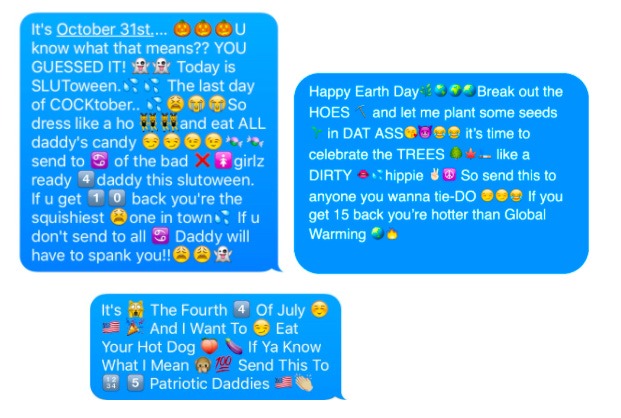
We’ve spent centuries thinking we "evolved" past pictures. After moving from cave paintings to the Phoenician alphabet and then to the printing press, humanity finally arrived at the peak of intellectual expression: the abstract word. Then, in the late 90s, we started sending each other little pixelated faces. Now, in 2026, we’re deep in the era of the emoji chain.
You’ve seen them. Those long, rhythmic strings of symbols—✨🧚♂️🍓📉—that somehow convey a specific mood or "vibe" that words just can't touch. Critics call it a regression. They say we're getting dumber. They're wrong.
If you look at how a scribe in the 12th Dynasty of Egypt constructed a sentence and how a teenager uses emojis today, the logic is almost identical. We haven't gone backward. We've just rediscovered a cognitive superpower that the alphabet tried to kill.
The Rebus Principle and Digital Slang
The biggest misconception about Egyptian hieroglyphs is that they're just "pictures." People think a picture of a bird means "bird." Sometimes it does, but usually, it doesn't.
Ancient Egyptians used something called the Rebus Principle. This is the linguistic "cheat code" where you use the sound of a symbol rather than its meaning. For example, if you wanted to write the word "belief" in English using this logic, you might draw an eye (B-E) and a leaf (LIEF).
We do this constantly now. When someone sends "👁️❤️U," they aren't talking about physical organs or anatomical hearts. They're using the visual as a phonetic placeholder. In the early 2000s, this was "L8R" or "B4." Today, it’s evolved into complex strings where the order of emojis creates a specific grammatical "flavor."
The Egyptians did this with determinatives. These were symbols placed at the end of a word that didn't have a sound but told you what kind of word it was. A pair of walking legs at the end of a sentence signaled "motion." A man with his hand to his mouth meant "eating" or "thinking."
Compare that to: "I'm so happy for you 💀."
The skull is your modern determinative. It tells the reader that "happy" is actually "dying of laughter" or "ironic." Without it, the sentence means something totally different. Just like the ancient scribes, we use visual markers to provide the context that flat text lacks.
Scribes Were the Original Power Users
Being a scribe in ancient Egypt wasn't just about knowing how to draw. It was a high-status tech job. You had to know which symbols could be used phonetically and which were ideograms. It was a layering of meaning.
Today’s "power users" of emoji chains do the exact same thing. There’s a sophisticated social hierarchy in how people use visual language. If you use the wrong emoji in a specific sequence, you look like an outsider.
- The Redundancy Rule: In Egyptian writing, it was common to write the phonetic sounds of a word and then add the picture of the word itself for emphasis.
- The Modern Equivalent: Typing "I'm literally crying 😭😭😭."
We’re doubling down on the meaning because text feels "thin." The Egyptians lived in a world where the written word was "the words of the gods." It had weight. It was magic. When we drop a "✨" around a word today, we’re attempting to give that word a physical presence or a "glow" that the letters alone can't provide.
Why We Reverted to Pictures
If the alphabet is so efficient, why did we bring the pictures back?
Speed is the obvious answer, but it's deeper than that. The alphabet is great for logic, law, and dry information. It's terrible for human connection. When we moved our entire social lives onto screens, we lost 70% of our communication: body language, tone, and facial expressions.
Emojis aren't a replacement for the alphabet; they're the "plugin" that fixes its bugs. We’re using them to add the "metadata" of human emotion back into our data.
Ancient Egyptian wasn't a "static" language. It evolved into Hieratic and Demotic—faster, more cursive versions for everyday life. We’re seeing a similar "slurring" of emojis. The "Face with Tears of Joy" 😂 went from the most popular symbol to a "boomer" marker in the span of a few years. We’re constantly innovating new visual slang because the old ones lose their "charge."
The Myth of Universal Understanding
One of the biggest lies told about both hieroglyphs and emojis is that they're a "universal language" anyone can read.
Try showing a 70-year-old a string of emojis from a Discord server. They won't have a clue. Emojis are deeply cultural and contextual. The 🍑 is a fruit to your grandmother and something else entirely on Instagram.
This mirrors the Egyptian "cryptographic" scripts where priests would use rare or non-standard symbols to hide secrets or show off their elite status. Language has always been as much about excluding people as it is about including them. If you don't know the "code," you’re not part of the tribe.
Stop Fighting the Future of the Past
If you’re worried that we’re losing our ability to write, don't be. The Egyptians managed to build pyramids, map the stars, and run a 3,000-year empire using "picture texts."
The reality is that we're becoming biscriptal. We're learning to use two different types of logic at the same time: the linear, phonetic logic of the alphabet and the holistic, visual logic of the icon.
How to use this to your advantage:
- Don't overthink the "correct" meaning. In digital communication, the meaning is whatever the group decides it is. Follow the "determinatives" of your specific circle.
- Use emojis for tone, not just objects. If you're sending a professional message that might sound too blunt, a single, well-placed symbol does more work than three sentences of hedging.
- Watch the sequence. Order matters. Just like hieroglyphic syntax, the emoji at the end of the chain modifies everything that came before it.
We aren't regressing to the Stone Age. We're finally catching up to the sophistication of the Bronze Age. It's time to embrace it.