The coffee in the paper cup was hot, the air conditioning in the Dubai International Financial Centre was crisp, and the view through the floor-to-ceiling glass was deceptively still. Outside, the Burj Khalifa pierced a sky so blue it looked painted. But on the glowing screens of a thousand smartphones in the lobby, the world was bleeding.
News alerts flashed like strobe lights. Missile trajectories. Escalations. The old, jagged tectonic plates of Middle Eastern geopolitics were grinding against one another again, sending tremors from Washington to Tehran. For anyone watching from a distance, the region looked like a tinderbox. Yet, inside the marble halls of the city, there was a peculiar, almost defiant sense of normalcy.
Sarah, a British architect who moved to the Emirates six years ago, didn't check the news to see if she needed to pack a bag. She checked it to see if her flight to London for her niece’s birthday would be delayed.
"My parents call me every time something happens," she says, twisting a silver ring on her finger. "They ask if I'm safe. They ask if I'm coming home. I have to explain to them that I am already home."
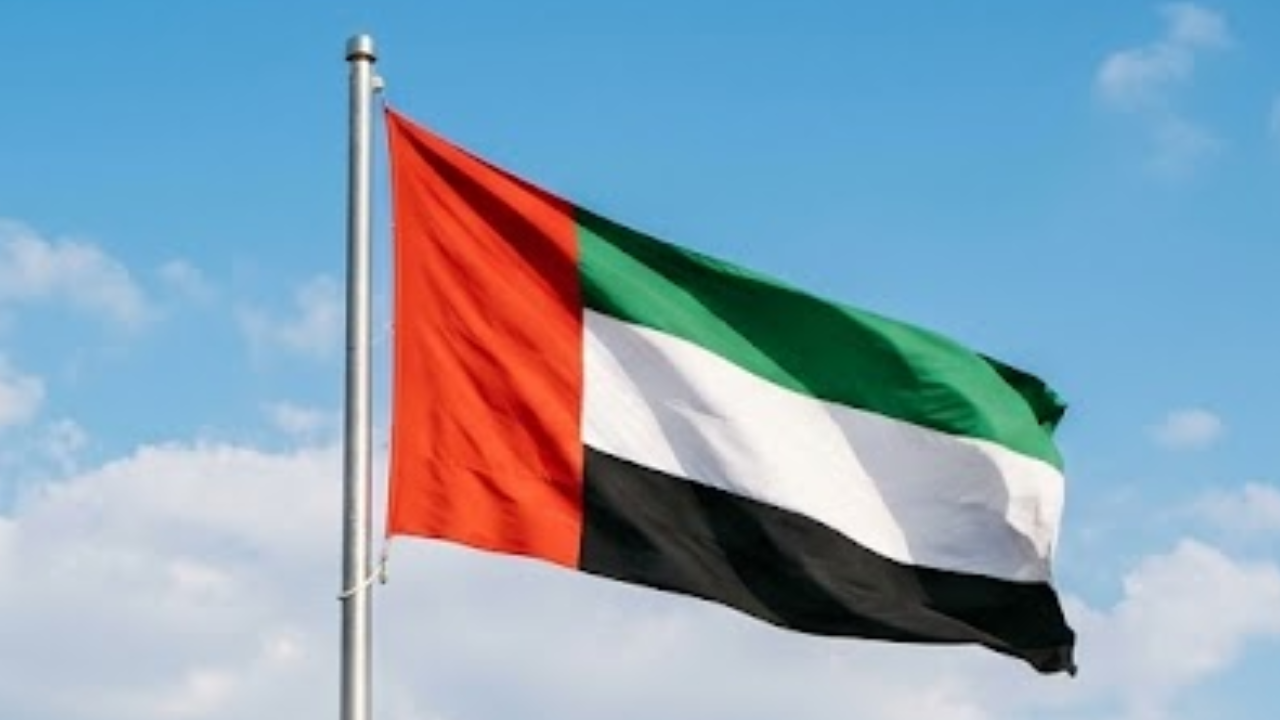
This is the central paradox of the modern United Arab Emirates. It sits at the geographic crossroads of some of the most enduring conflicts of the twenty-first century, yet it has become a sanctuary for millions who have fled instability elsewhere. It is a place where the concept of "safety" isn't just the absence of violence, but the presence of a predictable future.
The Architecture of Certainty
When we talk about national stability, we often speak in dry, macroeconomic terms. We talk about GDP growth, foreign direct investment, and sovereign wealth funds. These are important, but they don't capture why a father from Lebanon or a tech CEO from California chooses to move their entire life to a desert peninsula.
Safety is an emotional currency.
Imagine a bridge. If you walk across a bridge that sways and creaks with every gust of wind, you spend all your energy looking at your feet, gripping the railing, bracing for the fall. You cannot build anything on that bridge. You cannot dream. You are merely surviving the crossing.
For many expatriates, the countries they left behind—whether due to economic stagnation in Europe or active conflict in neighboring states—had become swaying bridges. The UAE, by contrast, feels like solid ground.
The leadership here has made a calculated, generational bet: that in a world defined by chaos, "boring" is a premium product. They have cultivated a brand of radical stability. While the rhetoric between the US, Israel, and Iran dominated the airwaves in late 2024 and throughout 2025, the UAE focused on a different kind of noise: the sound of construction cranes, the hum of data centers, and the rustle of new visas being stamped.
The Invisible Stakes of the Long Game
There is a specific kind of exhaustion that comes from living in a state of "what if."
What if the currency devalues overnight? What if the electricity doesn't come on? What if the laws change while I’m sleeping?
When you remove those "what ifs," something remarkable happens to the human psyche. You start to invest. Not just money, but time, emotion, and identity.
The competitor narratives often miss this human element. They report that "expats praise the leadership," as if it’s a scripted line from a press release. But talk to a Syrian business owner in Sharjah, and you’ll hear a different story. He isn’t praising a political philosophy; he is praising the fact that he can sign a five-year lease and know, with 99% certainty, that his shop will still be there in year five.
The stakes are invisible because they are the things that don't happen. The protest that doesn't disrupt the school run. The bank run that never occurs. The sudden policy U-turn that doesn't wipe out a life's savings.
This stability is maintained through a delicate, high-stakes balancing act. The UAE manages a web of "frenemy" relationships that would make a Machiavellian prince weep. It hosts US military interests while being China’s largest trading partner in the region. It signed the Abraham Accords with Israel while maintaining a firm, vocal stance on Palestinian rights and navigating the complex waters of Iranian proximity.
It is a diplomatic tightrope walk performed over a canyon. But for the people on the ground, the tightrope looks like a highway.
The Psychology of the Second Home
There was a time, perhaps twenty years ago, when moving to the UAE was seen as a "two-year stint." You came, you earned tax-free money, you lived in a hotel-like apartment, and you left. You were a guest, a temporary resident in a gilded transit lounge.
That era is over.
The introduction of the Golden Visa and the expansion of property ownership rights have fundamentally altered the expatriate DNA. People aren't just passing through anymore. They are planting trees.
Consider the hypothetical—but very real—case of Marcus, a German engineer. In Berlin, he felt the weight of a stagnant bureaucracy and a darkening geopolitical mood in Europe. He moved to Abu Dhabi three years ago.
"In Germany, I felt like the best days were behind us," Marcus says. "Here, there is a palpable sense that the best days are Tuesday. Or next month. Or 2030. It’s infectious."
This shift in perspective is the UAE’s greatest achievement. It has successfully decoupled its internal narrative from the regional one. When the headlines scream about conflict, the internal reality remains one of ambitious logistics.
However, this sanctuary isn't a bubble. No place is. The leaders in Abu Dhabi and Dubai are acutely aware that their prosperity is tied to regional cooling. They aren't just observers of the US-Israel-Iran tension; they are active, behind-the-scenes de-escalators. They know that a fire in the neighbor's house eventually sends embers onto your own roof.
The Cost of the Calm
Trust is hard to build and incredibly easy to shatter.
The reason expats stay—and why new ones keep arriving despite the regional headlines—is that the UAE has proven it can handle a crisis. We saw it during the global pandemic, where the country’s response was among the most organized in the world. We see it every time there is a regional flare-up. The markets might dip for a day, but the schools stay open, the malls stay full, and the police remain a visible, reassuring presence.
But there is a vulnerability in being an oasis. An oasis requires constant maintenance. It requires a relentless focus on the rule of law, economic diversification, and social cohesion.
If you ask a resident why they feel safe, they might point to the low crime rates. They might point to the clean streets. But if you dig deeper, they will eventually talk about the "vibe." That intangible feeling that the people in charge have a plan.
In a world where most governments seem to be reacting to the last twenty-four hours of social media outrage, a government that plans in decades feels like a superpower.
The Anchor
As evening falls in Dubai, the fountains at the base of the world’s tallest building begin their dance. Thousands of people from every corner of the globe—Russians, Ukrainians, Indians, Pakistanis, Americans, Iranians—stand shoulder to shoulder to watch the water rise.
In their home countries, some of these people might be told they are enemies. Here, they are just tourists, parents, and workers sharing a moment of choreographed beauty.
It is easy to be cynical about the "glitz" of the Emirates. It is easy to dismiss the praise of expats as the product of comfort. But comfort is a shallow word for what is actually happening.
When the world feels like it is spinning out of control, humans seek an anchor. They look for a place where the ground doesn't move beneath their feet. For millions of people, that anchor is a desert nation that decided, against all odds, to become the most stable room in a volatile house.
The news alerts will continue to flash. The rhetoric in distant capitals will continue to rise and fall like the tide. But for Sarah, Marcus, and the millions like them, the choice is already made. They aren't staying because they are oblivious to the risks. They are staying because they’ve decided that the risk of leaving the sanctuary is far greater than the risk of staying within it.
They have found something rarer than oil or gold. They have found a place where they can sleep through the night, confident that the world they wake up to will be the same one they left behind.
The sun sets, the lights of the city flicker on, and for another night, the storm stays on the other side of the glass.