The floor of my hallway looks like a textile graveyard. Canvas rectangles with frayed straps, stiff nylon abominations from corporate trade shows, and leather monstrosities that weigh three pounds empty. We collect them because we are modern nomads. We carry our laptops, our gym clothes, our half-eaten apples, our emergency umbrellas, and our entire portable identities from subway car to coffee shop, day in and day out.
Most of them fail us. They dig into shoulders. They rip at the seams the moment you shove a hardcover book inside. They look professional for precisely one week before collecting scuffs that refuse to vanish.
Then you notice Maya.
(Note: Maya is a hypothetical composite of three different friends I watched unpack grocery bags last Tuesday, but her shoulder is real, and her frustration is universal.)
Maya stands in the checkout line of her neighborhood bodega. Slung over her forearm is a piece of fabric so light it looks like it could catch a breeze and float across the avenue. It is folded into a tiny, pocket-sized square until she snaps it open with a flick of her wrist, transforming it into a cavernous, sturdy receptacle capable of swallowing two gallons of milk, a bunch of kale, and a paperback novel without so much as groaning.
That fabric is ripstop nylon. It is the secret weapon of the Baggu summer sale, an event where the cult-favorite brand slashes prices by up to fifty percent on its iconic bestsellers.
We need to talk about why this matters.
The Weight of Our Stuff
We live in an era of accumulation. Every week brings a new item we apparently cannot survive without. But the real problem lies elsewhere: we have nowhere graceful to put anything.
Consider what happens next on a standard Tuesday morning. You grab your keys, your wallet, your sunglasses, your water bottle, your lunch container, and your phone charger. Suddenly, you are a pack mule. Standard purses are too rigid. Plastic grocery bags are an environmental catastrophe waiting to happen, snapping mid-stride and sending your bruised peaches rolling across a crowded crosswalk.
This is where the humble, reusable shopping bag transforms from a boring utilitarian chore into a style statement. Baggu understood something profound years ago: people do not want to choose between looking like they care about their aesthetic and carrying groceries. They want both. They want a bag that folds up small enough to disappear into a pocket, yet opens up wide enough to hold the contents of a small apartment.
When a brand takes half off its inventory, it is rarely an act of charity. It is a seasonal rotation. Summer brings bright hues, checkerboard patterns, metallic finishes, and limited-edition collaborations that vanish into thin air the moment autumn arrives. Right now, during the summer markdown event, those coveted prints and standard classics are sitting at half price.
The Engineering of Simplicity
Let us look closer at the physics of a good nylon bag.
Standard cotton totes stretch out of shape. They absorb rain. They trap odors if a leaky yogurt container meets your textbook. Nylon, specifically the recycled ripstop variety used here, behaves differently. It sheds water. It resists tears. If you spill coffee inside it, you rinse it under a kitchen tap, hang it over the faucet, and twenty minutes later it is ready for deployment again.
Standard reusable bags usually feature short handles that dig painfully into your elbow if you try to wear them over a winter coat. Baggu gave theirs long, balanced handles designed to be slung comfortably over a shoulder, distributing weight evenly across the collarbone. It is a minor design adjustment that changes everything about how a human interacts with their cargo.
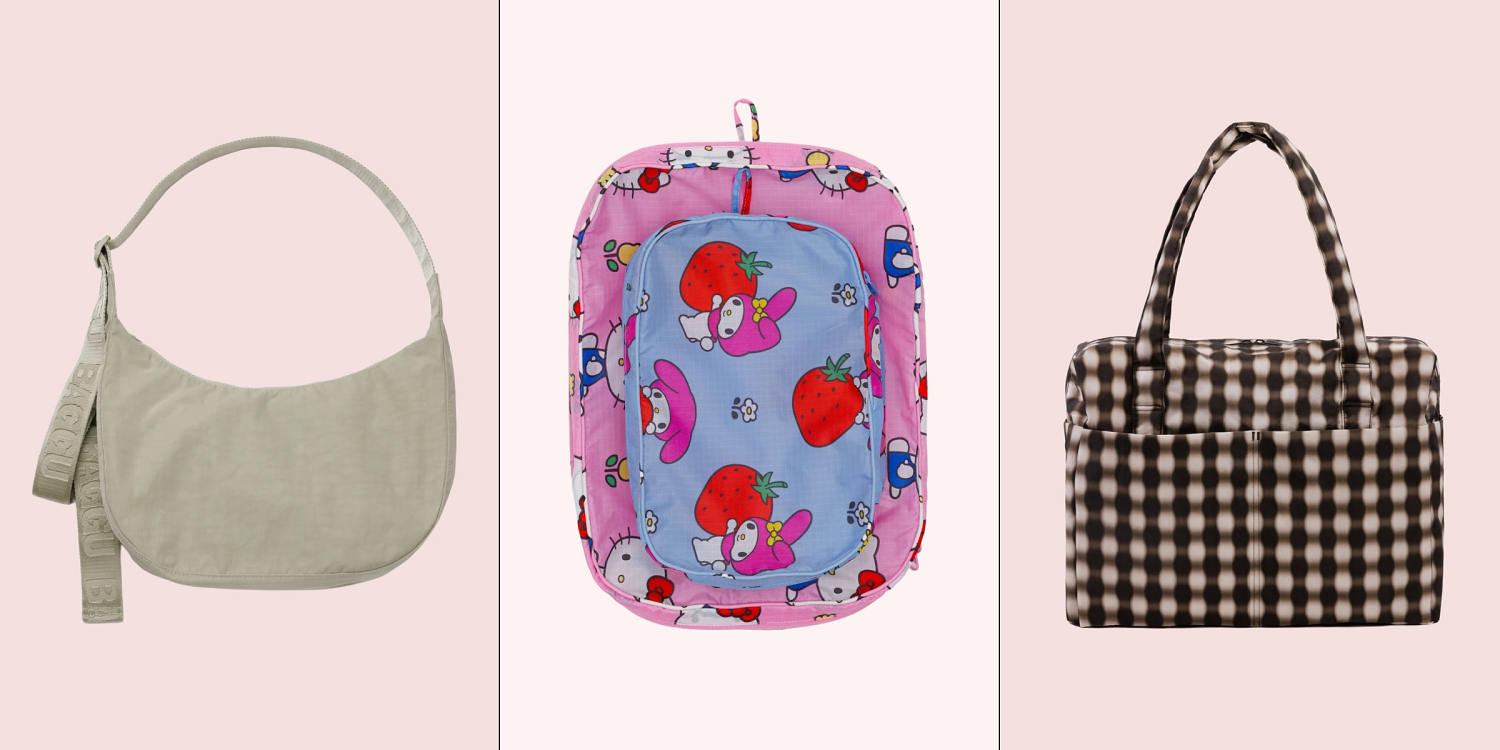
During the current sale, the discounts stretch across the entire ecosystem. You have the standard reusable bags sold in packs of three, which solve the eternal problem of leaving your bags in the trunk of a car when you are already standing at the cash register. You have the crescent bags, which have quietly taken over urban transit systems, slouching against denim jackets and linen shirts with effortless nonchalance. You have packing cubes, lunch boxes, and dopp kits, all draped in the brand's signature loud, joyful colors.
The Economics of the Impulse Buy
We have all fallen victim to the midnight scroll. You are sitting on your couch at eleven o'clock at night, the television glowing softly, your thumb rhythmically swiping through a feed. A notification pops up. A sale. Fifty percent off.
Logic usually tells us to close the tab. You do not need another bag. Your hallway floor is living proof of your excess.
Yet, there is a distinct psychological comfort in buying something practical. It is not like purchasing a decorative ceramic mushroom that will collect dust on a shelf. A bag is a tool. Buying a durable, well-designed bag at a steep discount feels like an investment in future efficiency. It is a promise to yourself that next week, when you go to the farmers market, you will be prepared. You will look put together. You will not be the person awkwardly clutching five plastic grocery bags against your chest while one handle slowly unwinds from your sweaty palm.
The sale is loud, but the items themselves are quiet companions. They sit in your backpack, waiting for the moment you buy a watermelon you didn't plan on purchasing, or a heavy book you couldn't resist browsing through in a secondhand shop.
The Aftermath of the Haul
Boxes arrive on doorsteps in waves of crinkling brown paper. You pull out the bright patterns—maybe a bold stripe, maybe a classic black that goes with everything, maybe a whimsical strawberry print that makes you smile on a gray morning.
You stuff one into your coat pocket. You tuck another into your work backpack. You line up a third by the front door.
For a brief, shining moment, the hallway floor is clean. The textile graveyard has been conquered by lightweight, folded rectangles of nylon, waiting patiently for the chaos of the afternoon to begin.
The sale will end. The stock will clear out to make room for autumn coats and heavy cords. But the habits forged in the checkout lines and subway cars remain. We carry our lives with us, and we might as well do it without breaking our shoulders.