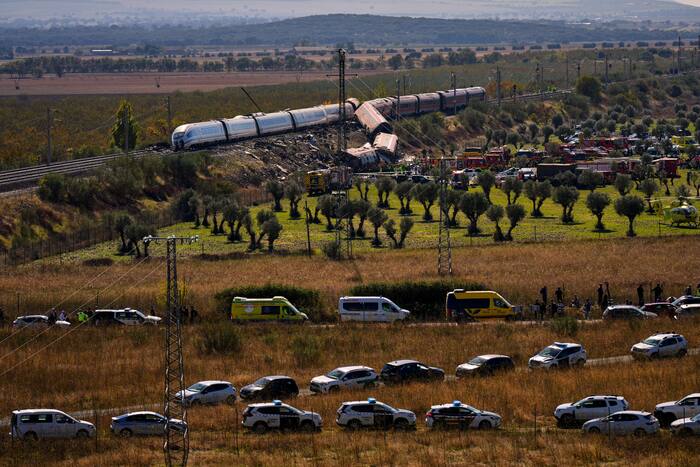
Two catastrophic high-speed rail disasters on the same corridor within ten months—killing 115 people combined—have exposed a severe structural vulnerability in Spain’s flagship infrastructure model precisely four weeks before a snap general election. On October 28, 2026, a Renfe AVE Class 103 traveling between 160 and 200 kilometers per hour rear-ended a stationary Iryo Frecciarossa 1000 near Urda, Toledo, killing 69 passengers and crew and injuring roughly 200. Coming after the January 2026 Adamuz rail crash on the exact same Madrid–Seville line that claimed 46 lives, the collision triggered the resignation of Transport Minister Óscar Puente on November 3 and turned rail safety into the central referendum issue for Spain’s November 29, 2026, national vote.
Standard news coverage treats these tragedies as isolated human errors or unfortunate pre-election optics. An operational and political-economy breakdown reveals a far more systemic reality: Spain aggressively liberalized high-speed rail traffic on legacy infrastructure whose signaling architecture, control-center hardware, and maintenance cycles had not kept pace with network density.
The Technical Architecture of the Urda Failure
To understand why two modern high-speed trains occupied the same block of track at lethal closing speeds, analysts must separate the known sequence of events from unresolved root causes.
Known Operational Facts
- The Automated Degradation: At approximately 8:30 a.m. on October 28, a computer malfunction disabled the primary automated train protection systems on the Madrid–Seville corridor. The line relies on LZB (Linienzugbeeinflussung), a continuous cab-signaling and automatic train protection system that monitors exact train speed and position, backed up by BSL (Blocco Lateral). When LZB fails, operations degrade to manual block authorization governed by the ADIF (Administrador de Infraestructuras Ferroviarias) Regulation and Control Center (CRC) in Atocha, Madrid.
- The Immobilization: The leading train, operated by private competitor Iryo, came to a halt near Los Yébenes (Urda). The driver reported an immobilized restart failure seven minutes after receiving initial movement clearance.
- The Authorization Breach: Official audio logs confirm that ADIF controllers authorized the following state-operated Renfe AVE train to resume normal operating speed despite the stationary Iryo train remaining in the active block ahead. No emergency stop command was transmitted before impact at 08:54:03 CET.
Unresolved Root Causes and Hypotheses
- Hardware Obsolescence: Rail unions have pointed to 1990s-era computer terminals still operating inside the Atocha control center as a primary contributor to operator cognitive overload during manual fallback procedures. While investigators have not yet published a final forensic report on the 8:30 a.m. crash of the LZB interface, the hypothesis that legacy human-machine interfaces (HMIs) obscure track-occupancy alerts under high-stress manual routing aligns with established human-factors engineering principles.
- Procurement and Modernization Delays: The Madrid–Seville corridor, opened in 1992, is Spain’s oldest high-speed line. Upgrades to modern European Rail Traffic Management System (ERTMS) standards have faced repeated delays. Following the Urda crash, European Union prosecutors opened an investigation into the potential fraudulent misuse of EU funds earmarked for signaling upgrades on this specific line. Whether diverted or delayed capital directly caused the October 28 computer failure remains under judicial inquiry, separating confirmed financial investigation from proven mechanical causation.
The Three Pillars of Infrastructure Stress
Viewing the January Adamuz derailment, the Gelida incident, and the October Urda collision as disconnected anomalies ignores the underlying operational mechanics compressing safety margins across Spain’s rail network.
1. Asymmetric Liberalization Without Capacity Expansion
Following European Union rail liberalization directives, Spain opened its high-speed corridors to private operators—most notably Iryo and Ouigo—to compete with state incumbent Renfe. Passenger volumes surged, and train headways (the time and distance intervals between consecutive trains) tightened dramatically. However, track capacity and signaling modernization did not scale at the same velocity as rolling-stock deployment. Operating multi-operator, high-frequency schedules over 1990s-era LZB architecture reduces the buffer available to absorb equipment anomalies.
2. The Automation-to-Manual Cliff
In complex sociotechnical systems, high reliability during normal automated operations often breeds fragility during sudden manual transitions—a phenomenon known in systems safety as the irony of automation. Because LZB normally enforces braking curves automatically, human controllers spend 99 percent of their shifts monitoring nominal screens. When an abrupt computer failure forces an immediate transition to verbal radio clearances and manual block tracking across dozens of high-speed movements, error rates spike exponentially unless supported by rigid two-person verification protocols and modern conflict-detection software.
3. Maintenance Under Continuous Traffic Load
Prior to his resignation, Transport Minister Óscar Puente attributed signaling upgrade delays to the logistical difficulty of modernizing trackside infrastructure while maintaining uninterrupted daytime commercial schedules. In infrastructure management, deferring full-corridor possession windows forces engineers into piecemeal, overnight micro-upgrades. This creates hybrid operational states where legacy hardware must interface with partially installed modern components, introducing novel software and telemetry failure modes.
Economic Fallout and Modal Substitution
The immediate financial impact of the 2026 rail disasters extends well beyond emergency response and rolling-stock write-offs—which include a destroyed Frecciarossa 1000 and a severely damaged Renfe Class 103.
High-speed rail in Spain functions as a primary engine of domestic business travel and tourism, having largely displaced domestic aviation on routes under 600 kilometers. That modal dominance relies entirely on perceived safety and schedule reliability. Even before the October Urda collision, operational disruptions and safety concerns following the January Adamuz crash contributed to a drop of 1.2 million rail passengers on major corridors in the second quarter of 2026 compared to Q2 2025.
The Urda crash compounds this demand shock in three ways:
- Immediate Corridor Severance: Suspending high-speed services between Madrid and Andalusia severs the primary economic artery connecting the capital to Seville, Córdoba, and Málaga.
- Mandatory Speed Restrictions: Operating protocols during LZB degradation or pending safety audits force trains onto backup systems with lower speed ceilings, erasing the time-to-destination advantage that high-speed rail holds over short-haul flights and intercity buses.
- Liability and Insurance Re-pricing: With 69 fatalities (including 15 foreign nationals) and multi-operator involvement between state infrastructure manager ADIF and private carrier Iryo, protracted litigation over primary liability will raise operational insurance premiums across all liberalized European rail entrants.
The Electoral Transmission Mechanism
In Spanish politics, infrastructure failures rarely remain confined to technocratic ministries; they rapidly convert into broader indictments of state competence. Prime Minister Pedro Sánchez dissolved the Cortes Generales on October 6, 2026, calling a snap general election for November 29 after failing to pass a housing relief package.
When the Urda collision occurred on October 28—just 32 days before voters go to the polls—it landed atop an already fragile electoral landscape for the ruling coalition. Voters evaluate incumbent governments through a retrospective competence heuristic: when basic, state-guaranteed public utilities fail repeatedly, ideological messaging loses traction.
The political damage operates through four distinct channels:
- Pattern Recognition Over Isolated Tragedy: A single accident allows an administration to frame the event as an unforeseeable black swan. Two mass-casualty disasters on the same high-speed line within ten months (46 dead in January, 69 dead in October), combined with the 2025 Iberian Peninsula blackout and the Gelida rail accident, establish a narrative of systemic state decay.
- The Exhaustion of Ministerial Firewalls: Óscar Puente’s resignation on November 3 was a textbook attempt to create a political firewall around Moncloa. However, because Puente had previously defended the network's safety record after Adamuz—and because opposition parties and rail unions immediately linked the crash to chronic underinvestment and staff shortages—the resignation validated opposition critiques rather than neutralizing them.
- The EU Fraud Probe Multiplier: The European Public Prosecutor’s Office (EPPO) investigation into potential misuse of signaling upgrade funds directly connects infrastructure failure to corruption narratives. For an electorate already sensitized by the Koldo affair involving former transport ministry leadership, the intersection of EU fund mismanagement and fatal rail collisions creates a potent political vulnerability that crosses ideological lines.
- Regional Turnout Asymmetry: Andalusia is Spain’s most populous autonomous community and a decisive electoral battleground. Because both the Adamuz and Urda crashes occurred on the Madrid–Andalusia artery, service suspensions and safety anxieties disproportionately affect Andalusian commuters, families, and businesses, magnifying voter anger in high-seat-count provinces like Seville, Málaga, and Córdoba.
Limitations of Immediate Regulatory Remedies
In the wake of the Urda collision, caretaker transport leadership and ADIF face immense pressure to demonstrate immediate control before November 29. Standard crisis responses—such as imposing blanket speed caps during manual signaling fallbacks or suspending traffic during computer anomalies—carry severe operational trade-offs.
Manual speed restrictions immediately degrade network punctuality, triggering cascading delays across interconnected lines that share rolling stock and platform slots at Madrid-Atocha. Furthermore, administrative decrees cannot accelerate physical infrastructure replacement. Installing and certifying ERTMS Level 2 across hundreds of kilometers of active track, replacing legacy CRC hardware in Atocha, and training a new cohort of certified traffic controllers require multi-year capital cycles that extend well beyond the lifespan of any single parliamentary term. No regulatory directive can eliminate human error so long as controllers are forced to manage high-density traffic manually on outdated interfaces during system degradations.
Strategic Forecast and Operational Imperatives
Regardless of which coalition secures the 176-seat majority required to form a government after November 29, Spain’s high-speed rail model must undergo an immediate structural reset to restore public trust and EU regulatory compliance.
- Enforce Zero-Tolerance Manual Fallback Protocols: ADIF must immediately implement an automated interlocking rule prohibiting high-speed train movements above 80 kilometers per hour in any sector experiencing LZB/ERTMS telemetry loss, paired with mandatory dual-controller digital verification before clearing any train into an occupied or degraded block.
- Audit and Ring-Fence EU Signaling Funds: The incoming Transport Ministry must publish a transparent, line-by-line forensic audit of all EU cohesion and recovery funds allocated to ADIF since 2020, ring-fencing capital specifically for replacing 1990s Atocha CRC terminals and completing ERTMS deployment on the Madrid–Seville corridor.
- Align Slot Allocation with Infrastructure Capacity: Until ERTMS upgrades are certified on legacy lines, ADIF must cap peak-hour train slots across Renfe, Iryo, and Ouigo to expand minimum safe headways, prioritizing system resilience over short-term ticket volume.
Until these structural bottlenecks are resolved, domestic air carriers operating between Madrid and Andalusia will capture a sustained 10 to 15 percent modal shift from high-speed rail, while infrastructure competence will remain the decisive swing variable in Spain’s November 29 general election.