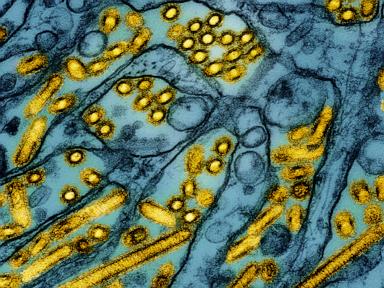
A fatal human case of avian influenza in Washington state represents a critical signal in public health surveillance, yet standard news reporting frequently obscures the underlying epidemiological mechanics behind vague terminology like "severe illness." Understanding the true risk profile of an H5N1 or related avian influenza fatality requires separating isolated zoonotic spillover from sustained human-to-human transmission, evaluating viral receptor binding dynamics, and mapping the clinical progression of acute respiratory distress. When a regional health department confirms a death following avian influenza infection, the immediate operational priority is determining whether the pathogen acquired mammalian adaptation markers or simply exploited high-dose exposure in a vulnerable host.
The Mechanics of Zoonotic Spillover and Viral Tropism
Avian influenza A viruses, predominantly of the H5, H7, and H9 subtypes, circulate naturally in wild aquatic birds, which serve as the primary reservoir. Transmission to humans—known as zoonotic spillover—occurs when environmental, occupational, or behavioral factors bridge the species barrier. In the Pacific Northwest, a major corridor along the Pacific Flyway, migratory waterfowl regularly interact with commercial poultry, backyard flocks, and dairy cattle, creating multiple high-density interfaces for viral shedding.
To understand why some human infections result in mild conjunctivitis while others progress to fatal multi-organ failure, one must examine viral tropism and receptor distribution in the human respiratory tract:
- Alpha-2,3 Sialic Acid Receptors: Avian influenza hemagglutinin (HA) proteins bind preferentially to alpha-2,3-linked sialic acid receptors. In humans, these receptors are largely absent in the upper respiratory tract (nasal passages and trachea) but are densely expressed in the lower respiratory tract, specifically on Type II pneumocytes and alveolar macrophages deep within the lungs.
- Alpha-2,6 Sialic Acid Receptors: Seasonal human influenza viruses bind to alpha-2,6-linked sialic acid receptors, which dominate the upper airway. This distribution enables efficient coughing, sneezing, and airborne transmission between humans, typically resulting in localized upper respiratory disease.
- The Anatomical Bottleneck: Because avian strains struggle to bind efficiently in the upper airway, casual inhalation rarely establishes infection. However, when a person inhales a high concentration of aerosolized viral particles—such as during the culling of infected poultry, cleaning contaminated barns, or handling raw dairy products—the virus can bypass the upper airway and deposit directly into the alveoli.
Once established in the lower respiratory tract, viral replication triggers rapid alveolar damage. The host immune system responds with an aggressive release of pro-inflammatory cytokines, frequently termed a cytokine storm. This hyper-inflammatory cascade increases vascular permeability, flooding the alveolar spaces with protein-rich fluid and causing acute respiratory distress syndrome (ARDS). What mainstream headlines summarize simply as "severe illness" is clinically a combination of direct viral cytopathic destruction of lung tissue and secondary immunopathology.
Deconstructing the Surveillance and Diagnostic Pipeline
When a patient presents with severe acute respiratory illness (SARI) in a state like Washington, identifying avian influenza is neither automatic nor instantaneous. Standard hospital respiratory panels test for Influenza A and B, RSV, and SARS-CoV-2. A positive Influenza A result without a match for seasonal H1 or H3 subtypes triggers an "unsubtypeable" flag.
This diagnostic anomaly initiates a rigid protocol across local, state, and federal laboratories:
- Specimen Routing: Clinical swabs—ideally lower respiratory tract specimens like endotracheal aspirates or bronchoalveolar lavage fluid, as nasopharyngeal swabs often yield false negatives due to receptor tropism—are forwarded from hospital laboratories to the Washington State Department of Health Public Health Laboratories.
- Subtyping via RT-PCR: State epidemiologists run specialized reverse-transcription polymerase chain reaction (RT-PCR) assays targeting specific hemagglutinin (e.g., H5) and neuraminidase (e.g., N1) gene segments.
- Confirmatory Sequencing: Presumptive positive samples are dispatched to the Centers for Disease Control and Prevention (CDC) for whole-genome sequencing. Sequencing serves two operational functions: confirming the exact clade (such as clade 2.3.4.4b) and screening the polymerase basic 2 (PB2) and hemagglutinin genes for mutations associated with mammalian adaptation, such as the E627K or D701N substitutions.
Delays at any node in this pipeline distort public perception and clinical outcomes. Neuraminidase inhibitors like oseltamivir (Tamiflu) or cap-dependent endonuclease inhibitors like baloxavir marboxil exhibit maximum efficacy within 48 hours of symptom onset. If an unsubtypeable Influenza A signal is not immediately treated empirically while awaiting state confirmation, viral replication in the lower lung may outpace antiviral intervention, rendering late-stage therapy largely supportive.
Distinguishing Known Facts from Epidemiological Hypotheses
In the immediate aftermath of a confirmed fatality, information asymmetry creates a vacuum filled by speculation. Rigorous risk assessment requires separating verified clinical and epidemiological facts from working hypotheses that remain under investigation.
Verified Baseline Realities:
- A resident of Washington state contracted a confirmed avian influenza virus and died following severe clinical complications.
- Avian influenza viruses currently circulating in North American wildlife and agricultural sectors possess the capacity to cause high case-fatality rates in humans when deep-lung infection occurs.
- Historical global data on H5N1 demonstrates a cumulative case-fatality rate exceeding 50 percent among confirmed clinical cases, though this figure suffers from significant ascertainment bias because mild or asymptomatic infections frequently go undetected.
Active Epidemiological Hypotheses (Requiring Investigation):
- Exposure Vector: Without published contact-tracing data, the exact route of acquisition remains a hypothesis. Investigators must evaluate direct contact with sick or dead wild birds, exposure to infected backyard poultry, occupational contact with dairy herds, or consumption of unpasteurized animal products. In rare instances, no direct animal contact is identified, pointing toward unrecognized environmental contamination.
- Host Comorbidities: Severe outcomes in zoonotic influenza are heavily influenced by host factors, including advanced age, underlying pulmonary or cardiovascular disease, and immunosuppression. Whether the fatality resulted from an exceptionally virulent viral genotype or standard viral kinetics operating within a compromised host cannot be determined without clinical disclosure.
- Genetic Drift and Reassortment: A primary hypothesis tested during every human fatality is whether the virus underwent in vivo mutation during the course of the patient's illness. Prolonged viral replication in a human host creates selective pressure for the virus to adapt to mammalian body temperatures (37°C compared to 40–42°C in avian intestinal tracts) and upper respiratory receptors.
The Risk Matrix: Individual Threat vs. Population-Level Pandemic Potential
Public anxiety around avian influenza stems from a failure to distinguish between individual clinical severity and population-level transmissibility. These two variables operate independently on an epidemiological risk matrix.
A pathogen with high clinical severity and low transmissibility—the current profile of avian influenza in humans—poses a severe threat to exposed individuals but a low immediate threat to the general public. The basic reproduction number ($R_0$) of H5N1 in humans remains effectively near zero. Chains of transmission terminate at the index patient because the virus lacks the structural configuration required to replicate efficiently in the nasal epithelium and expel via respiratory droplets.
The transition to a pandemic threat requires the virus to solve an evolutionary optimization problem: acquiring alpha-2,6 receptor binding specificity and acid stability in the hemagglutinin stalk without losing replicative fitness. This transition can occur through two primary mechanisms:
- Gradual Point Mutations: Sequential mutations in the receptor-binding domain of the HA protein slowly shift preference from avian to human receptors, paired with mutations in the polymerase complex (PB2, PB1, PA) that optimize replication at lower temperatures.
- Genetic Reassortment: If a host—such as a pig, or a human co-infected with both seasonal influenza and avian influenza—harbors two distinct influenza A viruses simultaneously, the segmented RNA genomes can shuffle. A reassortant virus combining the surface proteins of an avian strain (against which the human population has zero neutralizing antibodies) with the internal replication machinery of a human-adapted seasonal strain would bypass the gradual mutation timeline entirely.
Operational Limitations of Current Containment Strategies
Managing avian influenza at the human-animal interface exposes structural vulnerabilities in both agricultural biosecurity and public health infrastructure. No single intervention eliminates spillover risk, and relying on reactive measures guarantees recurring human cases.
Agricultural culling and quarantine protocols effectively eliminate localized outbreaks in commercial poultry houses, yet they fail to address the continuous reintroduction of the virus by migratory wild birds. Biosecurity measures—such as restricting barn access, sanitizing equipment, and housing flocks indoors—reduce transmission probabilities but cannot create hermetic seals across vast agricultural regions. Furthermore, the expansion of avian influenza into mammalian livestock, notably dairy cattle, has complicated containment. Unlike poultry, where infection causes rapid, high-mortality die-offs that immediately alert farmers, infected cattle often exhibit mild symptoms such as reduced milk production and thickened milk, allowing the virus to circulate silently for weeks before detection.
On the human health side, occupational surveillance relies heavily on voluntary symptom reporting and cooperation from agricultural workers. Economic disincentives, lack of paid sick leave, and distrust of government agencies suppress testing rates among the exact demographic facing the highest exposure risk. When mild cases go untested, public health systems lose visibility into the true denominator of infections, skewing fatality calculations and missing early opportunities to detect viral adaptation.
Pre-pandemic vaccine stockpiles (such as clade-specific H5 vaccines) exist, yet they face severe operational bottlenecks. Traditional egg-based vaccine manufacturing requires months to scale and relies on the availability of pathogen-free chicken eggs—a supply chain paradoxically vulnerable to the very virus the vaccine targets. Cell-based and mRNA platforms offer faster pivot capabilities, but deploying a vaccine proactively requires crossing a high regulatory and political threshold before sustained human transmission is proven.
Strategic Framework for Health Systems and High-Risk Operators
Given the persistent circulation of avian influenza in North America and the demonstrated lethality of severe human cases, public health agencies, hospital networks, and agricultural operators must shift from passive monitoring to targeted, proactive mitigation.
1. Hospital Intake and Diagnostic Protocols
Emergency departments and intensive care units in regions along major migratory flyways must integrate occupational and environmental exposure screening into standard triage workflows for all patients presenting with severe pneumonia or ARDS. Any patient testing positive for Influenza A who has a history of animal contact, agricultural work, or unpasteurized dairy consumption—or whose sample fails standard H1/H3 subtyping—must be placed immediately under airborne and contact isolation precautions, matching the protocol for novel respiratory pathogens. Empirical antiviral therapy with oseltamivir must be initiated prior to state laboratory confirmation, utilizing lower respiratory tract specimens for diagnostic accuracy.
2. Agricultural Biosecurity and Worker Protection
Operations involving poultry, waterfowl, and dairy cattle must standardize personal protective equipment (PPE) protocols for high-risk tasks, including milking, barn cleaning, and handling sick animals. Minimum standards require fit-tested N95 respirators, eye protection (goggles or face shields to block conjunctival entry), and fluid-resistant coveralls. Concurrently, state health departments must deploy non-punitive, confidential testing and medical monitoring programs directly to farms, removing financial barriers to care so mild conjunctivitis or upper respiratory cases are captured and sequenced early.
3. Genomic Surveillance Prioritization
Public health laboratories must prioritize rapid whole-genome sequencing not only for fatal human cases, but for all mammalian infections (including domestic cats, wild carnivores, and livestock) detected within the state. Identifying mammalian adaptation markers in animal populations provides the only actionable early-warning window before those variants spill over into human hosts. Until viral surveillance demonstrates a clear decline in environmental circulation across the Pacific Flyway, severe sporadic human cases—and occasional fatalities—will remain a predictable statistical outcome of high-dose zoonotic exposure.