The autumn air on Humberside carried the crisp, sharp promise of a new footballing dawn, but for Manchester United, the afternoon devolved into a familiar, suffocating nightmare.
Consider what happens when a multi-million-pound machine steps onto an away pitch expecting momentum and encounters a wall of pure, unadulterated hunger instead. Hull City did not just beat Manchester United; they dismantled the illusion of comfort. Two first-half set pieces—bullet headers dispatched with ruthless efficiency by Semi Ajayi and Nobel Mendy—turned the MKM Stadium into a cauldron of disbelief.
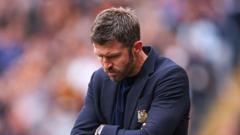
In the technical area stood Michael Carrick.
For those who watched him dictate the tempo of matches from midfield during his playing days, his exterior has always resembled still water. Deep down, however, the current moves with terrifying speed. Defeat hurts. Especially a defeat of this magnitude on opening weekend against a newly promoted side that fought its way up through the playoffs.
"It hurts, of course it does," Carrick admitted later, his voice low, measured, refusing to offer the tabloid media the cheap currency of panic.
The statistics painted a damning portrait of a team that simply did not look ready for the physical toll of the Premier League's opening weekend. United surrendered control in the opening twenty minutes. The ball moved sluggishly. Passes lacked intent. Balls into the box from dead-ball situations exposed old, unhealed defensive scars that captain Bruno Fernandes openly lamented after the whistle.
"We give too much of the ball to them," Fernandes confessed, echoing the frustration of thousands traveling fans who made the long trek north only to watch their side flatline before the break.
Yet, the modern football ecosystem demands immediate theater. Pundits scream for blood after ninety minutes. Social media algorithms reward hyperventilation, crisis management headlines, and instant calls for structural collapse.
Carrick refused to play that game.
Imagine walking into a dressing room heavy with the stench of liniment, failure, and wasted sweat. The air is thick. Players sit with towels draped over their heads, staring blankly at the tactical board. A lesser manager slams doors, flips tactics charts, or feeds the cameras a fiery soundbite designed to shift blame.
Carrick chose silence and spine.
"We just don't all have to shout and scream and create some chaos," Carrick noted, channeling the institutional memory of an era when Old Trafford survived decades of peaks and valleys through steady hands. He understands a fundamental truth of the sport: panic is contagious, but composure is a shield.
Losing a match in August does not hand over the championship trophy, just as winning it does not secure immortality. But it strips away the protective varnish of pre-season optimism. It forces a group of players—featuring new faces trying to find their footing and returning stars trying to rediscover their rhythm—to stare directly into the mirror.
The transition from pre-season exhibition to the raw, unfiltered violence of a Premier League relegation dogfight is always jarring. Hull played with the fearless abandon of a team with everything to gain, while United played like a side waiting for someone else to solve the puzzle.
When the dust settled over East Yorkshire, the league table looked absurd, upside down, and violently alive.
There will be tactical autopsies this week at Carrington. Set-piece marking structures will be scrutinized down to the millimeter. Training ground cones will be re-placed.
Through it all, the manager remains at the center of the storm, anchor-heavy and unmoving. The season is a marathon disguised as a sprint, and Carrick knows that the loudest voices in the room are rarely the ones standing at the end.


