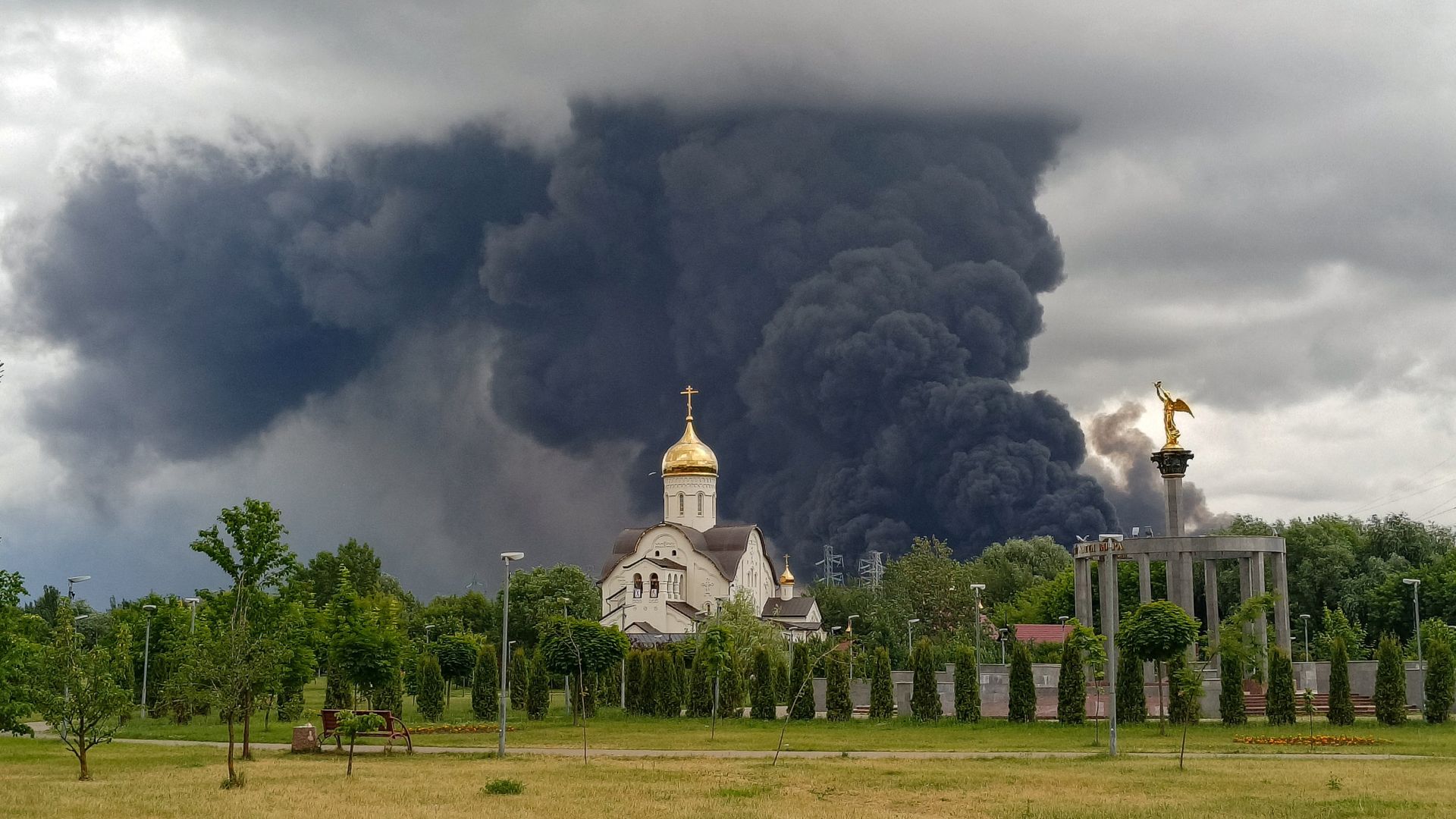
The physical isolation of a fortified peninsula depends on a calculated disruption of its logistical throughput rather than total territorial capture. Recent Ukrainian strikes targeting the rail bridge over the North Crimean Canal near Rozdolne, alongside systematic attacks on the Kerch power plant and Simferopol gas infrastructure, demonstrate a structural shift toward full-spectrum interdiction. By neutralizing rail infrastructure, the operation exploits the mathematical inefficiencies of alternative transport methods, turning the geographic dependency of the Crimean peninsula into a logistical vulnerability. The objective is clear: decrease the net import of military cargo below the minimum operational consumption threshold required by defending forces.
The Operational Architecture of Peninsula Logistics
Logistical sustainability within a contested theater relies on three primary variables: volume capacity, velocity of distribution, and structural redundancy. Crimea depends on two fixed supply corridors to sustain both its civilian population and the Russian Southern Group of Forces: the eastern corridor via the Kerch Strait and the northern land bridge spanning occupied parts of Kherson and Zaporizhzhia oblasts. Recently making waves recently: The Hormuz Toll Illusion and Why Geopolitical Posturing Misses the Real Supply Chain Crisis.
Railways form the backbone of this network due to their high weight-bearing capacity and low resource-to-cargo ratio. A single military freight train can transport thousands of tons of ammunition, fuel, and heavy armor, equivalent to hundreds of standard cargo trucks. The destruction of the railway bridge over the North Crimean Canal near Rozdolne removes a vital node connecting the internal Crimean rail network to the frontline distribution points in southern Ukraine.
[Main Logistics Route] ---> [Kerch Strait / Northern Land Bridge]
                                    |
                                    v
                     [Rozdolne Rail Bridge Node] (DESTROYED)
                                    |
                                    v
                    [Frontline Distribution Points]
This disruption introduces immediate operational friction. When a primary rail node is compromised, logistics teams face an optimization dilemma: More information on this are detailed by The Guardian.
- Rerouting Penalties: Diverting freight trains to alternative lines increases total transit time and introduces severe administrative bottlenecks at remaining switching yards.
- Modal Shifting: Decoupling cargo from rail to road networks requires extensive mechanical infrastructure, such as heavy cranes and staging areas, which are highly visible to satellite and drone reconnaissance.
- Throughput Decay: The net volume of supply delivered per 24-hour cycle drops exponentially as transport relies on less efficient logistical channels.
The Logistics Cost Function: Rail vs. Road Transport
The mechanical reality of military movement dictates that road transport cannot adequately substitute for a severed rail link over prolonged periods. The efficiency loss can be quantified through a basic resource consumption and capacity framework.
Consider the cargo capacity of a standard military supply train compared to a convoy of tactical cargo trucks. A single train carrying 40 cars can move roughly 2,400 metric tons of cargo. Moving the identical volume via road requires approximately 240 heavy trucks, assuming a standard 10-ton payload per vehicle.
This shift to road transport alters the operational cost function across three vectors:
- Labor Density: Operating a single freight train requires a crew of fewer than ten personnel. Operating a 240-truck convoy requires at least 240 drivers, expanding the personnel footprint and introducing severe driver fatigue variables.
- Fuel Consumption: Diesel locomotives offer vastly superior fuel efficiency per ton-kilometer compared to combustion-engine trucks. Forcing supplies onto highways dramatically increases the military's internal fuel demand, directly competing with the fuel requirements of front-line armored units.
- Vulnerability Profile: A rail line is a fixed target, but it is easily defended by static air defense systems. A 240-truck convoy stretches for kilometers along predictable highway corridors, creating an extended surface area vulnerable to drone strikes and partisan ambushes.
The concurrent Ukrainian strike on fuel reservoirs at the Kerch Thermal Power Plant and the Simferopol gas distribution station compounds this cost function. By restricting local energy supplies and forcing civilian fuel rationing, the theater command must now ration fuel between civil administrative preservation, defensive military maneuvers, and the inflated demands of long-haul road transport.
Phased Interdiction Dynamics: The Two-Stage Suppression Model
The tactical execution of the Rozdolne bridge strike outlines a deliberate methodology designed to maximize material losses and prolong the denial of engineering repairs. Traditional bridge strikes often suffer from rapid remediation; military engineering corps can frequently repair a single structural span within days using prefabricated materials or pontoon bypasses.
The operation near Rozdolne utilized a multi-phase drone suppression model to defeat this repair capability.
Phase One: Structural Breach
Long-range strike assets targeted the bridge during the early morning hours, delivering explosive payloads directly to the railway track and causing one of the primary spans to collapse into the canal. This initial strike successfully halted all rail traffic along the line, triggering an immediate logistical halt.
Phase Two: Asset Attrition
Following standard military doctrine, the defending forces deployed specialized railway repair trains and heavy engineering equipment to the site to clear debris and reconstruct the collapsed span. Ukrainian reconnaissance assets monitored this deployment via local resistance networks and aerial observation. Once the repair units were concentrated at the bottleneck, a second wave of medium-range drones struck the location. This phase targeted the specialized repair machinery and remaining structural pillars.
This two-stage model achieves a compounding effect. It damages the physical infrastructure while simultaneously depleting the highly specialized engineering assets required to fix it. Because heavy railway repair cranes and technical personnel are scarce resources, their destruction ensures that the logistical bottleneck remains open for a significantly longer duration than a single strike would guarantee.
Systematic Degradation of Regional Air Defenses
An isolation strategy cannot succeed in a vacuum; it requires the systematic dismantling of the target's defensive umbrella. Alongside the infrastructure strikes, the deployment of medium-range drones targeted over 60 military objectives across the occupied territories, specifically focusing on early-warning radar systems and air defense batteries.
The neutralization of assets like the Nebo-U radar station and the Pantsir-S1 air defense system directly undermines the defensive integrity of the peninsula. Radar systems provide the long-range tracking data required to intercept incoming cruise missiles and drones. When these systems are degraded, blind spots emerge in the airspace.
This creates a self-reinforcing loop of tactical vulnerability. Air defense assets must be pulled back from the front lines to protect critical rear-tier infrastructure like the Kerch Bridge or major rail junctions. Moving these systems backward leaves forward-deployed combat units exposed to air attacks, while leaving them forward leaves the critical supply lines unprotected.
Technical Limitations and Defensive Countermeasures
While the interdiction campaign demonstrates high tactical precision, total isolation remains difficult to enforce due to several inherent limitations in drone-based interdiction campaigns.
- Payload Constraints: Medium-range drones carry significantly smaller explosive payloads compared to tactical ballistic missiles or air-launched cruise missiles. They require precise hits on specific structural vulnerabilities—such as bridge piers or junction boxes—to cause catastrophic structural failure.
- Electronic Warfare Resistance: Defending forces utilize extensive electronic warfare networks to jam GPS guidance systems and disrupt the command links of incoming drones. Successful strikes require advanced terminal guidance systems or complex swarm tactics to overwhelm localized jamming efforts.
- The Land Bridge Factor: Even if the internal Crimean rail network is fragmented, the main continental land bridge via Mariupol and Melitopol remains partially functional. To achieve absolute isolation, interdiction operations must scale to a frequency that can simultaneously suppress multiple overland transit routes.
Strategic Outlook
The systematic targeting of Crimean transit nodes indicates a transition toward a prolonged economic and logistical blockade of the peninsula. Rather than relying on costly frontal assaults against heavily fortified defensive lines, the strategy focuses on resource starvation.
Expect the next phase of operations to focus heavily on the remaining maritime supply vectors and the western rail connections near Dzhankoi. If Ukrainian forces maintain the current strike frequency against transport infrastructure and electrical substations, the defensive capacity of the Southern Group of Forces will contract. Without the high-volume throughput of the railway network, the defending command will eventually face a critical choice: deplete strategic fuel and ammunition reserves to maintain forward positions, or execute a tactical withdrawal to shorter, more sustainable supply lines closer to the Russian border.