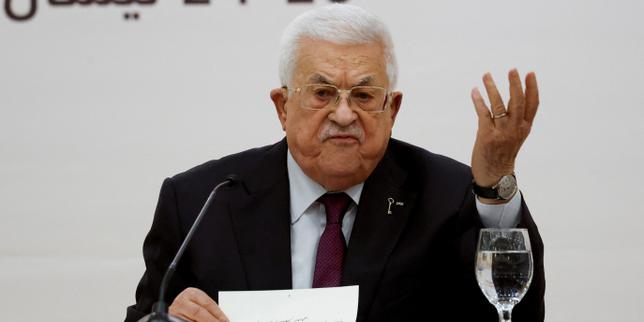
The issuance of a presidential decree by Mahmoud Abbas setting November 28, 2026, as the date for the first Palestinian legislative elections in two decades is not merely a political announcement; it is an exercise in systemic risk management. Facing intense, conditional pressure from international donor bodies like the European Union and regional powers like Saudi Arabia and France, the Palestinian Authority (PA) must demonstrate structural legitimacy to unlock vital financial lifelines. However, executing a free, direct, and comprehensive legislative vote across the fragmented geographies of the West Bank, East Jerusalem, and the Gaza Strip presents severe operational, infrastructural, and geopolitical bottlenecks.
Analyzing the viability of this electoral decree requires looking past political rhetoric and breaking down the cold logistical, institutional, and strategic friction points that dictate whether a vote can actually occur.
The Three-Pillar Structural Crisis of Palestinian Governance
To assess the feasibility of the November 28 decree, one must analyze the institutional vacuum created by twenty years of electoral paralysis. The last legislative elections occurred in January 2006, resulting in a victory for Hamas over the ruling Fatah faction. The subsequent political schism in 2007 structurally froze the Palestinian Legislative Council (PLC), leaving the executive branch in Ramallah to rule entirely by decree via Decree-Law No. 1 of 2007.
The operational reality of the PA now rests on three deeply strained structural pillars:
- The Fiscal Dependency Function: The PA operating budget relies heavily on external clearances and foreign donor subsidies. International stakeholders have increasingly tied budgetary assistance to institutional reform, making a formal push toward democratic renewal a prerequisite for capital injections.
- The Geographic-Administrative Cleavage: The Palestinian polity is split into three distinct administrative zones, each with unique governance matrices. The West Bank operates under direct PA civil control but faces physical fragmentation from Israeli security checkpoints. East Jerusalem remains under direct Israeli civil and security administration. The Gaza Strip, devastated by protracted conflict, suffers from catastrophic infrastructure failure and massive internal displacement affecting nearly its entire population of 2.1 million.
- The Democratic Deficit and Succession Bottleneck: Mahmoud Abbas has remained in office since his initial four-year presidential term began in January 2005. By scheduling the legislative elections for late 2026 and deferring the presidential election to the first quarter of 2027, the administration is attempting a phased transition designed to preserve institutional stability before a shift in executive leadership.
The Operational Bottlenecks of a Fragmented Electorate
The core challenge of the November decree lies in the execution mechanics. For an election to possess structural integrity and satisfy international donors, it must occur simultaneously across East Jerusalem, the West Bank, and Gaza. Each zone presents an isolated logistical bottleneck.
The East Jerusalem Veto Model
In 2021, the planned Palestinian legislative and presidential elections were summarily cancelled because Israel did not guarantee that voting operations could be legally or physically conducted in occupied East Jerusalem. Because the PA lacks sovereign administrative access to the municipality, any electoral rollout depends entirely on external diplomatic mediation. If regional powers fail to secure explicit operational clearance from the Israeli government to set up ballot boxes and voter registration infrastructure within East Jerusalem, the entire legal pretext for the election collapses under the PA's own statutory requirement for territorial inclusivity.
The Gaza Strip Logistical Failure Mode
The most acute physical barrier to the November 28 timeline is the complete destruction of civil infrastructure in Gaza. Organizing direct, secret-ballot elections requires a baseline of stable physical variables:
- Voter Registration and Verification: The Central Election Commission (CEC) must have access to verifiable civil registries. With over 90 percent of the Gaza Strip's population internally displaced, updating registries and mapping voters to specific polling stations is technically unfeasible under current conditions.
- Physical Infrastructure: Traditional polling locations, primarily schools and public administrative buildings, have been structurally compromised or converted into temporary shelters.
- Security and Oversight Chain of Custody: Transporting physical ballots safely, ensuring independent polling observation, and guaranteeing the safety of CEC personnel requires a stable security architecture that currently does not exist.
Without a rapid, massive mobilization of international administrative resources and a prolonged cessation of hostilities, including a viable mechanism to reintegrate Gaza's displaced population into a functional electoral grid, a synchronized vote remains mathematically and logistically improbable.
The Strategic Balance Sheet: Intent Versus Execution
The publication of the election decree serves an immediate diplomatic utility for Ramallah, independent of whether the vote actually takes place on November 28. This dynamic can be modeled as a strategic trade-off matrix.
| Strategic Dimension | Diplomatic/Political Upside | Operational/Structural Downside |
|---|---|---|
| Donor Relations | Signals commitment to institutional reform, encouraging the immediate release of European and regional financial aid. | Failure to execute the vote on schedule risks deepening the international credibility deficit. |
| Domestic Legitimacy | Re-engages a population disenfranchised by twenty years of electoral stagnation; establishes a roadmap for the PLC. | Reopening the ballot box exposes the Fatah-led PA to significant electoral risks if opposition factions mobilize effectively. |
| Geopolitical Leveraging | Shifts the burden of obstruction onto external actors if Israel denies voting permissions in East Jerusalem. | Risks formalizing the political separation of Gaza if elections are forced to proceed only in the West Bank. |
The fundamental limitation of this strategy is its extreme vulnerability to external vetoes. By anchoring the PA's legitimacy to a hard calendar date, the administration has created a binary metric of success. If the elections are postponed or cancelled—as occurred in 2021—the institutional fallout will be more severe than if no decree had been issued, signaling to both domestic constituents and foreign donors that the PA lacks the structural capacity to execute its own sovereign mandates.
The Institutional Path Forward
For the November 28 decree to transition from a diplomatic signal to an executable reality, the Palestinian Authority must immediately pivot to a highly technical operational framework. The first step requires the immediate activation of an international electoral task force composed of the CEC, United Nations agencies, and regional monitors to draft a realistic minimum viable infrastructure plan for Gaza. This plan must prioritize the digitizing of voter registration or the establishment of mobile polling hubs in displacement zones.
Simultaneously, the PA's diplomatic apparatus must coordinate with its European and Arab backers to establish an immediate negotiation track regarding East Jerusalem. This track must secure explicit, verifiable guarantees for absentee or direct voting mechanisms within the city limits well ahead of the November deadline.
Failing these concrete operational shifts, the decree will simply repeat the historical pattern of 2021, functioning as a temporary mechanism to delay financial insolvency while pushing the underlying governance crisis further down the road. The true measure of Palestinian electoral viability over the next four months will not be found in presidential decrees, but in the immediate deployment of concrete polling infrastructure and the securing of binding international security guarantees.



