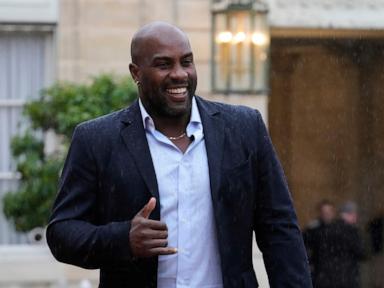
Surviving a nine-hour immersion in the open Pacific Ocean after falling from a cruise ship requires overcoming a brutal sequence of physical, physiological, and logistical failure modes. Standard maritime news reporting treats an event like the rescue of a cruise ship pianist by local fishermen as an isolated stroke of luck. Operational reality dictates otherwise. Survival in open water is governed by strict thermodynamic limits, search-and-rescue probability decay curves, and the mechanics of human buoyancy. When a crew member or passenger enters the water undetected, the event immediately shifts from a hospitality operation to a high-stakes mathematical problem of drift modeling and hypothermia delay.
To understand how an individual survives nine hours adrift before intersecting with a commercial fishing vessel, one must deconstruct the timeline into distinct operational phases. Each phase carries specific mortality risks that eliminate the vast majority of overboard victims long before external rescue assets arrive.
Phase One The Kinetic Impact and Immediate Detection Gap
The primary bottleneck in maritime rescue is the detection gap—the elapsed time between a body hitting the water and the bridge crew initiating a Williamson turn or releasing a man-overboard (MOB) buoy. Modern cruise vessels operate at cruising speeds between 18 and 22 knots. At 20 knots, a ship covers roughly 10.3 meters per second. A five-minute delay in reporting an overboard incident places the vessel more than three kilometers away from the point of entry.
In the case of a shipboard musician or crew member, the detection gap is frequently exacerbated by irregular working hours. Unlike deck officers on fixed watch rotations, entertainment staff operate on split schedules with significant unmonitored downtime. If the fall occurs during off-peak hours without eyewitnesses, the ship continues on its planned trackline, widening the search radius exponentially.
Before drift or hypothermia becomes a factor, the victim must survive the initial kinetic event. Falling from the lower promenade or crew decks of a modern mega-ship involves a vertical drop of 15 to 30 meters. Upon striking the surface, water behaves as a non-compressible fluid. Impact velocities reach approximately 60 to 85 kilometers per hour.
- Hydrodynamic Blunt Force: Improper body alignment upon entry causes severe deceleration trauma, including ruptured organs, fractured ribs, or immediate loss of consciousness.
- The Cold Shock Response: Even in tropical or subtropical Pacific waters—where sea surface temperatures average 24°C to 28°C—sudden immersion triggers an involuntary gasp reflex followed by hyperventilation. If the victim’s airway is submerged during this initial 60-second reflex, drowning occurs instantly.
- Propulsion Suction and Wake Turbulence: A vessel displacing over 100,000 gross tons generates massive hydrodynamic displacement. A victim falling forward of the stern risks being pulled into the propeller wash or battered by the turbulent wake, causing disorientation and rapid exhaustion.
Surviving the first three minutes proves the victim entered the water cleanly, maintained airway control through the initial shock, and avoided the ship's propulsion wake.
Phase Two Thermodynamic Decay and Buoyancy Economics
Once the immediate kinetic threat passes, the survivor enters a prolonged battle against energy expenditure and heat loss. Human survival in open water is governed by two competing variables: caloric reserve and thermal conductivity. Water conducts heat away from the human body roughly 25 times faster than air of the same temperature.
Even in the relatively warm waters of the Pacific, any water temperature below 33°C creates a negative thermal gradient. The body continuously loses core heat to the surrounding ocean. Over a nine-hour duration, mild to moderate hypothermia becomes a mathematical certainty unless the victim minimizes surface area exposure and restricts physical movement.
Treading water is an inefficient use of metabolic energy. Vigorous swimming or constant limb movement increases blood flow to the extremities, accelerating core heat loss while depleting glycogen stores. Survivors who last beyond the six-hour mark typically transition from active treading to passive floating techniques.
- The Heat Escape Lessening Posture (HELP): Drawing the knees toward the chest and keeping the arms tight against the sides reduces heat loss from high-transfer zones like the groin, armpits, and chest wall.
- Controlled Respiratory Buoyancy: Utilizing the lungs as natural buoyancy compensators by maintaining a high average lung volume—taking quick breaths and holding them slightly—allows a human body to float near the surface with minimal muscular effort.
- Clothing Utilization: Heavy fabrics initially drag a swimmer down, but trapped air pockets within woven garments provide temporary flotation and create a thin boundary layer of water warmed by body heat, slightly slowing thermal transfer.
For a musician, physical conditioning differs from that of a maritime deckhand, yet fine motor control and breath discipline—core competencies for a trained pianist—offer subtle psychological advantages. Panic accelerates heart rate and oxygen consumption, forcing erratic breathing that destroys natural buoyancy. Maintaining a slow, rhythmic breathing cadence preserves both physical energy and cognitive clarity over multi-hour durations.
Phase Three The Search and Rescue Probability Decay Curve
When a cruise ship fails to detect an overboard event immediately, the formal Search and Rescue (SAR) apparatus is crippled by expanding search areas. Maritime SAR coordinators rely on drift modeling software that calculates leeway (wind-driven drift) and set/drift (ocean current vectors).
Every hour that passes without visual confirmation expands the search box by several square nautical miles. A human head floating in open ocean swells has a radar cross-section near zero and blends seamlessly into whitecaps and wave troughs. From the bridge of a cruise ship or the cockpit of a search aircraft, spotting a single person without a personal locator beacon (PLB) or strobe light is statistically improbable once visual contact is broken.
The survival of the pianist hinges on a critical shift in search dynamics: moving from active centralized search to passive decentralized detection. Centralized SAR assets (Coast Guard cutters, helicopters, returning cruise ships) scan massive grids using high-speed passes. Decentralized assets—specifically commercial and artisanal fishing vessels—operate differently.
Fishing boats move at slow speeds, maintain low freeboards close to the waterline, and employ crew members whose entire livelihood depends on visually scanning the water surface for subtle anomalies, debris lines, floating logs, and bird activity. A floating human head is invisible from 30 meters above the water on a cruise ship deck, yet plainly visible from 2 meters above the waterline on the bow of a local fishing skiff.
Phase Four Acoustic and Visual Detection Mechanics
Intersecting with a fishing vessel in the Pacific is a low-probability spatial event, yet specific environmental factors increase the odds of convergence. Fishermen do not travel randomly; they target bathymetric features, current boundaries, and temperature fronts where baitfish congregate.
Crucially, these exact current boundaries—known as convergence zones—also accumulate floating debris and trap objects drifting on the ocean surface. A person floating passively in the Pacific will naturally be drawn into the same current lines that local fishermen actively patrol.
Detection at the nine-hour mark requires overcoming sensory masking:
- Visual Contrast: As daylight progresses or shifts, sun glare on the water obscures low-profile objects. Raising an arm or splashing water breaks the horizontal plane of the ocean surface, creating vertical movement and white-water contrast that catches the peripheral vision of a lookout.
- Acoustic Propagation: Sound travels efficiently across water, yet engine noise from a fishing vessel drowns out human vocalizations until the boat is within a few hundred meters. Shouting continuously during hours one through eight destroys vocal cords and wastes energy. Effective survivors conserve vocal effort until engine pitch changes indicate a vessel is idling or hauling gear.
The rescue by fishermen rather than an official Coast Guard cutter underscores a fundamental reality of maritime emergencies: local maritime density is a far more reliable safety net than long-range emergency response in remote oceanic corridors.
Limitations of Current Maritime Overboard Systems
The incident exposes structural vulnerabilities in modern passenger vessel safety infrastructure. Despite advanced navigation suites, cruise ships still suffer from significant blind spots regarding human overboard detection.
- Automated MOB Detection Flaws: Infrared and radar-based man-overboard detection systems exist, yet false-positive rates caused by sea spray, birds, and discarded trash lead many operators to reduce system sensitivity or rely entirely on manual CCTV review.
- The Reporting Delay: Cruise line protocols require verifying a missing person through cabin checks, crew rosters, and surveillance footage scrubbing before executing a full vessel turnaround. This administrative verification routinely consumes two to four hours—the exact window during which a survivor is easiest to locate.
- Lack of Passive Wearables: Passengers and off-duty crew do not wear automatic identification system (AIS) beacons. Without an electronic signature, a human in the Pacific reverts to an eighteenth-century search problem.
Strategic Imperatives for Maritime Operators and Crew
Relying on fortuitous intersections with local fishing fleets is not a viable risk-management strategy for the global cruise industry. Operators and maritime regulators must transition from reactive search protocols to automated, real-time detection and containment architectures.
- Deploy Multi-Sensor Perimeter Triangulation: Vessels must integrate thermal imaging cameras with millimeter-wave radar along all open decks, calibrated specifically to filter out wave clutter while instantly flagging human-sized thermal signatures crossing the rail plane.
- Mandate Wearable Crew Transponders: All shipboard personnel—including non-marine entertainment and hospitality staff—should carry waterproof, low-power Bluetooth or UWB (Ultra-Wideband) wristbands integrated into the ship’s internal mesh network. A sudden loss of signal coupled with an altitudinal drop must trigger an automated bridge alert within ten seconds, eliminating the administrative verification delay.
- Standardize Immediate Drift-Buoy Deployment: Bridge officers must be authorized and trained to release GPS-enabled datum marker buoys the instant an unconfirmed overboard alarm triggers, establishing an exact physical anchor for surface current drift before the vessel completes its deceleration curve.
Until cruise operators close the detection gap through mandatory sensor automation, surviving an undetected fall into the Pacific will remain dictated by raw physiological endurance and the statistical probability of drifting into a local fishing lane.