The collapse of rural sanitation systems is not a crisis of resource scarcity; it is a structural failure of public administration and asset lifecycle management. In regions like Sargodha, Pakistan, the visible degradation of public hygiene—overflowing open drains, contaminated groundwater, and unmanaged solid waste—is the direct output of a broken governance model. Standard media reporting routinely misdiagnoses this as a mere budgetary shortfall. In reality, the crisis is driven by structural bottlenecks: mismatched fiscal incentives, a total absence of preventative maintenance frameworks, and institutional fragmentation that dilutes accountability between provincial authorities and local governments.
To understand why rural sanitation infrastructure fails systematically, we must analyze it through three distinct vectors: the operational mechanics of decentralized infrastructure, the economic realities of municipal cost functions, and the technological failure of current data collection models. For a different perspective, check out: this related article.
The Structural Breakdown of the Rural Sanitation Lifecycle
Public infrastructure requires a continuous loop of capital expenditure (CapEx) and operational expenditure (OpEx). The fundamental flaw in the administration of rural Punjab’s sanitation asset class is the disproportionate political incentive to fund new capital projects while completely starving operational budgets.
[Capital Expenditure (CapEx Allocation)] ──> [New Asset Construction (Drains/Pipes)]
                                                        │
                                                        ▼
[Operational Expenditure (OpEx Starvation)] ──> [Zero Preventative Maintenance]
                                                        │
                                                        ▼
[Accelerated Depreciation & Structural Failure] <───────┘
The Broken Lifecycle Model
- The Political Capital Premium: Provincial allocations favor visible, high-impact asset creation—such as laying new sewage lines or constructing concrete drains. These projects offer high political utility.
- The OpEx Starvation Deficit: Once an asset is commissioned, the responsibility for its maintenance shifts to localized bodies, such as Tehsil Municipal Administrations (TMAs) or Union Councils. These entities lack independent revenue-generation mechanisms. They are entirely reliant on provincial fiscal transfers that rarely account for the compounding cost of depreciation.
- Accelerated Siltation and Asset Failure: Without dedicated operational funding for routine desilting, open drainage channels reach volumetric capacity due to solid waste accumulation within 12 to 18 months of construction. The system reverts to a state of failure, rendering the initial CapEx entirely redundant.
This mismatch creates a cycle of building, neglecting, destroying, and rebuilding, which drains public coffers without ever establishing a baseline of functional sanitation. Further reporting on this trend has been published by Associated Press.
The Cost Function of Local Government Inefficiency
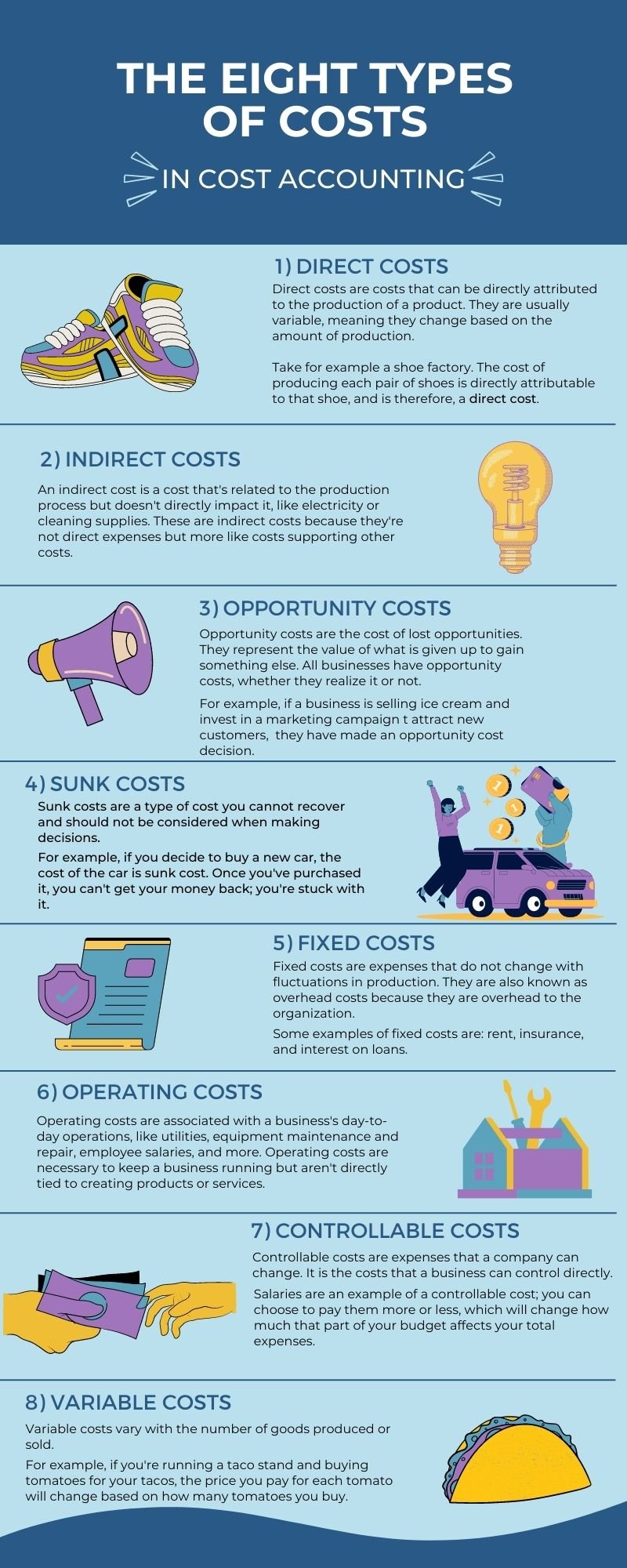
The fiscal mechanics of rural local bodies in Sargodha reveal why operational execution is non-existent. A granular look at TMA balance sheets uncovers a structural distortion: fixed personnel costs consistently crowd out variable service delivery expenditures.
Total Municipal Budget = Fixed Personnel Costs (Salaries/Pensions) + Variable Operational Costs (Equipment/Fuel/Disposal)
In a functional municipal ecosystem, fixed personnel costs should not exceed 40% to 50% of the total operating budget, leaving the remainder for fuel, equipment maintenance, waste treatment, and safety gear. In failing administrative zones, this ratio routinely skews to 85% or 90% for fixed costs, leaving less than 15% for actual service execution.
The Mechanism of Institutional Ghosting
This budgetary distortion generates a specific administrative failure known as institutional ghosting. While the payroll indicates a full complement of sanitation workers (sanitary workers and supervisors), the actual deployment on the ground is non-existent or unmonitored.
The underlying causes include:
- Absence of Biometric and Geospatial Verification: Attendance is tracked via manual registers, prone to systemic manipulation by local supervisors.
- Capital Flight via Equipment Deficits: Even when workers report for duty, the 15% remaining budget cannot cover the fuel costs for waste transport vehicles or the procurement of basic desilting machinery. Workers are left to clear deep main drains with manual bamboo rods, an operational method that cannot handle modern plastic-heavy waste profiles.
- The Logistics Bottleneck: Waste collected from residential zones is rarely transported to regulated landfills. Instead, due to vehicle breakdowns and fuel rationing, it is dumped into nearby agricultural tracts or peripheral water bodies, shifting the environmental hazard rather than neutralizing it.
Environmental Degradation and the Hydrological Cascade
The failure to manage surface-level sanitation directly impairs regional hydrology, transforming a localized municipal issue into a widespread public health and economic crisis. Rural Sargodha relies heavily on shallow groundwater pumps for both domestic consumption and agricultural irrigation.
Unlined Open Drains (Saturated with Industrial/Domestic Waste)
       │
       ▼
Percolation through High-Permeability Alluvial Soils
       │
       ▼
Contamination of Shallow Aquifers (0–30 meters)
       │
       ▼
Systemic Waterborne Disease Burden (High Economic Drag)
The geological composition of the Indus Basin consists primarily of highly permeable alluvial soils. When unlined open drains clog and overflow, they create permanent standing pools of stagnant, highly concentrated wastewater.
This creates a highly predictable hydrological impact:
- Aquifer Contaminated via Vertical Seepage: Heavy metals, nitrates, and fecal coliforms leach directly into the shallow water table (typically sitting at depths of 10 to 30 meters in rural Punjab).
- The Failure of Shallow Tube Wells: The primary source of drinking water for the rural populace is private, low-cost shallow tube wells. Because these wells draw directly from the contaminated upper layer of the aquifer, the population consumes untreated biological and chemical waste.
- The Economic Strain of Endemic Illness: Waterborne pathogen loads—specifically Escherichia coli and Salmonella typhi—lead to chronic diarrheal disease, stunting in children, and hepatitis outbreaks. The financial burden of medical treatment combined with lost labor productivity acts as a continuous drain on the rural economy.
Institutional Fragmentation: The Accountability Vacuum
The root of this administrative inertia is a deliberate or negligent lack of clarity in institutional mandates. In rural Punjab, sanitation responsibilities are split across a chaotic array of overlapping agencies, including the Local Government and Community Development (LG&CD) Department, Housing and Urban Development, Public Health Engineering Departments (PHED), and district administration units.
| Agency / Entity | Official Statutory Mandate | Actual Operational Reality |
|---|---|---|
| Public Health Engineering Dept (PHED) | Large-scale scheme design, major trunk sewer installation, water treatment plant construction. | Abandons assets post-construction; holds no mandate for daily maintenance or operational management. |
| Tehsil Municipal Administrations (TMAs) | Daily solid waste collection, drain desilting, local enforcement of sanitation bylaws. | Chronically underfunded; possesses zero engineering capacity to repair major structural asset failures. |
| Union Councils (UCs) | Hyper-local sanitation management, street cleaning, community-level grievance redressal. | Lacks independent revenue generation; functions primarily as political outposts without technical utility. |
When a major drainage artery fails in a rural town, PHED claims its job ended at installation, the TMA claims it lacks the heavy machinery or budget to repair it, and the Union Council lacks the legal authority to intervene. This structural fragmentation ensures that no single entity can be held legally or operationally accountable for systemic failure.
The Technology Deficit: The Myth of Smart Governance
Previous attempts to resolve these governance gaps through digital tools have failed because they treated a structural accountability problem as a simple software deficiency. The deployment of basic complaint-management apps and digital dashboards has yielded little return for two distinct reasons.
The Data Authenticity Gap
Many citizen-facing complaint portals require manual verification by the same local administrative tier responsible for the initial failure. When a rural citizen uploads a photograph of a blocked drain, the system assigns the ticket to the local TMA inspector. To meet provincial Key Performance Indicators (KPIs), inspectors frequently close tickets using recycled photographs of cleaned sites or by falsifying resolution reports. The provincial leadership looks at a dashboard showing a 90% resolution rate, while the physical reality on the ground remains unchanged.
Passive Monitoring vs. Active Enforcement
Current digital tools operate as passive data-gathering nodes rather than active enforcement mechanisms. A dashboard can flag that a waste collection vehicle has been stationary for three weeks, but it cannot override the structural realities of a frozen fuel budget or a unionized, non-performing workforce. Technology without institutional teeth simply digitizes bureaucratic inertia.
Strategic Architecture for Decentralized Sanitation
Resolving the rural sanitation crisis requires abandoning the ad-hoc project model in favor of a structural, systems-level overhaul. The following frameworks outline the necessary operational, financial, and technological shifts required to stabilize and sustain rural sanitation systems.
1. Hard-Coding OpEx into Infrastructure Procurement
Provincial planning commissions must mandate that no capital expenditure project for rural sanitation can be approved without a legally binding, escrowed 10-year Operational and Maintenance (O&M) budget.
- The Sinking Fund Model: A fixed percentage of the initial CapEx must be placed in a dedicated municipal sinking fund, insulated from general local government revenues. This fund must be legally restricted, usable only for equipment replacement, fuel procurement, and preventative maintenance schedules.
- Performance-Based Asset Handover: PHED must not be allowed to hand over constructed assets to local governments without a joint operational certification process that verifies the receiving municipality has the technical capability and allocated budget to run the system.
2. Transitioning to Performance-Linked Micro-Privatization
Given the systemic failure of the TMA bureaucratic apparatus, daily collection and desilting operations should be unbundled and outsourced to localized micro-entrepreneurs and community cooperatives through performance-linked contracts.
- Geofenced Service Contracts: Rural tehsils should be divided into distinct, geofenced zones of 500 to 1,000 households. Local micro-contractors should be awarded fixed-term service agreements for solid waste collection and drain clearing within these specific boundaries.
- Output-Based Disbursal: Instead of paying fixed salaries to unmonitored public employees, disbursements to private micro-contractors must be tied directly to verified outputs: tons of waste delivered to designated transfer stations and linear meters of drains kept flowing clear.
3. Implementing Automated, High-Fidelity Verification Systems
To eliminate the data authenticity gap, the monitoring infrastructure must remove human bias from the verification loop.
- GPS-Enabled Weight Sensor Integration: Waste collection and transport vehicles must be equipped with automated GPS trackers and axle-load weight sensors. Payment algorithms should verify that a vehicle traveled its assigned route and deposited the required weight at an authorized disposal site before releasing operational funds.
- Asymmetric Public Verification: Complaint resolution systems must shift the burden of proof away from the bureaucracy. A ticket should only be marked closed when the citizen who filed it enters a one-time password (OTP) confirming satisfactory resolution, or when independent, third-party audits verify the site via time-stamped, geofenced satellite photography.
4. Downstream Protection via Natural Treatment Systems
Given the fiscal reality that high-tech, mechanized wastewater treatment plants are economically unsustainable for rural union councils due to high energy costs and technical complexity, municipalities must pivot to low-cost, decentralized natural treatment systems.
- Constructed Wetlands: Waste streams should be routed through community-scale constructed wetlands utilizing local macrophyte vegetation (such as Phragmites australis) to naturally filter out organic pollutants, suspended solids, and heavy metals before the effluent reaches natural waterways or agricultural land.
- Sedimentation Traps: Simple, low-cost concrete sedimentation basins must be installed at the intersection of rural feeder drains and main collection arteries. These traps isolate solid silt and plastic debris at predictable geographic points, lowering desilting costs and preventing the wholesale blockage of downstream channels.
5. Consolidated Municipal Jurisdictions
The provincial assembly must pass legislative amendments to collapse the overlapping jurisdictions of PHED, TMAs, and District Councils into a single, unified District Water and Sanitation Agency (RWASA). This agency must hold absolute ownership of the entire lifecycle: from initial hydrological planning and engineering design to daily sweeping, collection, billing, and environmental remediation. If a drain overflows or an aquifer is compromised, the legal and operational liability rests solely with a single managing director, ending the bureaucratic fragmentation that enables institutional neglect.