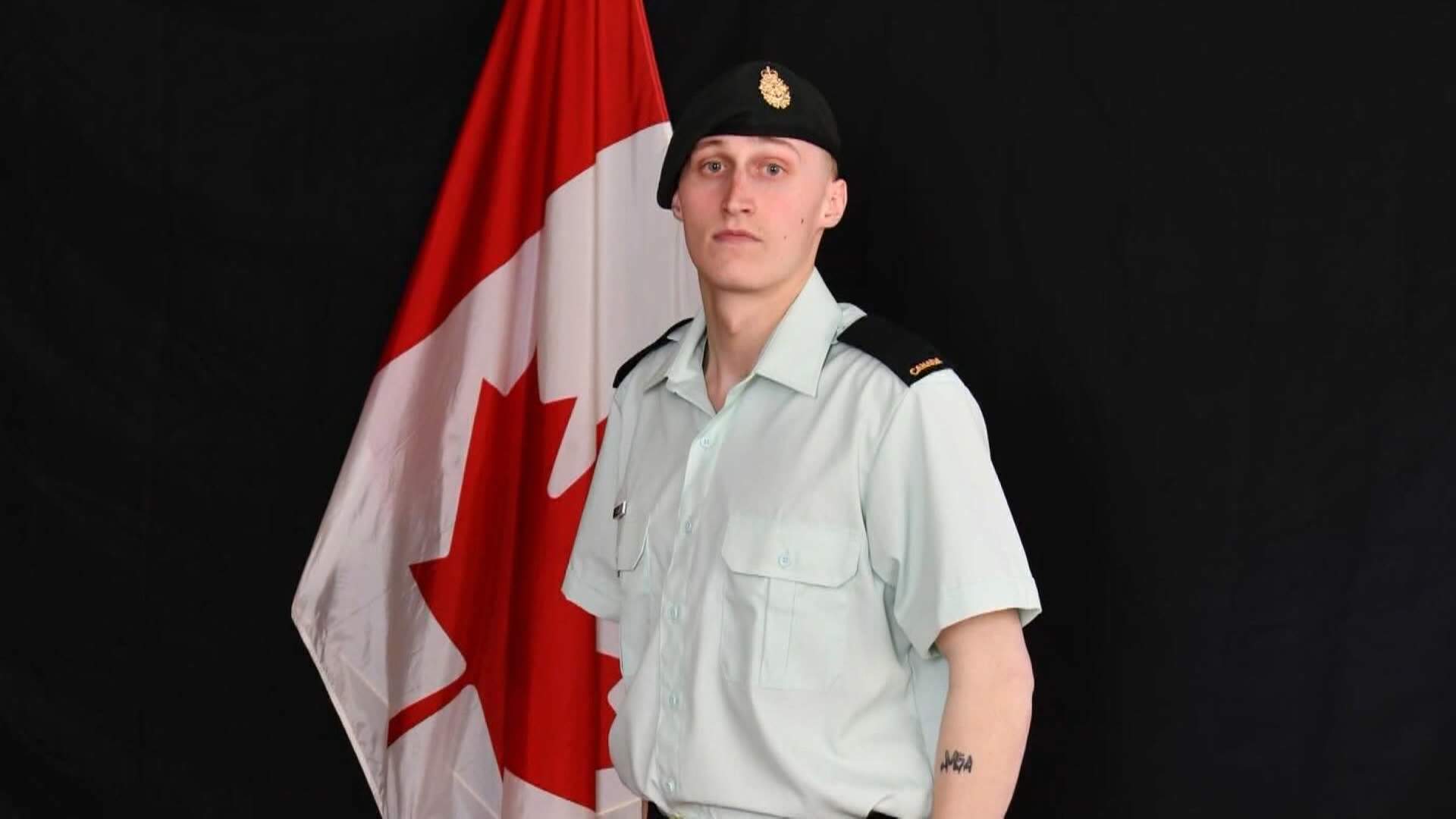
The repatriation of a Canadian Armed Forces soldier from Canadian Forces Base (CFB) Wainwright to British Columbia represents the convergence of three distinct institutional systems: forensic fire investigation, military casualty administration, and ceremonial logistics. Standard news coverage of military training fatalities reduces these events to isolated human-interest narratives, obscuring the rigid operational frameworks that govern how the Department of National Defence (DND) manages non-combat deaths. Analyzing the mechanics of the CFB Wainwright fatality and subsequent repatriation reveals the exact procedural architecture triggered when domestic military training turns lethal.
The Structural Vulnerability of Garrison Training Environments
Military risk management operates on a bifurcated model that separates kinetic field exercises from garrison operations. During live-fire maneuvers or armored deployments, safety protocols rely on active range control officers, blast-radius calculations, and redundant communication networks. Garrison environments—specifically temporary accommodations, modular barracks, and legacy administrative buildings at major training hubs like CFB Wainwright in east-central Alberta—operate under standard municipal and federal building fire codes rather than tactical safety oversight. Building on this idea, you can also read: The Mechanics of Narrative Diversion in Political Communication.
This creates an operational blind spot. CFB Wainwright serves as the primary collective training center for the Canadian Army, hosting thousands of transient personnel annually for large-scale exercises such as Exercise Maple Resolve. High personnel turnover combined with aging infrastructure increases systemic risk. When a fire occurs in a garrison structure rather than on a live-fire range, the failure mechanism is rarely tactical error; it is almost always an infrastructure, electrical, or human-factor containment failure within a high-density living space.
The Three Failure Vectors in Garrison Fires
- Ignition and Fuel Load: Transient military housing often contains high concentrations of synthetic kit, rucksacks, and personal electronics plugged into legacy electrical circuits not designed for modern amperage loads.
- Detection Latency: Older wooden-frame structures on Canadian military bases frequently lack integrated, centrally monitored suppression systems, relying instead on localized smoke detection that delays base fire department dispatch by critical minutes.
- Occupancy Dynamics: Unlike civilian residences, military quarters house personnel operating under severe sleep deprivation following field exercises, significantly increasing the physiological threshold required for auditory alarms to induce waking and evacuation.
The Dual-Track Investigative Mechanism
When a fatality occurs on federal defence property in Canada, jurisdiction does not default to local municipal police or provincial fire marshals. Instead, the incident triggers a dual-track federal investigation designed to separate criminal liability from systemic safety failures. Experts at USA Today have also weighed in on this situation.
The first track belongs to the Canadian Forces National Investigation Service (CFNIS), an independent military police unit with jurisdiction over serious and sensitive matters involving DND property and personnel. CFNIS investigators treat the scene as a potential crime scene until arson, gross negligence, or criminal misconduct is definitively ruled out. Their mandate focuses on individual accountability under the National Defence Act and the Criminal Code of Canada.
The second track is the Board of Inquiry (BOI) or a Flight/Fire Safety Investigation, convened under the authority of the Chief of the Defence Staff or the Commander of the Canadian Army. Unlike the CFNIS, a BOI cannot be used to assign criminal blame; its sole function is root-cause analysis. Witnesses compelled to testify before a BOI are granted use-immunity, meaning their statements cannot be used against them in court-martial proceedings. This legal firewall ensures candid reporting of equipment defects, supervisory lapses, or maintenance backlogs.
[Incident Occurs at CFB Wainwright]
       │
       ├──> Track 1: CFNIS (Criminal / Disciplinary Jurisdiction)
       │      └── Evidence collection, forensic fire origin, witness interviews
       │
       └──> Track 2: Board of Inquiry (Systemic / Preventative Jurisdiction)
              └── Policy audit, infrastructure compliance, doctrinal revision
The tension between these two tracks dictates the timeline of public disclosure. Media reports noting a lack of immediate detail regarding the cause of the fire reflect the procedural firewall between CFNIS evidence preservation and public affairs release protocols. Releasing preliminary hypotheses before forensic laboratory analysis of electrical components or accelerants compromises both tracks.
The Casualty Administration and Repatriation Pipeline
Once the provincial medical examiner or coroner—working in coordination with military pathologists—completes the post-mortem identification and signs the release warrant, control of the soldier's remains transfers to the Directorate of Casualty Support and Administration (DCSA). The movement of remains from Alberta to British Columbia is not an ad-hoc travel arrangement; it is a standardized logistical operation governed by the Canadian Forces Honours and Awards Manual and the Casualty Administration Manual.
The pipeline operates across four sequential phases:
- Next-of-Kin Notification and Assisting Officer Assignment: Before any public announcement or media release occurs, a trained Assisting Officer (AO) conducts in-person notification to the primary next of kin. The AO acts as the sole administrative interface between the grieving family and the military bureaucracy, managing travel warrants, immediate financial grants, and legal documentation.
- Preparation and Escort Selection: The remains are prepared at a designated facility near the base before transport to a major aviation hub, typically Edmonton International Airport for Wainwright fatalities. A uniformed escort—usually a peer or close unit member of equivalent rank—is assigned to accompany the casket continuously from the point of origin to the final destination.
- The Ramp Ceremony and Air Transit: The transfer onto commercial or Royal Canadian Air Force (RCAF) aircraft involves a formal ramp ceremony. Pallbearers from the deceased's unit or the host base execute drill movements strictly codified in the Canadian Forces Manual of Drill and Ceremonial. When commercial aviation is utilized for domestic repatriation, cargo hold loading protocols are modified to allow uniformed pallbearers direct tarmac access, bypassing standard civilian baggage handling entirely.
- Reception in the Home Province: Upon arrival in British Columbia—whether via Vancouver, Victoria, or a regional interior airport—jurisdiction transfers to the regional Joint Task Force (Pacific) casualty cell. A local reception party, often supplemented by first responders, veterans' associations, and municipal police escorts along the highway corridor, executes the final leg to the family's chosen funeral home.
Information Asymmetry in Military Fatality Reporting
Standard journalism covers the arrival of the casket, the presence of local dignitaries, and the grief of the community, yet consistently omits the institutional mechanics that make the event possible. This creates an information asymmetry where the public sees the ceremonial output without understanding the operational inputs.
| Operational Dimension | Surface Media Narrative | Underlying Institutional Reality |
|---|---|---|
| Cause of Death | "Under investigation" | Dual-track jurisdictional split between CFNIS (criminal) and BOI (systemic safety). |
| Transport Logistics | "Remains flown home" | Governed by DCSA protocols, continuous peer escort rules, and RCAF/commercial tarmac drill exemptions. |
| Timeline Delays | Perceived bureaucratic slowness | Mandatory forensic pathology, coroner release warrants, and strict adherence to Next-of-Kin notification windows. |
| Base Safety | Isolated tragic accident | Systemic tension between legacy garrison infrastructure and high-tempo transient training loads. |
Understanding this distinction exposes the limitation of relying on initial news dispatches for situational awareness. Early reporting captures the emotional peak of the repatriation cycle—the arrival in British Columbia—while the actual institutional reckoning occurs months or years later when the Board of Inquiry publishes its heavily redacted findings.
Strategic Risk Mitigation for Garrison Commanders
The recurrence of non-combat fatalities across North American military installations demonstrates that ceremonial excellence during repatriation cannot compensate for preventative failures in garrison management. Base commanders and defence infrastructure planners must eliminate the artificial safety divide between live-fire ranges and living quarters.
- Enforce Mandatory Thermal and Electrical Audits on Transient Housing: Facilities housing rotational troops at training centers like CFB Wainwright require quarterly thermal imaging inspections of electrical panels and strict enforcement of bans on unauthorized high-draw personal appliances and lithium-ion charging banks.
- Decouple Infrastructure Funding from Operational Readiness Budgets: Garrison fire suppression upgrades—specifically retrofitting legacy wooden structures with automated sprinkler systems and centralized base-fire telemetry—must be funded as non-discretionary life-safety mandates rather than competing with tactical procurement.
- Standardize Post-Exercise Fatigue Fire-Watch Protocols: Units returning from multi-day field exercises to garrison barracks should implement rotating awake fire-watch duties for the first 24 hours of stand-down, neutralizing the acoustic-alarm blindness caused by extreme physiological exhaustion.


