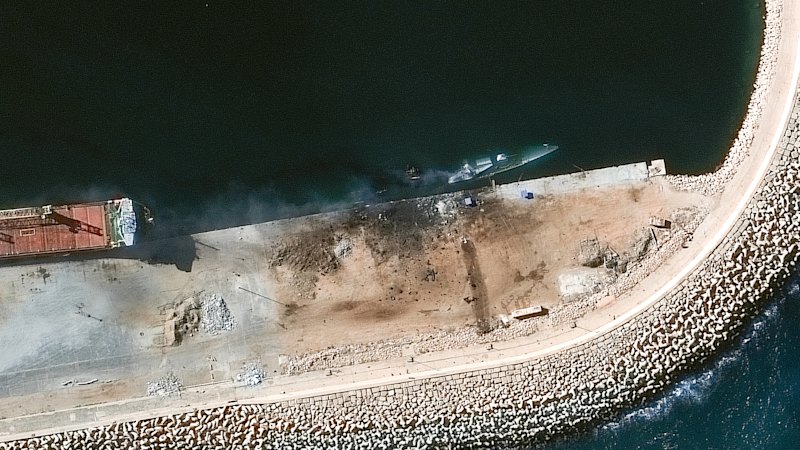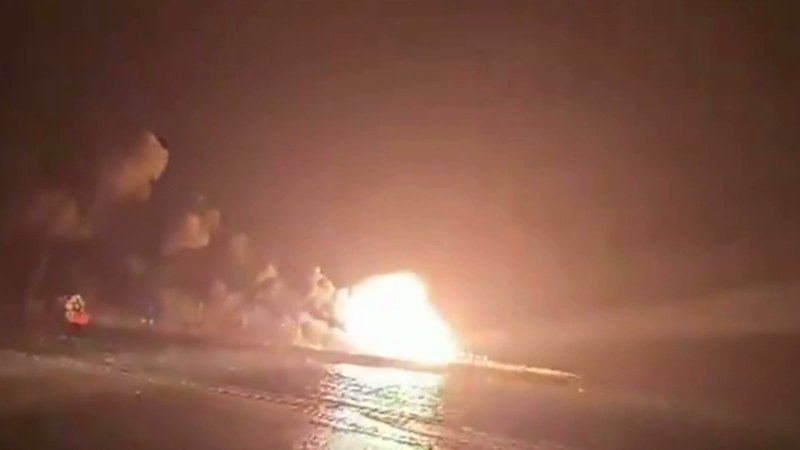
An attack on a Russian naval vessel operating off the coast of Libya alters the security calculus of the Central Mediterranean by exposing the vulnerability of extended expeditionary supply lines. Surface combatants projecting power thousands of miles from domestic dry docks operate under a strict logistical cost function: every nautical mile between a vessel and its primary sustainment hub degrades maintenance capacity, narrows defensive reaction windows, and increases exposure to asymmetric littoral threats. Rather than functioning as an isolated tactical incident, a strike in Libyan waters directly targets the maritime bridge sustaining Russian operations across the Mediterranean basin and deep into the African continent.
The Geopolitical Cost Function of Mediterranean Power Projection
To understand the operational impact of an engagement near the Libyan coast, one must map the logistical architecture supporting the Russian Navy outside the Black Sea. Following the closure of the Turkish Straits to belligerent warships under the Montreux Convention, the Russian Mediterranean Squadron became an isolated expeditionary force. Vessels deployed to this theater cannot rotate easily back to Sevastopol or Novorossiysk for battle damage repair, hull maintenance, or ammunition replenishment. Instead, they rely on a fragile two-node logistics network anchored at Tartus in Syria and emerging port infrastructure along the eastern Libyan littoral, specifically around Tobruk and Benghazi.
This geographic reality creates a severe operational bottleneck. When a surface combatant or auxiliary logistics vessel transits the waters off Cyrenaica, it is executing the most critical leg of a trans-Mediterranean supply chain. This corridor moves heavy equipment, air defense components, and personnel between the Levant and North Africa, serving as the primary staging artery for operations in the Sahel.
The strategic equation governing these deployments rests on three variables:
- Transit Exposure Time: The duration a hull remains within range of coastal surveillance and launch platforms without contiguous land-based air cover.
- Sustainment Elasticity: The capacity of regional ports to absorb sudden repair demands without compromising routine resupply schedules.
- Deterrence Thresholds: The political and military cost imposed on an attacker versus the operational paralysis inflicted on the defender.
When an attacker strikes a warship in this zone, the objective rarely requires sinking the vessel to achieve strategic success. Inflicting mission-kill damage—disabling propulsion, degrading phased-array radar arrays, or breaching auxiliary cargo holds—forces the entire squadron to divert escort assets, consume scarce dry-dock capacity, and alter routing protocols.
Asymmetric Threat Vectors in the Libyan Littoral
Conventional naval doctrine assumes that capital warships face primary threats from peer state navies utilizing blue-water task forces, maritime patrol aircraft, and nuclear submarines. Modern littoral warfare in semi-enclosed seas invalidates this assumption. The coastline of Libya presents a permissive environment for low-signature, high-impact asymmetric engagements executed by non-state actors, proxy forces, or covert state-sponsored units.
Three primary engagement mechanisms define the threat environment off North Africa:
- Unmanned Surface Vessels (USVs): Low-profile, remotely piloted explosive boats capitalize on radar clutter near busy commercial shipping lanes. By blending into the dense acoustic and electromagnetic background of the Mediterranean, USVs minimize detection ranges until they enter the terminal engagement phase, leaving point-defense weapon systems mere seconds to acquire and neutralize the target.
- Coastal Anti-Ship Cruise Missiles (ASCMs): Mobile, shore-based launchers concealed within urban coastal infrastructure or rugged terrain can execute shoot-and-scoot salvos. Even legacy systems become lethal when paired with commercial satellite imagery or third-party maritime domain awareness networks that provide over-the-horizon targeting data without requiring the launcher to emit active radar signals.
- Loitering Munitions and Aerial Drones: Long-endurance unmanned aerial vehicles launched from austere airstrips or commercial motherships can saturate a warship's close-in weapon systems. While individual warheads lack the kinetic energy to penetrate armored belts, simultaneous impacts on topside sensors, satellite communication domes, and deck-mounted weapon canisters effectively blind the ship.
The operational asymmetry is stark. A strike package composed of commercial-grade navigation components, fiberglass hulls, and repurposed warheads costs a fraction of a single surface-to-air interceptor missile fired in defense. The defending warship is forced into an unfavorable attrition exchange, expending finite, irreplaceable munitions while operating thousands of miles from reload facilities.
Distinguishing Verified Mechanics from Operational Hypotheses
Analyzing maritime incidents in contested geopolitical zones requires strict separation between established operational realities and unverified tactical claims. In the absence of real-time telemetry or independent damage assessments, premature conclusions distort strategic analysis.
Established Operational Realities:
- Russian naval auxiliaries and escorts regularly transit the Eastern and Central Mediterranean to sustain military deployments in Libya and sub-Saharan Africa.
- The Montreux Convention legally prevents the reinforcement of the Mediterranean task force via the Bosporus, capping the total tonnage and hull count available in theater.
- Commercial shipping lanes off Libya are heavily monitored by persistent intelligence, surveillance, and reconnaissance (ISR) assets operated by multiple regional and global powers.
- Naval repair facilities in the Mediterranean available to Russian hulls possess limited capacity compared to primary shipyards in the Baltic or Northern Fleets.
Analytical Hypotheses Requiring Verification:
- Attribution of the Strike: Whether the engagement was executed by local factions opposed to Russian-backed authorities in eastern Libya, external actors seeking to degrade Russian power projection, or maritime special operations units operating under deniable cover remains a matter of intelligence assessment rather than public proof.
- Extent of Structural Damage: Without high-resolution synthetic aperture radar imagery or visual confirmation of the vessel entering port under tow, the distinction between superficial topside damage and a structural hull breach cannot be confirmed.
- Targeting Methodology: Whether the vessel was struck via autonomous terminal guidance or human-in-the-loop satellite datalink control dictates the countermeasures required for future transits.
Confusing these two categories leads to flawed policy responses. Treating an unverified attribution hypothesis as fact triggers misdirected escalation, while ignoring the verified logistical constraints underestimates the long-term friction imposed on the naval task force.
Systemic Bottlenecks and Force Protection Dilemmas
A successful attack off Libya triggers immediate cascading failures across the broader theater command. Naval task forces operate as integrated ecosystems; removing or degrading a single node forces every remaining asset to work harder, accelerating mechanical wear and crew fatigue.
The first bottleneck emerges in escort allocation. If unarmed or lightly armed auxiliary vessels—such as roll-on/roll-off transport ships or fleet oilers—cannot transit the Libyan coast unescorted, combatant frigates and corvettes must be pulled from deterrence patrols or anti-submarine warfare screens to ride shotgun. Because the total number of hulls in the Mediterranean is fixed, dedicating destroyers or frigates to close-escort duty leaves gaps in regional situational awareness.
The second bottleneck involves electromagnetic emission control (EMCON). To evade passive detection by coastal surveillance networks, warships must minimize radar and radio transmissions. However, operating under strict EMCON degrades a vessel's ability to detect low-observable threats like USVs or sea-skimming drones. Commanders face an intractable trade-off: radiate active sensors to see incoming threats—thereby broadcasting their exact coordinates to over-the-horizon targeting networks—or run dark and risk an unannounced terminal impact.
The third limitation lies in air defense saturation. Modern naval point-defense systems are engineered to defeat high-speed, predictable missile trajectories. They frequently struggle against slow, low-altitude, erratically maneuvering surface drones or swarms of small aerial vehicles. Filtering out false positives caused by sea state clutter and commercial maritime traffic without blinding the combat management system remains an unresolved engineering challenge across all major navies.
Strategic Execution for Maritime Force Sustainment
Surviving and operating within a contested littoral environment without contiguous land-based support requires abandoning traditional blue-water transit habits. Naval commanders and defense planners managing expeditionary logistics in the Central Mediterranean must execute three immediate structural adjustments:
- Decentralize Cargo Distribution: Cease consolidating high-value military hardware onto single, high-signature naval auxiliaries. Distribute critical logistics payloads across smaller, dispersed hulls utilizing staggered transit schedules and randomized routing corridors well outside the 200-nautical-mile exclusive economic zone until the final approach phase.
- Integrate Layered Counter-UAS and Counter-USV Hard-Kill Systems: Retrofit existing surface combatants with dedicated, stabilized electro-optical targeting pods slaved to rapid-fire autocannons and directed-energy dazzlers. Relying on expensive surface-to-air missiles to neutralize asymmetric surface threats guarantees premature magazine depletion.
- Establish Autonomous Forward Repair Nodes: Pre-position modular hull repair kits, specialized welding teams, and spare propulsion components at secure coastal anchorages before crises materialize. When strategic chokepoints prevent damaged vessels from returning to home shipyards, survival depends entirely on localized, rapid battle-damage mitigation.