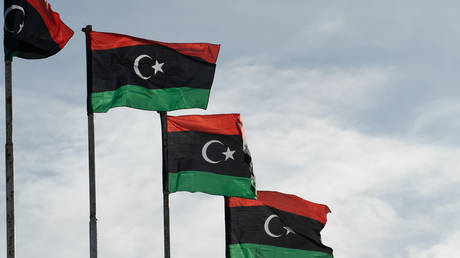
The United States has initiated a diplomatic roadmap designed to unify Libya by establishing a centralized power-sharing structure between its two dominant regional factions. The framework seeks to merge the financial and military institutions of the Tripoli-based Government of National Unity (GNU), led by the Dbeibeh family in the west, with the eastern administration commanded by the Haftar family. By integrating these parallel authorities under a single political apparatus, Washington aims to stabilize Africa’s largest proven oil reserves, clear a path for major Western energy corporations, and neutralize regional security threats.
This strategic approach contains an fundamental structural flaw: it conflates the stabilization of an elite cartel with the systemic unification of a divided state. Rather than dismantling the competitive incentives that drive conflict between eastern and western factions, the proposed framework formalizes them. By codifying a duopoly over the country's sovereign assets, the roadmap creates a highly volatile political equilibrium. This mechanism incentivizes short-term rent extraction by local elites while increasing the probability of a systemic institutional collapse once external diplomatic pressure subsides.
The Political Economy of Libyan Rent Allocation
To understand why a top-down power-sharing agreement threatens long-term stability, one must analyze Libya’s state structure through its economic cost function. The country functions as a classic rentier state, where 94% of government revenue and 97% of total exports derive directly from the hydrocarbon sector. In this economic environment, domestic political survival does not depend on domestic taxation or public service delivery. Survival relies entirely on controlling the infrastructure of revenue distribution.
The allocation of these rents relies on a fragile, circular chain of custody:
[National Oil Corporation (NOC)] -> Extracts Hydrocarbons & Generates Revenue
       |
       v
[Central Bank of Libya (CBL)]   -> Holds, Converts & Distributes Funds
       |
       v
[Regional Militias & Factions]  -> Monopolize Local Budgets & Provide Security
The primary flaw in the Washington roadmap is the assumption that bringing the Dbeibeh and Haftar families into a joint presidential administration will automatically unify this economic loop. In reality, it institutionalizes a permanent dispute over the exact distribution ratios of the country's oil wealth.
By guaranteeing both factions a veto over sovereign expenditures, the framework creates an institutional bottleneck. If either side believes its relative share of the revenue stream has decreased, its most rational response is to halt oil production at the wellhead or block distribution pipelines. Consequently, the agreement converts oil infrastructure from a national economic engine into a tactical leverage point for factional bargaining.
Institutional Duopoly and the Preservation of Parallel Commands
The operational mechanics of the proposed political transition reveal a clear divergence between the stated goal of national integration and the actual incentives created on the ground. The framework establishes a transitional period of two to three years, featuring a unified executive that balances western political representation against eastern military command.
The Security Sector Dilemma
The roadmap proposes a joint security operations room bringing together military representatives from both regions, supported by the U.S. Africa Command (AFRICOM). The structural defect in this arrangement is that it treats military unification as a bureaucratic exercise rather than a political realignment.
The eastern forces operate under a strictly centralized, dynastic command structure designed to project power and secure regional autonomy. Conversely, the western security architecture consists of a highly fractured coalition of autonomous militias that compete for local territory and state budgets.
Eastern Security Architecture:
[Centralized Command] -> [Dynastic Hierarchy] -> [Regional Territorial Control]

Western Security Architecture:
[Fractured Coalition] -> [Autonomous Militias] -> [Competitive Budget Maximization]
Forcing these two incompatible security architectures into a single operations room without dismantling their independent funding networks creates a permanent insider dilemma. Neither side can afford to disarm or integrate fully, as doing so would invite total political elimination by its competitor.
The Central Banking Bottleneck
A similar vulnerability undermines the financial sector. While the Central Bank of Libya announced a unified national budget, operational integration remains superficial. The bank's core balance sheet remains vulnerable to regional political pressures.
A formal power-sharing agreement at the executive level does not resolve the underlying constitutional dispute regarding who controls the central bank's foreign exchange reserves and letters of credit. Instead, it moves the factional conflict directly into the boardroom of the monetary authority, turning monetary policy into a zero-sum tool for political survival.
Macroeconomic Friction and Energy Sector Overexposure
The immediate catalyst for this diplomatic push is the shifting landscape of global energy security. Ongoing geopolitical conflicts in the Middle East have driven up Brent crude prices, prompting Washington to prioritize short-term supply stability. The strategic calculation assumes that a political agreement will secure the operations of Western energy multinationals, enabling Libya to scale its production from 1.4 million barrels per day to a projected 3 million barrels per day by the end of the decade.
This strategy overestimates the capacity of Libya's state institutions to absorb rapid capital inflows. The International Monetary Fund (IMF) noted that while real GDP growth remains highly sensitive to volatile oil volumes, the country’s broader financial system suffers from weak regulatory supervision, limited enforcement, and a lack of transparency regarding beneficial ownership.
Injecting billions of dollars in new energy investment into an un-reformed, dual-family political cartel creates severe macroeconomic friction:
- Distortionary Public Spending: Increased oil rents will likely be directed toward expanding public payrolls and fuel subsidies to buy short-term social peace, rather than investing in critical non-hydrocarbon infrastructure.
- Capital Flight and Illicit Flows: The lack of robust anti-money laundering (AML) controls within the parallel banking networks increases the risk that new capital inflows will be diverted into regional patronage networks or illicit regional financial flows.
- Sovereign Asset Vulnerability: Unlocking frozen sovereign assets to fund a joint transitional administration before establishing binding transparency mechanisms removes the primary external leverage point needed to enforce political compliance.
Strategic Alternatives for Institutional Stabilization
Because top-down executive pacts routinely collapse under the weight of localized security dilemmas, a more effective stabilization strategy must prioritize structural institutional design over elite power-sharing formulas.
Instead of trying to force an artificial political consensus between dynastic rivals, international policy should focus on implementing neutral, rules-based financial mechanisms. This requires decoupling the collection of hydrocarbon revenues from the political actors who consume them.
Establishing an independent, internationally audited escrow mechanism for oil revenues—where disbursements to regional municipalities are governed by a transparent, per-capita formula—would significantly reduce the strategic value of capturing or shutting down the central state apparatus.
Furthermore, security assistance must transition away from high-level joint operations rooms and toward localized, technocratic integration. International engagement should condition financial access on the verifiable consolidation of municipal policing units and the gradual reduction of independent militia payrolls.
Until the economic rewards for institutional disruption are systematically dismantled, top-down power-sharing agreements will continue to function as temporary truces, setting the stage for more intense institutional fragmentation.