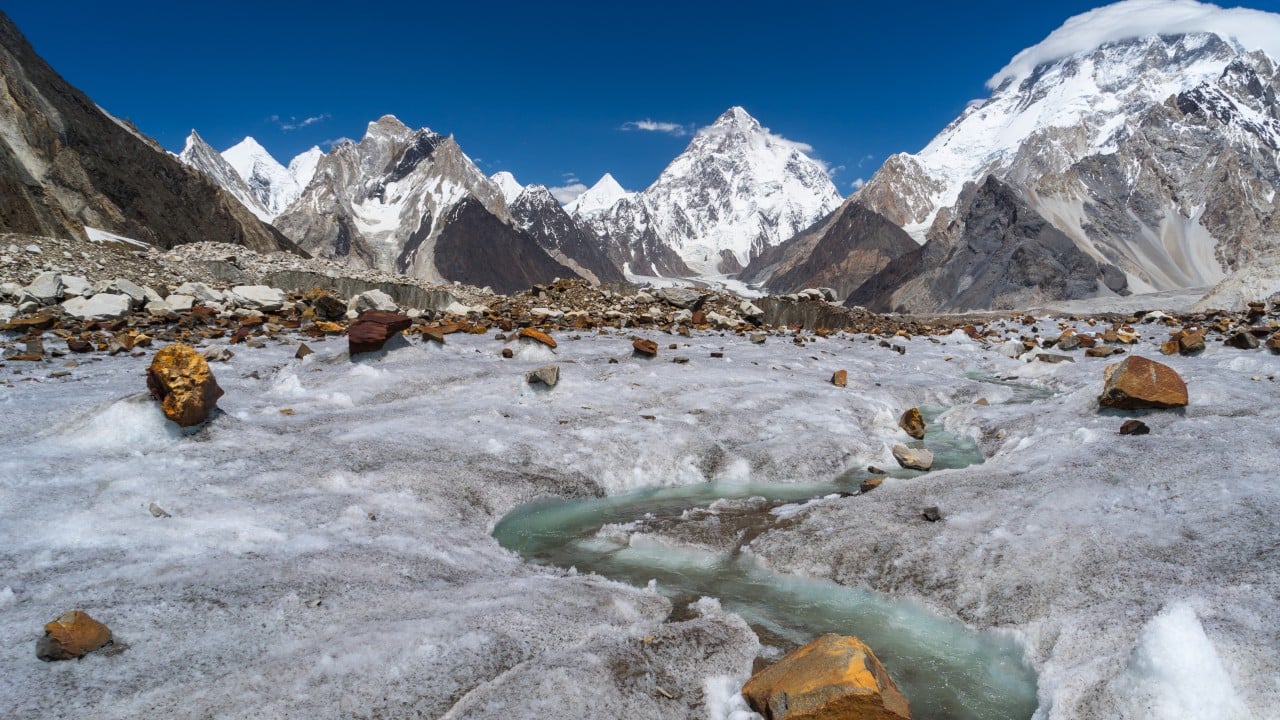
High-altitude mountaineering operates under extreme environmental constraints where risk management functions as the primary determinant of survival. When an avalanche strikes an expedition on an eight-thousander like Broad Peak in the Karakoram range of Pakistan, the event exposes the underlying mechanics of hazard exposure, decision architecture, and logistical dependencies at extreme elevation. Standard media coverage typically reduces such incidents to isolated tragedies driven by unpredictable weather. A rigorous structural deconstruction reveals a different reality: mountaineering disasters are systemic outcomes where objective environmental hazards interact with subjective human variables, including risk compensation, cognitive fatigue, and informational asymmetries.
The Hazard Framework of Karakoram Ascents
Broad Peak, standing at 8,051 meters, presents a distinct topographical and meteorological profile that differentiates it from other Himalayan giants. The mountain features a notoriously long summit ridge, steep snow slopes, and exposure to rapid weather shifts originating from regional jet streams. Analyzing an avalanche event requires categorizing variables into three distinct vectors: objective environmental triggers, route-specific exposure duration, and physiological degradation thresholds.
Objective Environmental Triggers
Avalanche initiation on high-altitude routes depends on snowpack stability, wind slab formation, and thermal loading. Wind scouring across the upper plateaus of Broad Peak redeposits large volumes of dry snow onto lee slopes, creating persistent weak layers. When solar radiation or shifting barometric pressure alters the cohesion of these wind slabs, the margin for error collapses. The trigger mechanism is rarely random; it is the physical culmination of shear stress exceeding shear strength within the snow stratigraphy.
Exposure Duration and Transit Risk
Risk is a function of probability multiplied by exposure time. On Broad Peak, climbers must traverse avalanche-prone corridors, such as the sections leading to Camp 3 or the bottleneck below the main ridge. The longer a team remains stationary or moves slowly within these zones, the higher the cumulative probability of an impact event. Operational delays—whether caused by gear failure, physical exhaustion, or bottlenecking of commercial climbing traffic—exponentially increase hazard exposure without a proportional increase in safety return.
Physiological Degradation and Decision Fatigue
Above 7,000 meters, the human body enters a zone known as the death zone, where physiological recovery becomes impossible due to hypoxia. Cognitive function declines sharply as arterial oxygen saturation drops. Decision architecture breaks down under these conditions. Climbers and expedition leaders frequently exhibit confirmation bias, sunk cost fallacy, and impaired risk assessment. When an approaching weather window narrows, the psychological pressure to push forward often overrides critical safety evaluations regarding unstable snowpack.
The Information Bottleneck in Remote Rescue Operations
When an avalanche traps or strands climbers in Pakistan's Karakoram, the post-incident response follows a rigid logistical timeline governed by geography and infrastructure. Unlike Alpine environments with instantaneous communication and rapid-response helicopter dispatch, remote Himalayan expeditions face severe friction across every phase of the rescue chain.
The Communication Latency Loop
Emergency signaling from high camps relies on satellite messengers or VHF radios, both of which are vulnerable to terrain blockage, battery degradation under extreme cold, and atmospheric interference. The transmission of accurate coordinates, casualty counts, and specific medical needs often suffers from degradation. By the time distress signals reach base camp managers, local tour operators, and military aviation authorities, hours have elapsed.
Aviation Constraints and Meteorological Limits
High-altitude rescue relies heavily on military rotorcraft, such as the Pakistan Army Aviation Corps fleets operating specialized platforms like the Eurocopter AS350 Écureuil or Bell variants. However, these aircraft face hard operational ceilings. Heavy payload capacities required for multi-person extraction degrade rapidly as air density decreases above 5,000 meters. Furthermore, if the storm system that triggered the avalanche persists, zero-visibility conditions ground aviation assets entirely. Ground-based search and rescue teams must then deploy, constrained by the same physical exhaustion and objective hazards that trapped the original expedition.
Commercialization Pressures and Safety Margin Compression
The modern landscape of eight-thousander mountaineering has shifted from elite, highly self-reliant alpine-style teams to large-scale commercial expeditions. This structural shift alters the risk equation significantly.
The Client-Guide Ratio and Dependency
Commercial operations introduce severe power dynamics. Clients who have invested substantial capital expect a summit attempt. Guides, often operating under commercial performance pressures or financial incentives linked to summit success, face compromised autonomy. When objective indicators suggest turning back, the economic cost of a canceled push creates an implicit bias toward continuing upward. This compresses safety margins until a single variable, such as an unexpected wind slab release, triggers a catastrophic outcome.
Experience Asymmetry
In large groups, the skill variance between expedition leaders and individual clients is vast. While professional mountain guides possess advanced hazard recognition capabilities, clients frequently lack the technical background to independently assess snow stability or recognize early symptoms of high-altitude cerebral edema. This asymmetry means that the safety of the entire rope team often depends on the vigilance of a severely overworked lead guide.
Systemic Vulnerability Vectors
To move beyond superficial post-mortems, analysis of high-altitude accidents must isolate the structural vulnerabilities that precede every major incident:
- Inadequate Real-Time Weather Modeling: Dependence on generalized forecasting models rather than localized micro-meteorological data prevents accurate prediction of rapid wind-loading events.
- Chain-of-Command Ambiguity: Unclear delegation of authority between local high-altitude porters, western guides, and expedition clients creates fatal hesitations during critical go-no-go junctures.
- Logistical Under-resourcing of Contingency Gear: Insufficient positioning of fixed ropes, oxygen supplies, and emergency bivouac equipment at upper camps transforms minor delays into survival crises.
Strategic Operational Redesign
Mitigating the recurrence of multi-casualty incidents on peaks like Broad Peak requires structural transformation of expedition protocols. Reliance on reactive rescue is mathematically insufficient given the speed of high-altitude weather dynamics.
Expedition operators must implement mandatory algorithmic turn-around times independent of climber desires, integrate real-time snowpack pit testing protocols into commercial itineraries, and establish decentralized cache networks above Camp 2 to eliminate reliance on single-line supply chains. Until structural safety metrics replace summit quotas as the primary KPI of high-altitude expeditions, the hazard architecture of the Karakoram will continue to produce predictable systemic failures.