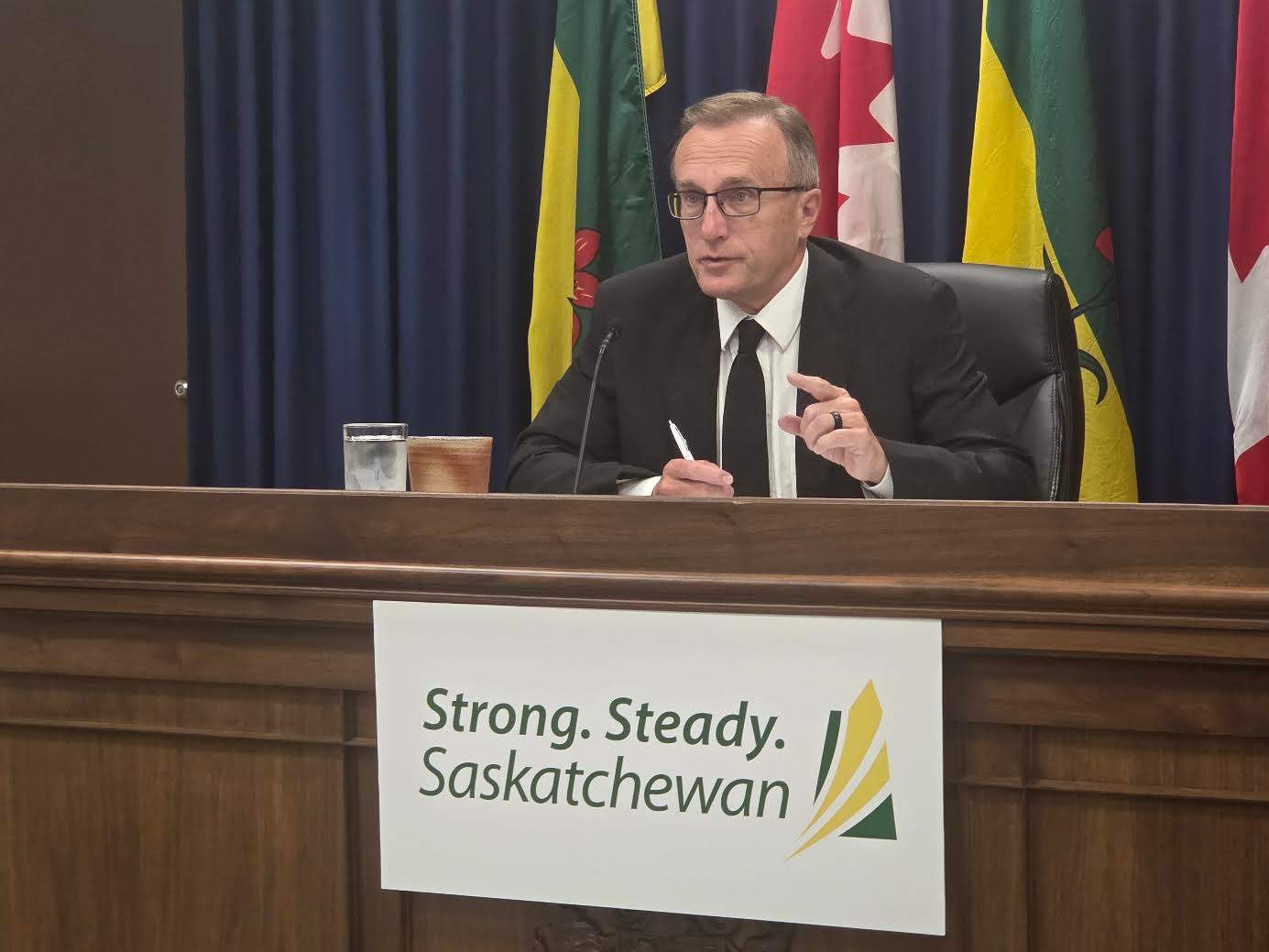
Sub-national governance in commodity-dependent jurisdictions operates under an unforgiving structural constraint: nominal windfalls in resource extraction rarely translate directly into fiscal surplus. When the Saskatchewan provincial government released its first-quarter financial update for the 2026-2027 fiscal year, it projected an $825 million deficit. This figure arrived despite a significant upward revision in West Texas Intermediate crude forecasts from US$59.75 to US$75.00 per barrel, catalyzed by geopolitical instability and shipping disruptions in the Middle East. Generating an additional $331 million in revenue should theoretically compress a deficit hovering near $819 million. Instead, the shortfall expanded marginally. Deconstructing this fiscal paradox requires analyzing the cost functions, institutional rigidities, and expenditure multipliers that neutralize resource booms before they reach the bottom line.
The Asymmetry of Revenue Windfalls and Expenditure Pressures
To understand why a higher commodity price baseline fails to eliminate provincial deficits, one must map the elasticity of public spending against resource price volatility. Every dollar increase in the average price of a barrel of oil expands the provincial treasury by roughly $17 million. The recent upward shift to a US$75 benchmark injected hundreds of millions of unexpected dollars into public coffers.
However, expenditure items do not remain static when resource revenues climb. Public sector operating costs scale dynamically. During the same fiscal window where resource income outperformed projections by $331 million, total expenses overshot budget targets by $337 million. This near-perfect symmetry between unexpected gains and overages exposes an underlying institutional reality: resource windfalls in sub-national economies frequently induce matching expenditure pressures rather than debt reduction.
The Three Cost Drivers Behind the Expenditure Expansion
A rigorous examination of the $337 million spending overrun points to three distinct macroeconomic and environmental variables that absorbed the resource surplus.
- Structural Demographics and Compensation: Healthcare delivery remains the single largest gravitational pull on provincial balance sheets. Service demands, inflationary pressures on medical goods, and workforce compensation adjustments added $200 million in unexpected expenditures. Collective bargaining agreements in public health create non-discretionary baseline spending that outpaces short-term revenue spikes.
- Climate Volatility and Agricultural Interventions: Natural capital dependencies extend beyond oil and gas into the agricultural sector. Excess spring moisture across the northeast triggered widespread unseeded acreage claims. Crop insurance outlays and immediate flood recovery operations introduced immediate cash-flow drains that directly offset petroleum gains.
- State-Owned Enterprise Capital Drag: Government business enterprises can occasionally bolster public revenues, but they also introduce liability vectors. Crown corporations like SaskPower experienced compressed net income—dropping to less than half of initial budget projections—forcing the enterprise to absorb higher borrowing requirements that expanded overall provincial debt obligations by tens of millions of dollars.
Macroeconomic Resilience Versus Fiscal Vulnerability
Critics often frame persistent deficits as a failure of revenue allocation, arguing that windfalls should immediately fund broad-based cost-of-living relief or debt retirement. From a political economy perspective, this creates a policy tension between structural deficit elimination and immediate taxpayer mitigation. Yet, evaluating fiscal health solely through the single-year deficit figure ignores broader balance sheet dynamics.
Saskatchewan's net debt-to-GDP ratio is projected to settle at 14.9 per cent by the end of the fiscal cycle, representing a structural improvement over the 16.1 per cent outlined in the original budget. Within the Canadian federation, this metric positions the province with the second-best debt-to-GDP ratio nationally. Furthermore, real GDP growth projections place the provincial economy near the top tier nationwide, supported by over $60 billion in planned and active private-sector capital projects.
This creates a divergence between cash-flow accounting and economic fundamentals. The government is managing an operating deficit driven by rigid healthcare delivery costs and climate-related remediation while simultaneously maintaining a robust macro-economic expansion and a strengthening debt-to-GDP trajectory.
Strategic Realignment for Commodity-Linked Budgets
Jurisdictions reliant on non-renewable resource extraction face a permanent structural vulnerability: treating volatile international commodity spikes as baseline operating capital ensures continuous fiscal friction. To break this cycle, treasury boards must decouple operational expenditure growth from short-term geopolitical risk premiums in the oil market.
Budgetary stabilization requires institutionalizing a strict fiscal rule where resource revenues exceeding baseline conservative forecasts are legally quarantined for capital debt reduction or structured sovereign wealth accumulation, completely shielding public sector operating budgets from windfall-induced expansion. Until expenditure growth is structurally isolated from resource price volatility, provincial balance sheets will remain tethered to the chaotic supply chains of the Strait of Hormuz, rendering fiscal balance perpetually out of reach regardless of how high oil climbs.